
If you are planning to start a factory, warehouse, recycling unit, or any business that may affect the environment in Delhi, you must first get Delhi Pollution Control Committee consent. This approval helps make sure that industries follow environmental rules and do not cause pollution.
What is Delhi Pollution Control Committee Consent?
The Delhi Pollution Control Committee (DPCC) is the government body that controls pollution in Delhi. It checks whether industries are following environmental laws.
Before starting operations, many businesses need permission from the DPCC. This permission is called Delhi Pollution Control Committee consent. It is generally issued in two stages:
- Consent to Establish (CTE) – Before setting up the business.
- Consent to Operate (CTO) – Before starting commercial operations.
Without these approvals, businesses may face penalties or legal action.
Who Needs DPCC Consent?
Many businesses require DPCC consent, such as:
- Manufacturing units
- Plastic recycling plants
- Chemical industries
- Food processing factories
- Printing units
- Warehouses handling hazardous materials
- Waste management and recycling businesses
Even small industries may need consent depending on their activities and pollution category.
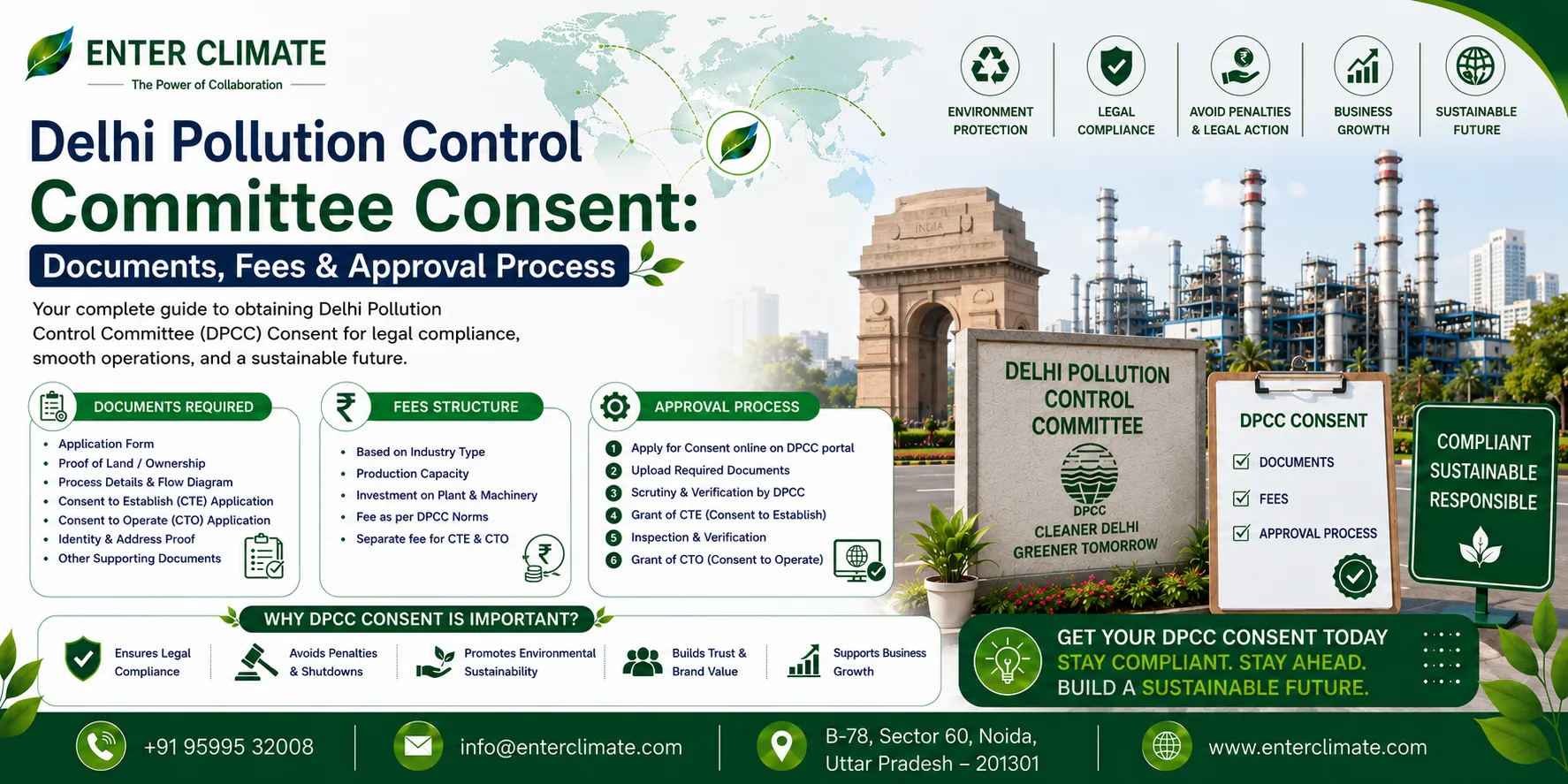
Documents Required
The exact documents may differ depending on your business, but commonly required documents include:
- PAN Card of the company or owner
- Aadhaar Card of the authorized person
- Business registration certificate
- GST Registration
- Factory or site ownership documents
- Rent or lease agreement (if applicable)
- Site layout or factory plan
- Manufacturing process details
- List of machinery
- Water and electricity bill
- Pollution control equipment details
Keeping all documents ready helps avoid delays during the approval process.
DPCC Consent Fees
The fee for Delhi Pollution Control Committee consent depends on factors like:
- Type of industry
- Investment amount
- Pollution category
- Validity period of the consent
Since fees are updated from time to time, applicants should check the latest fee structure before submitting their application.
Approval Process
The approval process is simple when all documents are complete.
Step 1: Prepare Documents
Collect all business and environmental documents.
Step 2: Submit the Application
Apply online with the required details and upload the necessary documents.
Step 3: Pay the Applicable Fees
Submit the prescribed government fee.
Step 4: Department Review
Officials review the application. In some cases, they may inspect the business location.
Step 5: Receive Consent
If everything meets the environmental requirements, the DPCC issues the required consent certificate.
Why is DPCC Consent Important?
Having DPCC consent offers many benefits:
- Helps your business follow environmental laws.
- Builds trust with customers and government authorities.
- Reduces the risk of penalties and legal issues.
- Makes it easier to obtain other business licenses.
- Supports cleaner and safer industrial operations.
Pollution Control Boards in Other States
Every state in India has its own pollution control authority. For example:
- The Gujarat Pollution Control Board manages environmental approvals and pollution control for industries operating in Gujarat.
- Businesses in Jharkhand may need a NOC from Jharkhand State Pollution Control Board before establishing or operating certain industries.
- Industries located in Himachal Pradesh may require a Himachal Pradesh State Pollution Control Board NOC depending on their business activities.
Although the rules are similar across India, each state has its own application process and documentation requirements.
How Enterclimate Can Help
Getting environmental approvals can sometimes feel confusing, especially for first-time business owners. Enterclimate helps businesses understand the process, prepare documents, file applications, and obtain pollution control board approvals across India.
Their experienced professionals also assist with environmental compliance, waste management authorizations, EPR registrations, and various government approvals, making the entire process smoother and faster.
Final Thoughts
Obtaining Delhi Pollution Control Committee consent is an important step before starting many industrial and commercial businesses in Delhi. By preparing the right documents, paying the required fees, and following the proper approval process, businesses can stay compliant with environmental regulations and operate without unnecessary legal problems.
Whether your business is in Delhi or another state such as Gujarat, Jharkhand, or Himachal Pradesh, following pollution control regulations is essential for protecting both your business and the environment.
Author Profile
Upendra Sharma is an Environmental Compliance Consultant with expertise in environmental regulations, pollution control approvals, EPR compliance, waste management, and industrial licensing. He regularly writes easy-to-understand articles that help businesses and entrepreneurs navigate complex environmental laws. Through his association with Enterclimate, Upendra shares practical guidance on obtaining government approvals and maintaining environmental compliance across India.