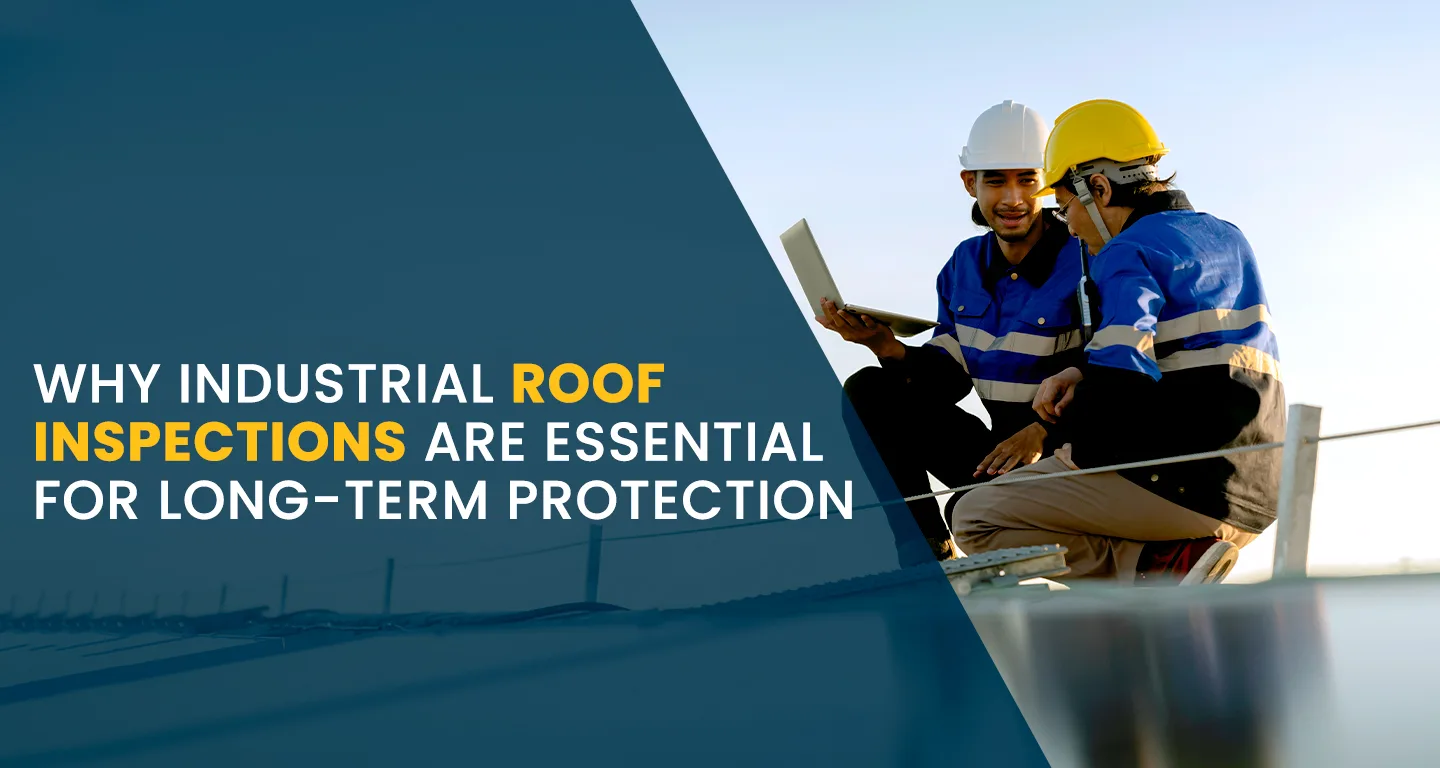
Industrial roofs are designed to withstand demanding conditions, but they are not immune to wear and damage. A thorough industrial roof inspection allows property owners to address hidden damage before it worsens, minimizing repair expenses while extending roof performance and protecting valuable business operations. Regular inspections also support long-term maintenance planning, making them a smart investment rather than an unexpected expense.
Why Industrial Roof Inspections Matter
An industrial roof is exposed to constant environmental stress, including sunlight, rain, temperature fluctuations, wind and airborne debris. Over time, these conditions gradually weaken roofing materials, seams, flashings and drainage systems. Even minor defects can allow moisture to enter the building envelope, leading to structural deterioration, insulation damage, mold growth, or production disruptions.
Routine inspections help detect these issues early, allowing facility managers to address them before they develop into major failures. Instead of reacting to leaks or emergency repairs, businesses can make informed maintenance decisions based on the actual condition of the roof.
Early Detection Prevents Expensive Repairs
One of the biggest advantages of industrial roof inspections is early problem detection. Small cracks, punctures, deteriorated sealants, loose fasteners and clogged drainage systems often remain unnoticed because they are not visible from inside the building.
When these issues are discovered during an inspection, they can usually be repaired quickly and at a much lower cost than replacing large sections of roofing after extensive water damage has occurred. Preventive maintenance not only reduces repair expenses but also minimizes operational downtime that can affect productivity.
Protecting the Building and Its Operations
Industrial facilities often house expensive machinery, inventory, raw materials and sensitive electrical equipment. A compromised roof increases the risk of water intrusion that can interrupt operations, damage equipment and create workplace hazards.
Regular inspections ensure that roofing components continue performing as intended, providing reliable protection throughout changing weather conditions. A properly sealed roof supports consistent indoor environmental conditions, which are vital for manufacturing facilities, storage spaces, and temperature-sensitive inventory.
Extending the Life of Industrial Roofing Systems
Every industrial roof has an expected service life, but proper maintenance plays a major role in determining whether it reaches or exceeds that lifespan. Inspections identify areas experiencing accelerated wear, allowing maintenance teams to make timely repairs that prevent further deterioration. Addressing localized damage is significantly more cost-effective than replacing an entire roof prematurely.
Well-maintained industrial roofing systems typically perform more efficiently over time because damaged materials, drainage problems and weakened flashing are corrected before they affect larger sections of the roof.
Weather Exposure Makes Regular Inspections Essential
Industrial roofs experience continuous exposure to harsh weather conditions throughout the year. Constant exposure to heavy rain, hail, strong winds, intense UV rays, and repeated temperature changes gradually weakens roofing materials over time. After severe storms, inspections become even more valuable because some damage may not be immediately visible from ground level.
Identifying displaced membranes, punctures, lifted flashing or impact damage early helps prevent future leaks and structural complications. Seasonal inspections also allow property owners to prepare their roofs before periods of extreme weather, reducing the likelihood of emergency repairs.
Supporting Long-Term Maintenance Planning
An industrial roof inspection provides valuable information beyond identifying current damage. It creates a record of the roof's condition, helping property owners prioritize repairs, schedule maintenance and budget for future improvements. With accurate inspection findings, facility managers can prioritize repairs based on the actual condition of the roof instead of relying on estimates or visible signs alone.
This proactive approach supports smarter financial planning while reducing unexpected repair costs. Businesses that invest in consistent commercial roof maintenance often experience fewer emergency situations and better overall roof performance throughout the building's lifecycle.
Waterproof Performance Is Critical
Water infiltration remains one of the leading causes of industrial roof deterioration. Minor imperfections in the roofing system can create pathways for moisture to reach the underlying insulation and structural elements, leading to hidden deterioration if left unaddressed.
Routine inspections verify that drainage systems function properly and that membranes, flashing and sealants remain intact. Maintaining effective waterproof roofing systems helps preserve structural integrity while reducing the likelihood of costly interior damage caused by persistent leaks.
Investing in Professional Roof Inspections
Industrial roofing systems are complex, making professional evaluations an important part of responsible facility management. Experienced inspectors understand how different roofing materials age, where failures commonly develop and which warning signs require immediate attention. Professional roof inspection services provide detailed assessments that help property owners make informed maintenance decisions, extend roof lifespan and avoid preventable repair costs.
When combined with a proactive maintenance strategy, routine inspections protect both the building and the business operating beneath it. If you're planning a long-term roofing strategy or want expert guidance on protecting your facility, explore the industrial roofing expertise available at Blue Vision Roofing. To discuss your property's specific needs or schedule an evaluation, connect with us and learn how proactive inspections can help preserve your investment for years to come.