
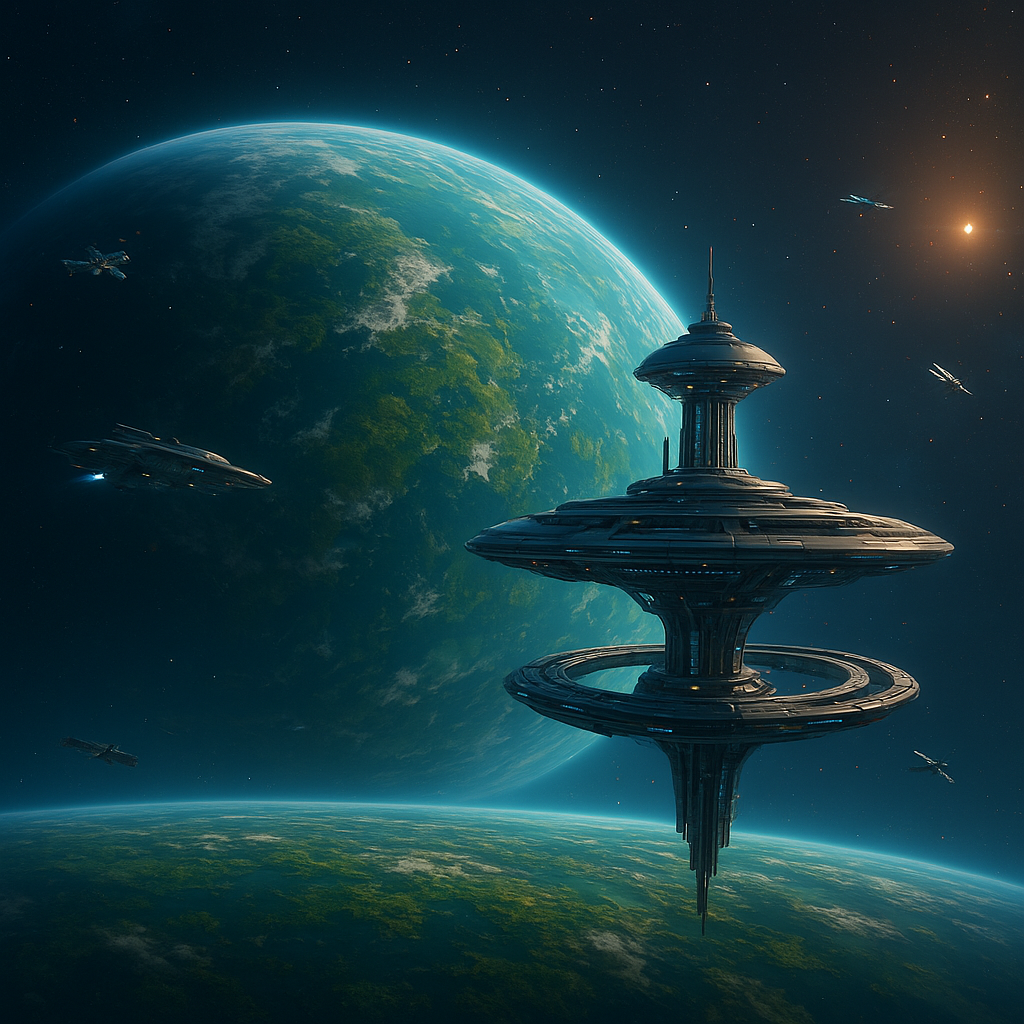
The Dawn of a New Cosmic Era
On a crisp morning in early September 2026, the Artemis VI mission lifted off from Kennedy Space Center, marking a pivotal moment in humanity’s push beyond the lunar surface. As the spacecraft pierced the thin atmosphere, it carried not only astronauts but also a new generation of technology designed to sustain long-term human presence off-Earth. This scene epitomizes a broader transformation in space exploration—one that is no longer about symbolic first steps but about establishing a sustainable foothold in the cosmos.
Space exploration today is a multidimensional endeavor, blending government ambition, private enterprise innovation, and international cooperation. After decades of incremental progress, 2026 represents a year of accelerated milestones and shifting paradigms. From lunar bases to Mars colonization plans, the vision of humans becoming a multiplanetary species is taking tangible shape.
“We are entering an era where space is not just the domain of superpowers but a collaborative platform for humanity’s survival and growth.” — Dr. Helena Reyes, Director of the International Space Research Consortium
This article explores this transformative journey, tracing the origins of space exploration, analyzing current breakthroughs, and projecting what lies ahead for this grand human enterprise.
Tracing the Trajectory: From Sputnik to Starships
The story of space exploration began over six decades ago with the Soviet Union’s Sputnik 1 in 1957, the first artificial satellite to orbit Earth. This event ignited the Cold War space race, culminating in the 1969 Apollo 11 Moon landing, a feat that defined 20th-century technological prowess. Yet, after the Apollo program ended, enthusiasm dimmed, and human spaceflight plateaued for decades.
The 21st century revived interest with the International Space Station (ISS), a testament to global collaboration since its first module launch in 1998. The ISS has served as a microgravity laboratory and a proving ground for long-duration missions. However, the true renaissance began with the advent of commercial space companies like SpaceX, Blue Origin, and international agencies expanding their ambitions.
Historical milestones that shaped today’s exploration include:
- 2004: SpaceShipOne achieved the first privately funded human spaceflight.
- 2012: SpaceX Dragon became the first commercial spacecraft to dock with the ISS.
- 2020s: NASA’s Artemis program launched to return humans to the Moon and prepare for Mars missions.
- 2025: China’s Chang’e 6 successfully returned samples from the lunar far side, expanding scientific understanding.
These achievements laid the foundation for the current phase, where exploration aims not just to visit but to inhabit and utilize extraterrestrial environments.
Breaking Boundaries: The 2026 Landscape of Space Exploration
The year 2026 marks a watershed in space exploration, characterized by several groundbreaking developments. NASA’s Artemis VI mission is currently assembling the Gateway lunar outpost, a modular station orbiting the Moon, designed to support extended missions and serve as a staging point for Mars expeditions.
Simultaneously, private companies have accelerated space logistics and infrastructure. SpaceX’s Starship fleet has completed over 30 orbital refueling missions, enhancing payload capacity and lowering costs. Blue Origin’s Blue Moon lander prototype is preparing for cargo delivery to the lunar surface, enabling in-situ resource utilization (ISRU).
Internationally, the European Space Agency (ESA) and Japan Aerospace Exploration Agency (JAXA) have advanced joint missions focusing on asteroid mining and planetary defense. The global space economy is estimated to have surpassed $700 billion in 2026, driven by satellite deployment, space tourism, and emerging off-world mining ventures.
Key 2026 shifts include:
- Permanent Lunar Habitats: The first multi-year habitats with regenerative life support systems are operational on the Moon’s south pole.
- Robotic Mars Precursors: Autonomous robots are constructing basic infrastructure for future human landings scheduled in the 2030s.
- Space-Based Manufacturing: Facilities in low Earth orbit are producing materials and components impossible to make on Earth.
- Commercial Space Tourism Expansion: Orbital hotels and lunar flybys are becoming accessible to non-professional astronauts.
“The integration of robotics, AI, and sustainable life support has transformed space exploration from exploration to habitation.” — Prof. Anil Khatri, Aerospace Engineering, MIT
These developments underscore a shift from episodic missions to continuous presence and exploitation of space resources.
Analyzing the Drivers: Technology, Economy, and Policy
Space exploration’s rapid evolution is fueled by several interlinked factors. Technological innovation has been paramount. Advances in propulsion, such as nuclear thermal and electric propulsion systems, have reduced transit times to Mars by nearly 30%, enhancing mission viability. AI-driven autonomous systems now perform complex tasks from spacecraft navigation to habitat maintenance, decreasing human workload and risk.
The economic dimension is equally critical. Investment from both public and private sectors surged, with governments committing over $60 billion globally in 2026 alone. Private capital, particularly venture funding in space tech startups, reached record levels.
Policy frameworks are also evolving to support this growth. International agreements like the Artemis Accords facilitate cooperation while addressing resource rights and planetary protection. Regulatory bodies are crafting new standards for orbital traffic management and space debris mitigation, crucial for sustainable operations.
Below is a summary of core drivers:
- Technological breakthroughs: Nuclear propulsion, AI automation, ISRU technologies.
- Economic incentives: Resource extraction potential, space tourism revenue, satellite mega-constellations.
- Policy evolution: International cooperation treaties, space traffic regulations, safety protocols.
- Public interest: Growing enthusiasm and STEM education initiatives fueling workforce development.
These elements form a synergistic ecosystem, propelling humanity’s cosmic ambitions forward.
Voices from the Frontline: Expert Insights and Industry Impact
The space sector’s transformation is reflected in the perspectives of leading experts and industry stakeholders. Dr. Mei Ling Tan, Chief Engineer at Orbital Dynamics Corp., emphasizes the role of collaboration: “No single nation or company can achieve sustainable space exploration alone. Our partnerships across borders and sectors are the bedrock of progress.”
Meanwhile, commercial leaders highlight the economic potential. Elon Musk, CEO of SpaceX, recently stated, “The future of humanity is among the stars. By making space travel affordable and routine, we open unprecedented opportunities for innovation and growth.”
The ripple effects extend beyond spaceflight. Satellite communications and Earth observation industries benefit from new constellations enabling global internet and climate monitoring. Moreover, spin-off technologies from space research are revolutionizing healthcare, materials science, and environmental management on Earth.
“Space exploration drives technological advancement that uplifts all sectors of society.” — Dr. Amina Yusuf, Space Policy Analyst
Employment in space-related fields has grown by nearly 15% in the past five years, according to industry reports, reflecting a robust and diverse workforce. Educational programs are adapting, with universities offering specialized degrees in space sciences and engineering, preparing the next generation of explorers.
Looking Beyond 2026: What to Watch in Space Exploration’s Next Phase
As 2026 unfolds, attention turns to several critical developments shaping the medium-term future of space exploration. The planned Mars Sample Return mission, a collaboration between NASA and ESA, aims to bring Martian rock samples to Earth by 2031, a scientific milestone that could unlock secrets of life’s potential beyond Earth.
Lunar resource utilization will be a decisive factor. Extracting water ice for fuel and life support can dramatically reduce mission costs and enable deeper space ventures. Additionally, the development of space-based solar power stations is poised to revolutionize energy supply both on Earth and in orbit.
Major challenges remain, including radiation protection for astronauts, psychological effects of long-duration spaceflight, and the political complexities of space governance. However, the trajectory is clear: humanity is committed to expanding its presence beyond Earth’s cradle.
Key future indicators to monitor include:
- Advances in propulsion technologies: Breakthroughs in fusion propulsion or antimatter engines.
- Expansion of international governance: New treaties addressing lunar and asteroid mining rights.
- Commercial ecosystem growth: Emergence of new players in space tourism and manufacturing.
- Technological integration: Synergy between AI, robotics, and human exploration.
For readers seeking a foundational understanding of space exploration’s history and mechanisms, Unlocking the Cosmos: A Beginner’s Guide to Space Exploration provides an excellent primer. For insights into upcoming trends and expert advice, 2026 Trends in Space Exploration: Charting Humanity’s Next Giant Leap is highly recommended.
Ultimately, space exploration in 2026 is a testament to human ingenuity, collaboration, and the enduring quest for knowledge. As Dr. Reyes aptly concluded, “Our reach into space reflects our deepest aspirations and capabilities as a species.” The coming decades promise to transform these aspirations into reality, reshaping how we live, work, and dream beyond our home planet.