
From Dorm Rooms to Stadiums: A Defining Moment in Esports History
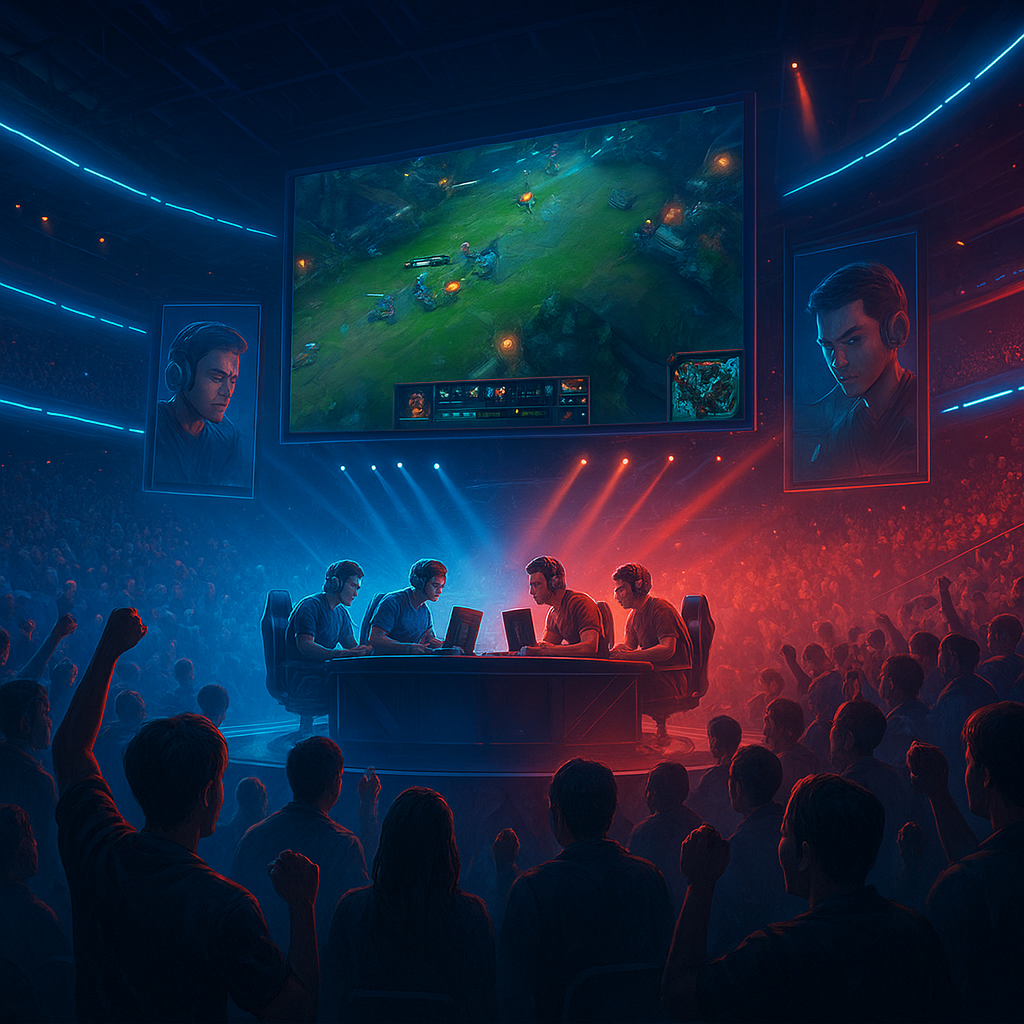
In August 2026, the Esports World Championship Finals held in Seoul shattered previous attendance records, drawing over 150,000 fans both in-person and via live streams worldwide. For the first time, the combined prize pool eclipsed $50 million USD, underscoring esports’ emergence as a major competitive and commercial force. This scene—an arena pulsating with energy, the roar of fans, and the focused intensity of players—exemplifies how esports has transcended its origins as a niche pastime to claim its place alongside traditional sports. The spectacle is not just about gaming; it is now a cultural phenomenon influencing entertainment, technology, and global youth culture.
To appreciate this seismic shift, one must understand how rapidly esports has evolved over the last decade. Once relegated to small internet cafés and underground tournaments, it now commands international media rights deals, celebrity endorsements, and multi-billion-dollar investments. This article explores esports’ journey to the mainstream, the current state of the industry in 2026, and what lies ahead for this fast-growing global entertainment sector.
The Evolution of Competitive Gaming: Tracing Esports’ Trajectory
Competitive gaming dates back to the 1970s with arcade competitions, but esports as we recognize it began to coalesce in the early 2000s with titles like StarCraft in South Korea and Counter-Strike globally. South Korea’s pioneering role in professionalizing esports laid the foundation for its meteoric rise, supported by government policies and broadband infrastructure. The 2010s saw a proliferation of new game genres, including MOBAs like League of Legends and battle royales like Fortnite, which captivated younger audiences worldwide.
By the mid-2020s, esports had diversified beyond PC and console gaming into mobile platforms, VR arenas, and even AI-assisted training camps. The growth was fueled by streaming platforms such as Twitch, YouTube Gaming, and newer entrants utilizing AI-driven content personalization. According to reports from Newzoo and industry analysts, global esports revenues surpassed $3.4 billion in 2025, with audience numbers exceeding 750 million globally—a trajectory that has only accelerated since.
This expansion was supported by a range of stakeholders, including game publishers, tournament organizers, professional teams, and sponsors. Unlike traditional sports, esports’ digital-first nature allowed rapid scaling and innovation in fan engagement, monetization, and content delivery. Internal coverage like Inside the Rise and Revolution of Esports provides detailed insights into these foundational shifts.
Analyzing Esports’ Economic and Cultural Impact in 2026
Esports today is a multi-faceted industry encompassing player contracts, broadcasting rights, advertising, merchandise, and emerging sectors such as virtual real estate within game universes. Economically, it rivals some traditional sports leagues. According to industry data, the top 20 teams now possess valuations exceeding $500 million each, with franchising systems similar to the NFL or NBA.
Several factors underpin this growth:
- Global Viewership Expansion: Esports viewership has expanded beyond millennials to include Gen Z and increasingly older demographics, driven by localized content and multi-language broadcasts.
- Sponsorship and Advertising: Leading brands in technology, apparel, and even finance now allocate significant marketing budgets to esports, leveraging influencer partnerships and branded content.
- Technological Innovation: AI-enhanced analytics and immersive VR experiences have boosted fan engagement and training efficacy.
- Diverse Game Ecosystems: Titles like Valorant, Call of Duty: Vanguard, and emerging VR esports franchises have broadened the competitive landscape.
- Regulatory and Institutional Recognition: Countries such as the United States, South Korea, and Germany have integrated esports into national sports frameworks, impacting visa policies and athlete support.
Culturally, esports continues to reshape entertainment norms. Its interactivity, community-driven content, and global accessibility challenge conventional sports’ regional dominance. Esports events blend music, cosplay, and digital art, creating hybrid festivals that appeal to diverse audiences. According to How Esports Transformed Into a Global Powerhouse of Competition and Culture, this cultural fusion has made esports a vital part of youth identity and social interaction worldwide.
“Esports is not just about competition; it is a cultural hub where technology, creativity, and community converge,” explains Dr. Lena Kim, a gaming sociologist at Seoul National University.
2026’s Defining Trends: Immersive Tech and AI Integration
This year marks a turning point for esports technology. The integration of AI-driven coaching tools, real-time strategy analysis, and immersive augmented reality (AR) overlays has transformed both player preparation and viewer experience. Leading esports organizations now employ AI analysts to dissect opponents’ gameplay patterns, enabling hyper-personalized training regimens. Meanwhile, AR-enhanced broadcasts provide spectators with dynamic statistics and 3D visualizations, enhancing understanding and engagement.
Virtual reality esports leagues have also gained traction, with franchises like VR Legends and MetaArena attracting millions of viewers and significant investment. These leagues offer fully immersive competitions where players and fans inhabit shared digital arenas, blurring lines between gaming and physical presence. Industry insiders predict VR esports could represent up to 20% of the market by 2030.
Additionally, blockchain technology underpins new monetization models such as NFTs for digital collectibles and player skins, creating novel revenue streams and fan ownership models. However, this rapid tech adoption also raises challenges around accessibility and regulatory oversight.
“The convergence of AI, VR, and blockchain is setting the stage for esports’ next frontier, redefining how competition and fandom intersect,” notes Marcus Chen, CTO at a leading esports analytics firm.
Insights from Industry Leaders: Navigating Opportunities and Challenges
Esports executives emphasize the importance of balancing innovation with sustainability. Maria Torres, CEO of Global Esports Federation, highlights the need for standardized player welfare policies amid increasing commercialization. Issues such as burnout, mental health, and fair contracts remain critical.
Meanwhile, media companies are exploring cross-platform content strategies to deepen fan interaction. Partnerships between traditional broadcasters and digital platforms have expanded esports’ reach beyond core gaming audiences. Sponsors are also keen on harnessing esports’ data-driven marketing potential, enabling precision targeting unmatched in other sports.
Yet, the industry faces headwinds. Regulatory scrutiny over gambling, data privacy, and intellectual property rights is intensifying globally. Moreover, geopolitical tensions impact international tournaments and player mobility, requiring adaptive strategies.
Experts advocate for collaborative governance involving stakeholders across gaming, technology, and policy spheres to ensure esports’ long-term growth and legitimacy. For a detailed exploration of these dynamics, readers should consult How Esports Is Redefining Competition, Culture, and Commerce in 2026.
Looking Forward: What’s Next for Esports?
The future of esports promises further integration with emerging technologies and deeper cultural embedding. Key areas to watch include:
- Artificial Intelligence: Increasingly sophisticated AI referees and content generators will automate tournament management and personalized fan experiences.
- Metaverse Expansion: Esports arenas within metaverse platforms will facilitate global participation and new social dynamics.
- Diversity and Inclusion: Efforts to broaden gender, geographic, and socioeconomic representation will shape community and industry policies.
- Educational Integration: Universities and vocational programs are developing esports curricula, training the next generation of professionals beyond players.
- Environmental Sustainability: Industry actors are adopting green initiatives to reduce the carbon footprint of large-scale events.
As esports continues to mature, its role as a driver of innovation and culture is undeniable. Stakeholders who balance growth with ethical considerations will shape a vibrant future for esports as a defining entertainment medium of the 21st century.
For those interested in the technological horizon of esports, How AI and Immersive Tech Are Shaping Esports’ Next Frontier offers an in-depth analysis.