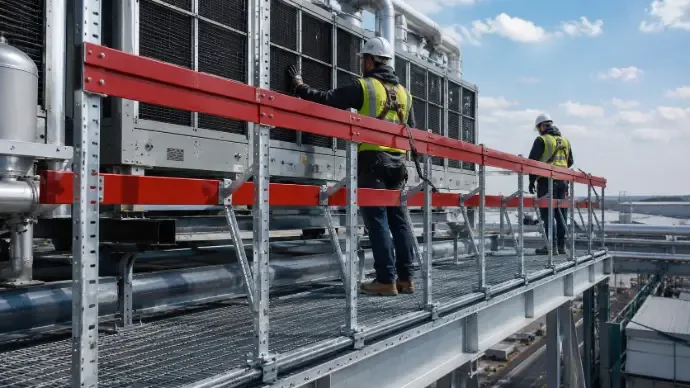
Introduction
Saudi Arabia's industrial and commercial sectors continue to expand through major infrastructure, manufacturing, logistics, and energy developments. As more facilities require regular rooftop access for inspections, maintenance, and equipment servicing, protecting employees who work at height has become a top priority. Implementing a reliable lifeline safety system is one of the most effective ways to reduce fall risks and create a safer working environment.
What Is a Lifeline Safety System?
A lifeline safety system is a permanent fall protection solution designed to keep workers securely connected while performing tasks at height. The system typically includes anchor points, horizontal or vertical lifelines, connectors, and personal protective equipment that work together to minimize the risk of serious injuries caused by falls.
Unlike temporary safety measures, a professionally installed lifeline system provides continuous protection, allowing workers to move safely across rooftops and elevated structures without compromising productivity.
Why Lifeline Safety Is Important
Work at height is common in factories, warehouses, commercial buildings, power plants, airports, and industrial facilities across Saudi Arabia. Routine maintenance of HVAC systems, solar panels, communication equipment, and rooftop infrastructure exposes workers to potential fall hazards.
A dependable lifeline safety system helps businesses reduce these risks by providing secure attachment points throughout the work area. This proactive approach not only protects employees but also supports efficient maintenance operations while reducing downtime caused by workplace incidents.
Key Benefits of Lifeline Safety Systems
Continuous Worker Protection
Workers remain safely connected throughout their tasks, providing dependable fall protection during maintenance, inspections, and repair work.
Increased Workplace Efficiency
Permanent lifeline systems allow maintenance teams to move freely between work areas without repeatedly installing temporary safety equipment.
Long-Term Durability
Modern lifeline systems are manufactured using corrosion-resistant materials that perform reliably in Saudi Arabia's demanding climate, including high temperatures, dust, and strong sunlight.
Flexible Installation
Lifeline safety solutions can be adapted to various roof types and elevated structures, making them suitable for both new construction projects and existing facilities.
Applications Across Industries
A lifeline safety system is widely used in many sectors, including:
- Manufacturing facilities
- Warehouses and distribution centers
- Commercial office buildings
- Oil and gas facilities
- Power generation plants
- Airports
- Healthcare facilities
- Educational institutions
- Renewable energy projects
These industries rely on safe work-at-height solutions to protect employees while maintaining uninterrupted operations.
Choosing the Right Lifeline Safety Solution
Selecting the right lifeline safety system requires evaluating roof design, work frequency, environmental conditions, and operational requirements. A professionally engineered solution should provide reliable protection, integrate seamlessly with the building, and support long-term workplace safety objectives.
Regular inspections, employee training, and scheduled maintenance also help ensure the system continues to perform effectively throughout its service life.
Conclusion
Investing in a high-quality lifeline safety system is a smart decision for organizations committed to protecting workers at height. By reducing fall hazards, improving maintenance efficiency, and supporting safer daily operations, lifeline systems contribute to stronger workplace safety and long-term business success. As Saudi Arabia continues to develop modern industrial and commercial infrastructure, lifeline safety remains an essential part of creating secure, productive, and future-ready workplaces.