Your factory sensors collect thousands of readings daily. But what happens if that information never reaches the systems managing your business?
That's a common challenge with Internet of Things (IoT) projects.
Connecting a machine to the internet is relatively straightforward. Making its data useful for inventory management, maintenance scheduling, customer service, and financial planning is considerably more complex.
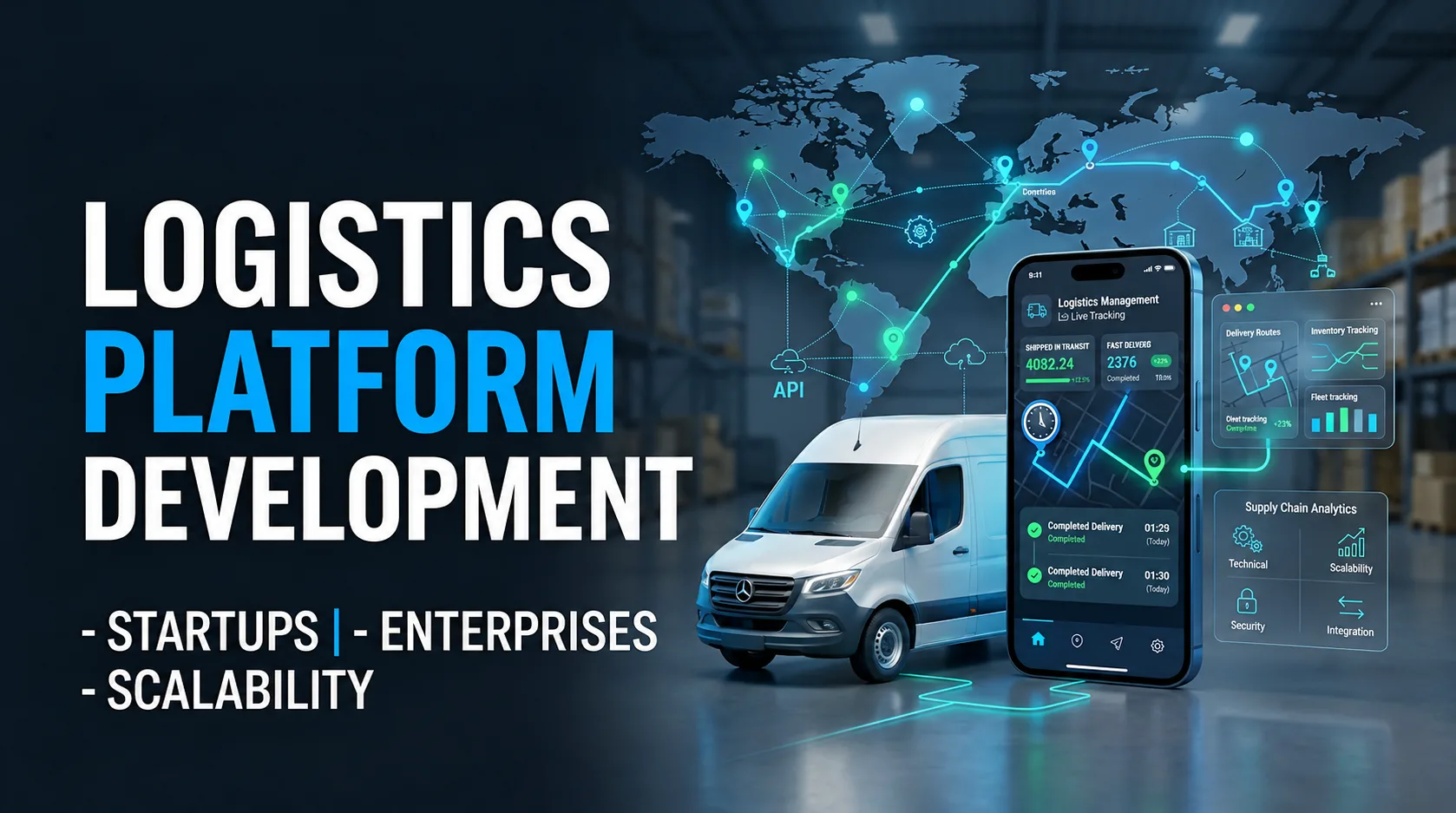
Imagine a US logistics company tracking its delivery vehicles through GPS devices. The information becomes valuable when location updates automatically reach dispatch software, customer notifications, and fleet management dashboards.
For American businesses exploring software development services in usa, the real opportunity lies in connecting physical devices with existing enterprise applications.
Here's how businesses can approach IoT software development in seven practical steps.
1. Identify the Business Problem Before Connecting Devices
An IoT project shouldn't begin with purchasing hundreds of sensors.
Start by identifying an operational problem that connected devices could solve.
For example:
- Manufacturing: Detect equipment abnormalities before unexpected shutdowns.
- Logistics: Monitor vehicle locations and shipment conditions.
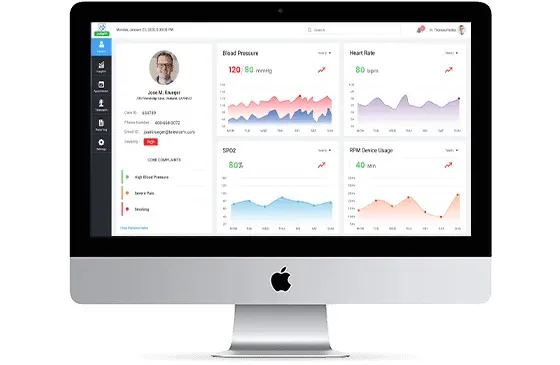
- Healthcare: Collect readings from compatible remote monitoring devices.
- Retail: Track refrigeration temperatures and inventory conditions.
- Agriculture: Monitor soil moisture and environmental conditions.
A manufacturing company in Michigan might prioritize monitoring machine vibrations because unexpected equipment failures interrupt production.
Key takeaway: Define measurable operational outcomes before selecting hardware or software.
2. Choose Devices and Communication Protocols
IoT systems depend on sensors, gateways, networks, and software communicating reliably.
Common connectivity options include:
- WiFi: Suitable for facilities with reliable wireless networks.
- Bluetooth Low Energy: Useful for nearby devices with limited power consumption.
- Cellular connectivity: Appropriate for distributed assets and vehicle tracking.
- LoRaWAN: Useful for low bandwidth communication across relatively long distances.
Protocols such as MQTT and HTTP help transmit data between devices and applications.
The right choice depends on battery life, coverage, bandwidth, latency, and operational requirements.
Key takeaway: Select connectivity based on the environment where devices will actually operate.
3. Build a Reliable Device to Cloud Data Pipeline
Once devices are connected, businesses need a dependable process for collecting and processing their information.
A typical IoT architecture follows this flow:
Sensors → IoT Gateway → Cloud Platform → Data Processing → Business Applications
For example, temperature sensors inside a US food distribution warehouse could transmit readings through an IoT gateway.
A cloud platform processes the information and triggers alerts when temperatures exceed acceptable limits.
According to AWS IoT Core documentation, its rules engine can route device messages into databases, notifications, processing functions, and other applications.
Key takeaway: Plan how the system handles missing readings, duplicate messages, device disconnections, and network failures.
4. Integrate IoT Data With ERP, CRM, and Operational Software
This is where connected devices begin delivering practical business value.
Raw sensor information rarely helps employees unless it reaches the applications they already use.
Businesses can connect IoT platforms with:
- ERP systems: Update inventory, asset information, and maintenance records.
- CRM platforms: Trigger customer notifications and service requests.
- Warehouse management systems: Monitor equipment and storage conditions.
- Business intelligence tools: Analyze trends and operational performance.
Consider a Texas equipment rental company.
Sensors detect that a rented machine requires maintenance. The IoT system sends an event to the company's maintenance platform, which creates a service request automatically.
Professional custom software development solutions can enable these workflows through APIs, event processing, and integration middleware.
Key takeaway: Device data becomes valuable when it supports a specific business action.
5. Add Analytics and Predictive Maintenance
Collecting information is useful. Understanding what it means is more valuable.
IoT analytics can identify abnormal patterns, operational inefficiencies, and opportunities for improvement.
For example, vibration and temperature readings may help identify equipment behavior associated with potential failures.
An advanced system could:
- Identify unusual operating conditions.
- Compare current readings with historical patterns.
- Estimate maintenance priorities.
- Notify responsible technicians.
- Record maintenance outcomes for future analysis.
However, predictive models require reliable data and validation against actual equipment performance.
Key takeaway: Start with understandable monitoring rules before investing in complex machine learning models.
6. Secure Devices, Networks, and Business Applications
Connecting operational equipment to digital infrastructure introduces additional cybersecurity risks.
An insecure device could expose information or provide attackers with access to connected systems.
The NIST IoT Device Cybersecurity Capability Core Baseline outlines foundational capabilities such as device identification, secure configuration, access control, data protection, and software updates.
US businesses should consider:
- Unique device identities and credentials
- Encrypted communications
- Secure firmware updates
- Network segmentation
- Role based access controls
- Continuous device monitoring
Healthcare, manufacturing, and critical infrastructure environments may require additional regulatory and operational safeguards.
Key takeaway: IoT cybersecurity must protect both connected hardware and the business systems receiving its data.
7. Test Scalability and Calculate Total Ownership Costs
An IoT platform supporting 20 sensors may behave differently when managing 20,000 devices.
As deployments expand, businesses must account for data volume, connectivity costs, storage, monitoring, and device maintenance.
Organizations evaluating custom software application development services should test:
- Device onboarding and provisioning
- Data processing performance
- Network interruption recovery
- Integration reliability
- Firmware update procedures
- Infrastructure operating costs
For example, a nationwide delivery company should test how its platform behaves when thousands of vehicles transmit location information simultaneously.
Key takeaway: Calculate the cost of operating the complete IoT ecosystem, not simply developing its dashboard.
Which US Industries Benefit Most From IoT Integration?
IndustryIoT ApplicationBusiness BenefitManufacturingEquipment monitoringReduced unplanned downtimeLogisticsFleet and shipment trackingBetter operational visibilityHealthcareRemote patient monitoringMore timely access to readingsRetailSmart inventory and refrigerationImproved stock monitoringAgricultureEnvironmental sensorsBetter resource managementBenefits depend on implementation quality, employee adoption, and whether collected information leads to useful decisions.
Ready to Connect Your Devices With Smarter Business Systems?
From IoT data processing to ERP integration and custom dashboards, building a connected ecosystem requires the right software architecture.
Explore how custom software development services can support secure integrations, business automation, and scalable applications tailored to your operational needs.
Final Thoughts
IoT software development isn't simply about connecting more devices to the internet.
It's about turning physical activity into reliable information that helps businesses make decisions and automate important processes.
For US organizations, the strongest projects begin with clearly defined operational problems, secure architecture, and meaningful integration with existing systems.
The real value of IoT isn't the amount of data your devices collect. It's what your business can actually do with that data.
Frequently Asked Questions
Q1. What is IoT software development?
IoT software development involves creating applications and infrastructure that collect, process, and exchange information between connected devices and business systems.
Q2. How much does IoT software development cost in the USA?
Costs depend on hardware, connectivity, cloud infrastructure, integrations, cybersecurity, application complexity, and ongoing maintenance. A pilot deployment provides a useful basis for estimating larger projects.
Q3. Can IoT devices integrate with existing ERP and CRM systems?
Yes. APIs, integration middleware, and event processing platforms can connect IoT information with enterprise applications, depending on their supported interfaces.
Q4. What programming languages are used in IoT development?
Python, C, C++, JavaScript, Java, and other languages are commonly used depending on device requirements, backend infrastructure, and application architecture.
Q5. How long does it take to build an enterprise IoT platform?
A limited pilot may take several weeks or months. Large deployments involving custom hardware, enterprise integrations, cybersecurity testing, and multiple locations generally require longer.