Remote care has moved far beyond occasional virtual visits. Patients with chronic conditions, recovering seniors, and high-risk populations now need continuous support between appointments. That shift is why remote patient monitoring software has become a critical part of digital care delivery. It helps providers collect patient-generated health data from connected devices, review changes in near real time, and intervene before a condition becomes more serious.
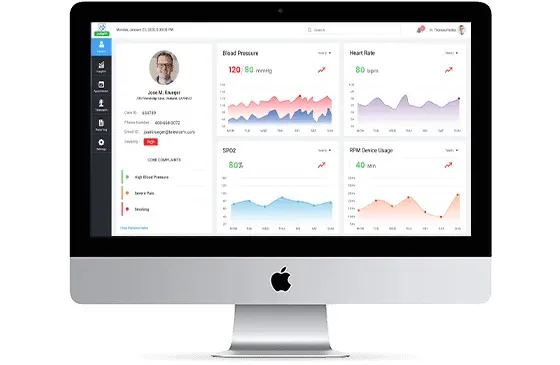
A strong RPM program gives physicians and care teams access to vitals such as blood pressure, oxygen saturation, glucose levels, heart rate, weight, temperature, and medication adherence signals. Instead of waiting for a patient to schedule a visit or report symptoms, providers can identify trends through dashboards, alerts, and structured reports. This turns remote care into a proactive model rather than a reactive one.
Modern remote patient monitoring solutions are especially valuable for chronic disease management. Patients managing diabetes, hypertension, heart disease, COPD, post-surgical recovery, or elderly care needs often require frequent observation. RPM software can help care teams monitor risk patterns, prioritize outreach, and document follow-up actions. When the system is integrated with EHR and care management workflows, clinicians can make better decisions without switching across disconnected platforms.
What makes RPM software effective?
An effective RPM platform is not just a device dashboard. It needs device connectivity, patient onboarding, secure data capture, alert rules, clinical review workflows, care-team messaging, telehealth access, and integration with existing systems. A remote patient monitoring platform should also support role-based dashboards for physicians, nurses, care coordinators, and administrators. Each user should see the data and tasks most relevant to their responsibilities.
Patient experience is another deciding factor. If the patient app is difficult to use, remote monitoring adoption will suffer. The best platforms simplify device setup, display reminders clearly, support secure communication, and make patients feel connected to their care team. Automated reminders can encourage medication adherence, appointment attendance, and daily device usage. This improves both engagement and data consistency.
Security and compliance must be built into the software from the start. RPM platforms handle protected health information, device data, clinician notes, and patient communication. Encryption, audit logs, secure APIs, access control, and HIPAA-aligned architecture are essential. This is where healthcare software development expertise becomes important. Building for healthcare requires more than general app development; it requires workflow mapping, privacy controls, interoperability planning, and long-term support.
Why providers are investing now
Healthcare organizations are adopting RPM because it supports better care access, fewer avoidable visits, stronger chronic care management, and improved patient visibility. A remote monitoring system in healthcare can also help organizations manage larger patient populations with structured alerts and automation. Rather than calling every patient manually, teams can focus attention on the patients who need timely intervention.
RPM can also support revenue cycle management when documentation, eligibility, billing rules, and care activity tracking are aligned properly. Providers need to know which monitoring activities were completed, who reviewed the data, and how care interactions were documented. When RPM workflows are connected to billing and reporting systems, organizations can reduce manual follow-up and improve operational accuracy.
For healthcare leaders, the real value of RPM is not only technology. It is the ability to extend care beyond facility walls while keeping clinicians informed and patients engaged. A well-designed RPM system creates a connected care loop: patients submit data, software identifies patterns, care teams respond, and outcomes improve over time. As healthcare continues to shift toward preventive and home-based care, remote patient monitoring will remain a core part of modern healthcare delivery.
Why Remote Patient Monitoring Software Is Becoming Core to Connected Care

shawn M davidson
·
3 min read
·
85 Buzz