Launching a home services marketplace requires more than connecting customers with local professionals. You need a reliable booking process, a way to manage service providers, and a clear plan for handling payments and cancellations. Building every feature upfront can increase costs before you know what customers actually need. That is where a minimum viable product (MVP) helps. With home services app MVP development, you can launch a smaller version of your platform, test real demand, and improve it using customer feedback. A focused MVP can also help you understand which services attract bookings and where operations need improvement. This guide explains how to plan, build, and launch your marketplace within a practical budget.
What Is an MVP for a Home Services Marketplace?
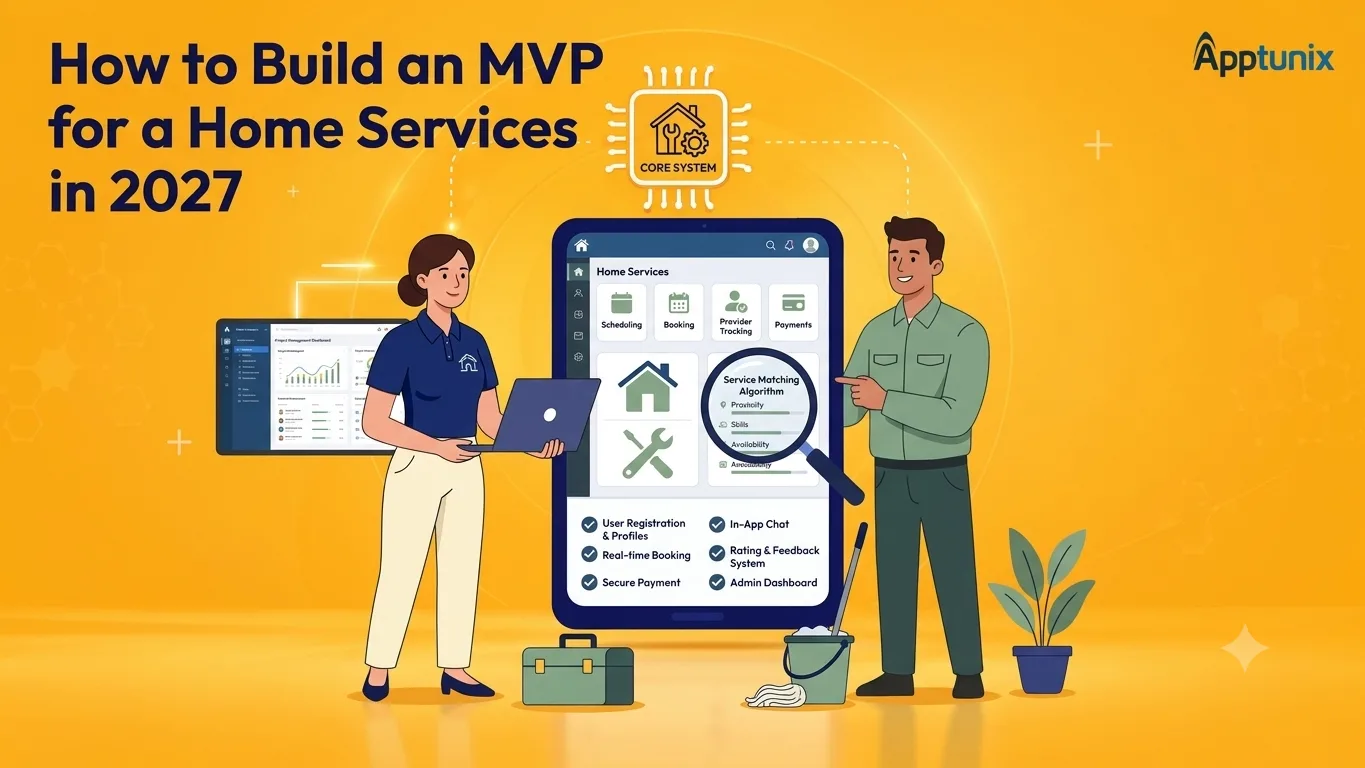
A home service marketplace MVP is an early version of an application that connects customers with service professionals through essential booking and management features.
Instead of launching dozens of service categories, you can begin with a focused offering, such as cleaning, plumbing, or appliance repair. The goal is to test whether customers will book services through your platform and whether providers can fulfil those requests reliably.
For example, if you want to create a home service app like Urban Company, you do not need to replicate its entire ecosystem immediately. Start with a specific market, a manageable provider network, and a straightforward booking experience.
Your MVP should help answer three questions:
- Are customers willing to book services through your platform?
- Can you attract and retain reliable service professionals?
- Can your business deliver services consistently at a sustainable cost?
The answers will help you decide what to improve before expanding the marketplace.
How to Build an MVP for a Home Services Marketplace
A practical MVP development roadmap starts with validating demand and ends with measuring real-world performance. Each stage should support a clear business objective.
1. Choose Your Target Market and Service Category
Begin by identifying the customers you want to serve and the services they need most. Trying to cover every household requirement from day one can complicate provider onboarding and service management.
Research local competitors, customer reviews, and common service complaints. Look for gaps such as unreliable arrival times, unclear pricing, or limited availability.
Next, select one location and a small number of related services. For instance, a startup could launch with home cleaning and deep cleaning in one city before introducing additional categories.
This approach helps you manage supply, understand local demand, and test your pricing assumptions without spreading resources too thin.
2. Define the Features Your MVP Actually Needs
Your first release should support the complete booking journey without unnecessary complexity. Focus on the features customers and service professionals need to complete a job.
You can initially manage some processes manually. For example, an administrator could assign providers when automated job allocation is outside the initial budget.
Advanced loyalty programmes, AI-based recommendations, and complex route optimisation can wait until usage justifies the investment.
The priority is to make booking, service fulfilment, and basic administration work reliably.
3. Map the Booking and Service Delivery Workflow
Before development begins, document how a customer request moves through your marketplace.
A typical workflow looks like this:
- A customer selects a service and enters the required details.
- The platform displays the available booking options and applicable price.
- The customer confirms the booking.
- A provider accepts the request or receives an assignment.
- The service is completed, and payment is processed according to the chosen arrangement.
- The customer can submit feedback or report a problem.
Also define what happens when a provider rejects a request, arrives late, or cancels an appointment. Your MVP does not need sophisticated automation for every exception, but it needs clear processes for handling them.
Mapping these workflows early reduces development rework and helps your team identify missing requirements before coding starts.
4. Select a Suitable Technology Stack
Choose technologies based on your launch requirements, budget, and plans for future expansion. Avoid selecting tools simply because they are popular.
A lean home service marketplace MVP might use:
- Frontend: Flutter or React Native for a cross-platform mobile application.
- Backend: Node.js or a comparable backend framework for business logic and APIs.
- Database: PostgreSQL or another suitable database for users, bookings, and service records.
- Cloud infrastructure: AWS, Google Cloud, or an appropriate managed hosting service.
- Integrations: A payment gateway, notifications, maps, or location services where required.
The final stack depends on your team's expertise and the complexity of your workflows. You may also choose a responsive web application for the first release if your audience does not require dedicated mobile apps immediately.
Keep the architecture modular enough to support future improvements without paying for enterprise-level infrastructure at launch.
5. Design, Develop, and Test the MVP
Once the requirements and technology choices are clear, create wireframes for the main customer, provider, and administrative workflows. Test these designs before investing in detailed interfaces.
During development, prioritise the booking flow, provider availability, booking status updates, and administrative controls. Integrate payment processing if online payments are essential to your business model.
Testing should cover more than whether individual buttons work. Verify booking confirmations, failed payments, cancellations, duplicate requests, and provider availability changes.
You should also check application security, access permissions, and the handling of customer information.
A smaller release still needs dependable functionality. Customers are unlikely to return if their bookings fail or service details are inaccurate.
6. Launch in a Limited Market and Collect Feedback
Start with a controlled launch in your selected service area. Onboard enough qualified professionals to fulfil expected demand, and monitor their availability before promoting the marketplace widely.
Track a few practical indicators:
- Booking completion rate
- Customer acquisition cost
- Provider acceptance rate
- Cancellation and refund rates
- Repeat bookings and customer feedback
These metrics help you identify where the marketplace struggles. A low booking completion rate may indicate confusing pricing, while frequent provider rejections could signal insufficient supply.
Use this feedback to prioritise improvements. Expand to new locations or service categories only when your initial operations become reasonably consistent.
How Much Does Home Services App MVP Development Cost?
A lean home services app MVP can cost approximately $5,000–$8,000, depending on the required features, platforms, integrations, and development scope.
At this budget, you should prioritise a focused booking experience, basic provider management, and essential administrative functionality. The exact deliverables will depend on whether you launch a web application, a cross-platform mobile app, or multiple interfaces.
These figures are indicative planning estimates, not fixed quotations. Actual costs can vary, and the ranges may require adjustments to fit the selected scope.
The estimate may not include ongoing maintenance, third-party subscription fees, payment processing charges, or extensive post-launch changes. Building separate, fully featured customer and provider apps alongside a complex admin dashboard may also require a larger budget.
Before development begins, confirm the deliverables, supported platforms, integrations, and post-launch responsibilities with your development partner.
Common Mistakes to Avoid When Building Your MVP
A focused MVP can still become expensive when early decisions are poorly planned.
Building too many features: Adding every requested feature delays validation. Start with the workflows required to complete a booking.
Expanding before validating demand: Launching across several cities increases provider acquisition and operational complexity. Prove the model in one market first.
Ignoring provider experience: Difficult onboarding or unclear job assignments can reduce provider participation. Make availability and booking updates straightforward.
Treating launch as the finish line: An MVP needs ongoing measurement and refinement. Use booking data and customer feedback to guide the next development phase.
Avoiding these mistakes helps you preserve your budget while learning what your marketplace needs to succeed.
Final Thoughts
Building a home services marketplace does not require launching a full-scale platform from the beginning. A well-planned MVP helps you test demand, understand provider requirements, and identify the features customers value most.
Start with a clearly defined market, essential booking workflows, and a manageable provider network. Then measure performance before committing to additional features or expansion.
With a focused scope, home services app MVP development can fit an estimated $5,000–$8,000 budget. However, the final cost depends on your platform choices and functional requirements.
If you are planning to build your own marketplace, define your first-release requirements before estimating the development effort. A clear roadmap makes it easier to control costs and turn early customer feedback into informed product decisions.