Introduction
Cyber threats have become one of the biggest challenges for modern organizations. Data breaches, ransomware attacks, unauthorized access, and information leaks can impact business operations, customer trust, and financial stability. To overcome these challenges, organizations need a systematic approach to protect sensitive information and manage security risks effectively.
ISO 27001 certification provides a globally recognized framework for establishing an effective Information Security Management System (ISMS). It helps organizations identify security risks, implement suitable controls, and continuously improve their information protection practices. Rather than focusing only on preventing cyber attacks, ISO 27001 helps businesses create a proactive security culture.
Understanding the Importance of ISO 27001 Certification
Every organization manages valuable information, including customer details, financial records, employee data, and confidential business information. Without proper security measures, this information can be exposed to various cyber risks.
ISO 27001 certification enables organizations to develop a structured information security framework that supports confidentiality, integrity, and availability of information. By following ISO 27001 requirements, businesses can identify potential vulnerabilities, evaluate risks, and establish effective security measures.
This certification also helps organizations demonstrate their commitment to protecting information, which improves customer confidence and strengthens business reputation.
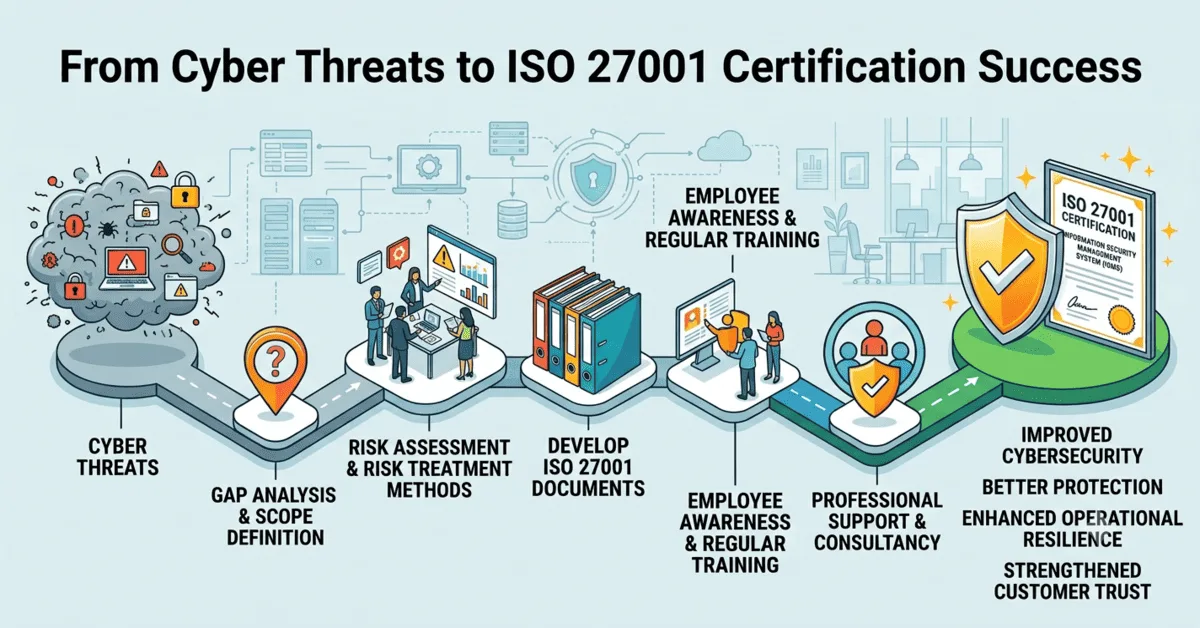
Practical Roadmap from Cyber Threats to ISO 27001 Success
The journey toward ISO 27001 certification begins with understanding the organization’s current information security practices. A gap analysis helps identify areas that require improvement compared with ISO 27001 requirements.
The next step involves defining the scope of the Information Security Management System and conducting a detailed risk assessment. Organizations need to identify critical information assets, analyze possible threats, and determine appropriate risk treatment methods.
Developing ISO 27001 documents is another important stage of implementation. These documents establish clear processes for managing information security activities, including access control, incident management, asset management, risk management, and internal audits.
Employee awareness also plays a vital role in successful ISO 27001 implementation. Even the strongest security systems can fail without proper employee understanding and participation. Regular training helps employees recognize security risks and follow established information security procedures.
How Professional Support Helps Organizations Achieve Certification
Implementing an ISMS requires a clear understanding of standard requirements, documentation practices, and audit expectations. Professional ISO 27001 consultancy helps organizations develop a practical implementation strategy, prepare required documents, manage risks, and improve readiness for the certification audit. A structured approach to ISO 27001 certification enables organizations to build an effective Information Security Management System that supports long-term security improvements.
Organizations working with experienced consultants can also improve their overall security framework and avoid common implementation mistakes. Similar expertise from an experienced ISO 17020 consultant can help organizations understand structured compliance approaches and management system requirements.
Benefits of Achieving ISO 27001 Certification
Organizations that achieve ISO 27001 certification gain several advantages, including improved cybersecurity risk management, better protection against information security risks, and enhanced operational resilience.
It helps businesses establish stronger security controls, improve compliance practices, and demonstrate reliability to customers and stakeholders. The certification also supports continuous improvement by encouraging regular monitoring, reviews, and updates to security processes.
The standard also enables organizations to respond effectively to evolving cyber threats by regularly reviewing security controls, improving processes, and maintaining a resilient information security management system aligned with business objectives.
Conclusion
Moving from cyber threats to ISO 27001 certification success requires a structured roadmap focused on risk identification, effective controls, employee involvement, and continuous improvement. With proper planning, suitable ISO 27001 documents, and expert guidance, organizations can build a stronger information security foundation.
This internationally recognized framework is not only a compliance achievement but also a strategic investment that helps businesses protect valuable information, strengthen customer trust, and prepare for future cybersecurity challenges.