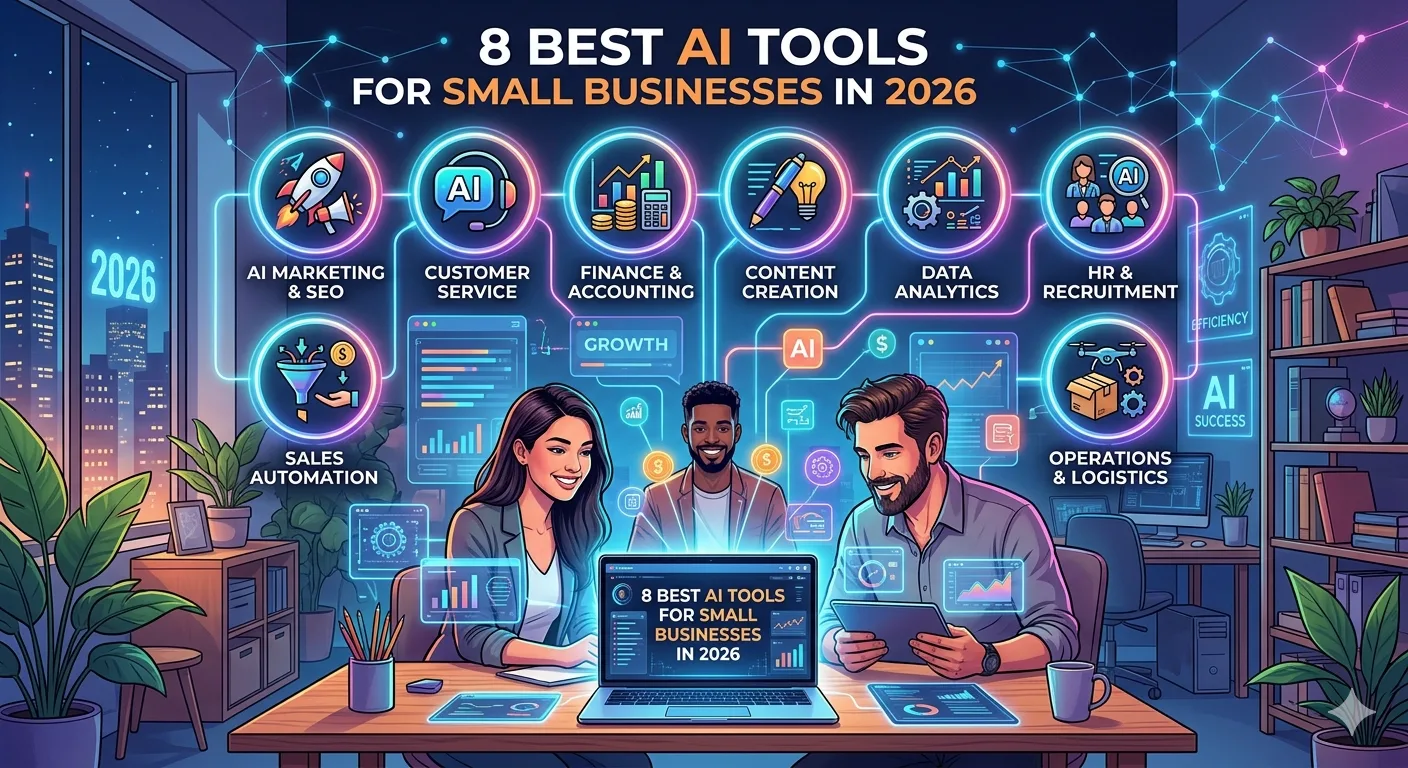
Artificial intelligence is no longer just for large enterprises with huge budgets. In 2026, small businesses are using AI tools to automate repetitive work, improve customer support, increase sales, and save time. From marketing automation to customer communication, AI has become a practical solution for businesses that want to grow faster with fewer resources.
The biggest advantage of AI tools is that they help small teams work more efficiently. Whether you run an eCommerce store, a local service company, or a property agency, the right AI software can improve productivity and customer experience at the same time.
Here are the 8 best AI tools for small businesses in 2026 that are helping companies stay competitive and profitable.
1. Treiva
One of the fastest-growing AI tools for small businesses in 2026 is Treiva. The platform helps businesses automate customer communication across websites, WhatsApp, social media ads, and Google Business messages.
Treiva is especially useful for businesses that receive large numbers of customer inquiries every day. Instead of manually responding to every message, the platform uses AI to provide instant and accurate replies in the company’s own tone and style.
Many businesses are now using Treiva as an advanced AI chatbot for business because it improves customer response times while reducing support workload. Small businesses can engage customers 24/7 without hiring large support teams.
Treiva also supports lead generation, appointment booking, and automated follow-ups, making it a practical AI solution for modern businesses looking to improve conversions and customer satisfaction.
2. ChatGPT
OpenAI developed ChatGPT, which remains one of the most popular AI tools for businesses in 2026. Small businesses use it for content writing, customer service responses, brainstorming marketing ideas, and creating product descriptions.
ChatGPT helps entrepreneurs save time on daily tasks while maintaining professional communication. It can assist with blog writing, social media captions, email campaigns, and customer support scripts.
For businesses with limited marketing teams, ChatGPT acts like a virtual assistant that improves productivity and reduces operational costs.
3. Canva AI
Canva has transformed graphic design for small businesses with its AI-powered features. In 2026, Canva AI helps businesses create social media posts, presentations, videos, advertisements, and branding materials in minutes.
The platform is beginner-friendly, which makes it ideal for startups and small business owners who do not have professional design experience.
AI-powered templates, automatic resizing, text-to-image generation, and brand consistency tools help businesses produce high-quality marketing content quickly and affordably.
4. HubSpot AI
HubSpot continues to be a leading AI-powered CRM platform for small businesses. It combines sales, customer support, email marketing, and automation into one system.
HubSpot AI helps businesses manage leads more efficiently by automating email responses, customer segmentation, and marketing campaigns.
The platform is particularly useful for companies that want stronger customer relationships and better sales tracking without spending hours on manual processes.
Businesses looking to improve communication often combine HubSpot with AI Chat Support solutions to deliver faster responses and improve customer engagement across multiple channels.
5. Grammarly AI
Grammarly is more than just a grammar checker in 2026. Its AI writing assistant helps small businesses create professional emails, reports, blog posts, and social media content.
The tool improves writing clarity, tone, and readability, which is important for businesses communicating with customers online.
For small businesses without dedicated content writers, Grammarly AI helps maintain professional communication while saving editing time.
6. QuickBooks AI
Intuit has integrated advanced AI capabilities into QuickBooks, making accounting easier for small businesses.
QuickBooks AI can automate invoicing, expense tracking, financial reporting, and tax preparation. The software also provides intelligent financial insights that help business owners make better decisions.
Managing finances is often one of the biggest challenges for small businesses, and AI-powered accounting tools simplify the process significantly.
7. Jasper AI
Jasper is widely used by marketers and small businesses for AI-powered content creation. It helps businesses produce blog articles, ad copy, landing page content, and email campaigns much faster than traditional writing methods.
Jasper AI is particularly useful for businesses focused on digital marketing and SEO. It helps create optimized content that attracts more traffic and improves online visibility.
Small businesses that regularly publish content can save both time and marketing costs by using AI writing tools like Jasper.
8. ManyChat
ManyChat is one of the leading chatbot platforms for customer engagement in 2026. Businesses use it to automate conversations on Instagram, Facebook Messenger, and WhatsApp.
As messaging apps continue to dominate customer communication, ManyChat has become a valuable WhatsApp chatbot for business solution for small companies that want to improve lead generation and customer support.
Automated messaging helps businesses respond instantly to customer questions, send promotions, and guide users through sales funnels without manual effort.
Why AI Tools Matter for Small Businesses in 2026
AI tools are no longer optional for small businesses that want to stay competitive. Customers now expect faster responses, personalized experiences, and 24/7 availability.
By using AI-powered platforms, businesses can automate repetitive tasks, reduce operational costs, and improve customer satisfaction. Whether it is content creation, customer communication, financial management, or marketing automation, AI helps businesses operate more efficiently.
For industries like real estate, AI adoption is growing rapidly. Many agencies now use a real estate ai chatbot to qualify leads, answer property inquiries, and schedule appointments automatically. This improves customer experience while helping agents focus on closing deals instead of handling repetitive questions.
Final Thoughts
The best AI tools for small businesses in 2026 are helping companies work smarter, not harder. Platforms like Treiva, ChatGPT, Canva AI, HubSpot AI, Grammarly AI, QuickBooks AI, Jasper AI, and ManyChat are transforming how businesses communicate, market, and grow.
As AI technology continues to evolve, small businesses that adopt these tools early will have a stronger competitive advantage. The key is choosing solutions that match your business goals, improve customer experiences, and save valuable time.