When the blazing heat of the Thar Desert retreats, Jaisalmer undergoes a remarkable transformation. From November through February, the golden sandstone settlement trades its sun-baked stillness for crisp desert breezes, temperate afternoons, and cool, clear nights. Known universally as the Golden City, Jaisalmer presents a captivating mix of medieval architecture and vast desert terrain. For travelers seeking authentic desert heritage, partnering with a knowledgeable tour operator in Rajasthan ensures an itinerary that goes beyond superficial sightseeing, balancing historic exploration with responsible wilderness encounters.
The Timeless Magic of Sonar Qila
Rising above the plains on Trikuta Hill, Jaisalmer Fort—locally celebrated as Sonar Qila or the Golden Fort—stands out as one of the few functional living forts in the world. Built in 1156 AD by the Rajput ruler Rawal Jaisal, this UNESCO World Heritage Site houses roughly a quarter of the old city's population inside its sandstone fortifications.
Walking through its winding alleys during winter mornings reveals a neighborhood waking to daily routines. Local residents sweep thresholds carved from yellow sandstone, priests conduct morning prayers in the intricately sculptured Jain Temples, and artisans set up vibrant textiles, camel-leather goods, and silver jewelry along the ramparts. The architectural layout within the fort showcases centuries of intuitive desert engineering. Narrow passages are oriented to channel cool winds and keep interior spaces comfortable, while the multi-tiered defensive gates illustrate tactical military planning. Experiencing these heritage quarters with local historians provides deep context on how community life and monumental preservation maintain a delicate balance inside the citadel.
Architectural Marvels of the Old Town
Descending from the fort, the surrounding city contains some of Western India’s most elaborate stone residences. Built during the eighteenth and nineteenth centuries by wealthy merchants who made fortunes along the trans-Thar caravan routes, these mansions demonstrate unmatched masonry skills.
- Patwon Ki Haveli: The largest and most elaborate mansion cluster, comprising five individual wings known for finely perforated stone jali screens and painted ceiling panels.
- Salim Singh Ki Haveli: Distinctive for its peacock-shaped upper brackets and an overhanging balcony that appears suspended in mid-air.
- Nathmal Ki Haveli: Constructed by two architect brothers who worked on opposite sides independently, producing a structure that is harmonious yet full of subtle asymmetries.
A carefully planned Rajasthan heritage tour enables travelers to discover how these merchant homes supported cross-continental trade with Central Asia, Persia, and Western ports, establishing Jaisalmer as an indispensable mercantile crossroads.
Into the Thar: Dunes, Camels, and Sunset
Beyond the stone quarters of the town lies the sweeping expanse of the Thar Desert. The sand dunes of Sam and Khuri offer open terrain where sweeping ridges shift with changing winds. Winter is the ideal season to leave the city boundaries behind, as mild daytime temperatures permit comfortable outdoor exploration without harsh desert heat.
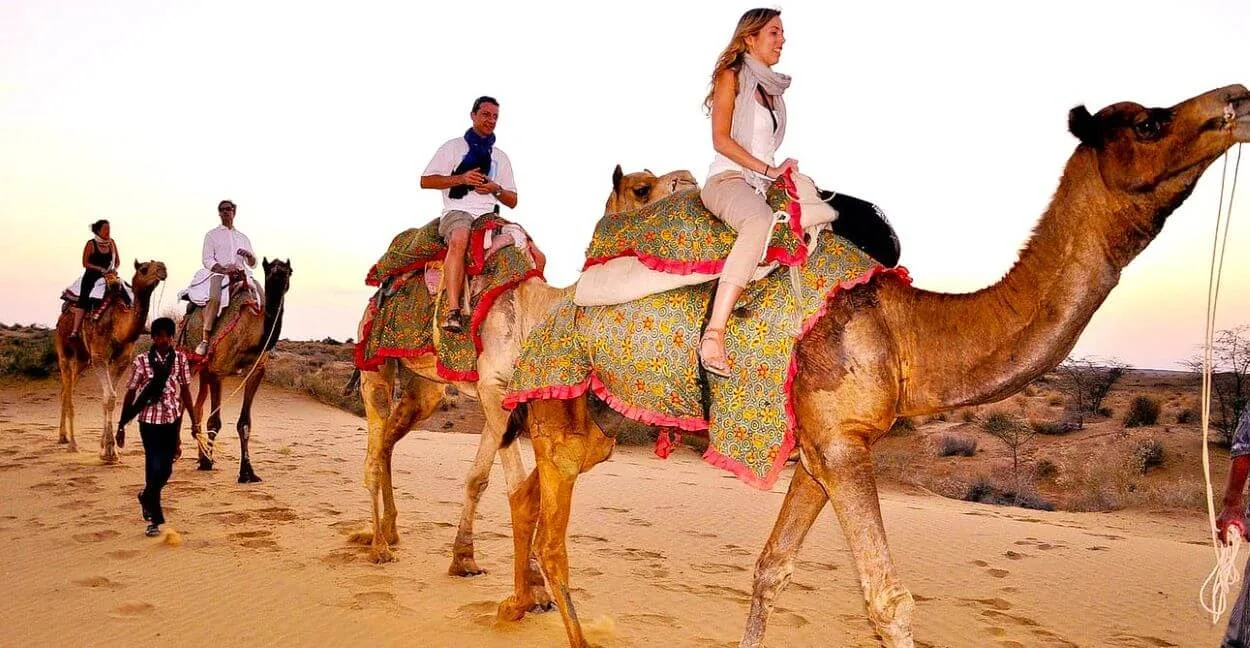
Embarking on a Rajasthan desert adventure tour provides an immersive desert stay that combines traditional camel rides along the ridge crests with modern comfort. As the afternoon wanes, the dunes take on intense amber and ochre tones. Experienced local camel handlers, many of whom have lived in adjacent hamlets for generations, navigate travelers through quiet trails away from crowded hubs, providing firsthand perspectives on desert navigation and folklore.
Starlit Desert Nights and Folk Traditions
As darkness falls, the Thar Desert temperature drops quickly, creating ideal conditions for clear-sky observation. The remote wilderness around Jaisalmer experiences minimal light pollution, revealing striking views of the Milky Way, constellations, and planetary paths directly overhead.
Evenings in desert camps center around open fires, where travelers gather to hear the Manganiyar and Langa musicians. These hereditary communities carry musical lineages spanning centuries, using instruments like the kamancha, khartal, and dholak to tell stories of desert survival, royal devotion, and spiritual longing. Paired with freshly prepared regional meals featuring bajra roti, ker sangri, and dal baati churma, the evening reflects genuine desert hospitality that honors cultural tradition while sustaining community livelihoods.
Planning a Winter Desert Expedition
A well-executed visit to Jaisalmer requires careful timing and preparation to navigate the winter climate smoothly.
- Clothing: Pack layered apparel. Daytime temperatures range comfortably between twenty and twenty-five degrees Celsius, while nighttime desert temperatures can dip toward single digits.
- Transportation: Reach Jaisalmer via direct train connections from major hubs or regional domestic flights into Jaisalmer Airport.
- Local Interaction: Support regional communities directly by purchasing crafts from resident artisans inside the fort and booking local guides accredited by state tourism boards.
Winter in Jaisalmer offers an exceptional window into the living history of the desert. Between the populated bastions of the medieval fort and the quiet sands of the Thar, travelers encounter a landscape shaped by endurance, architectural skill, and timeless cultural identity.