
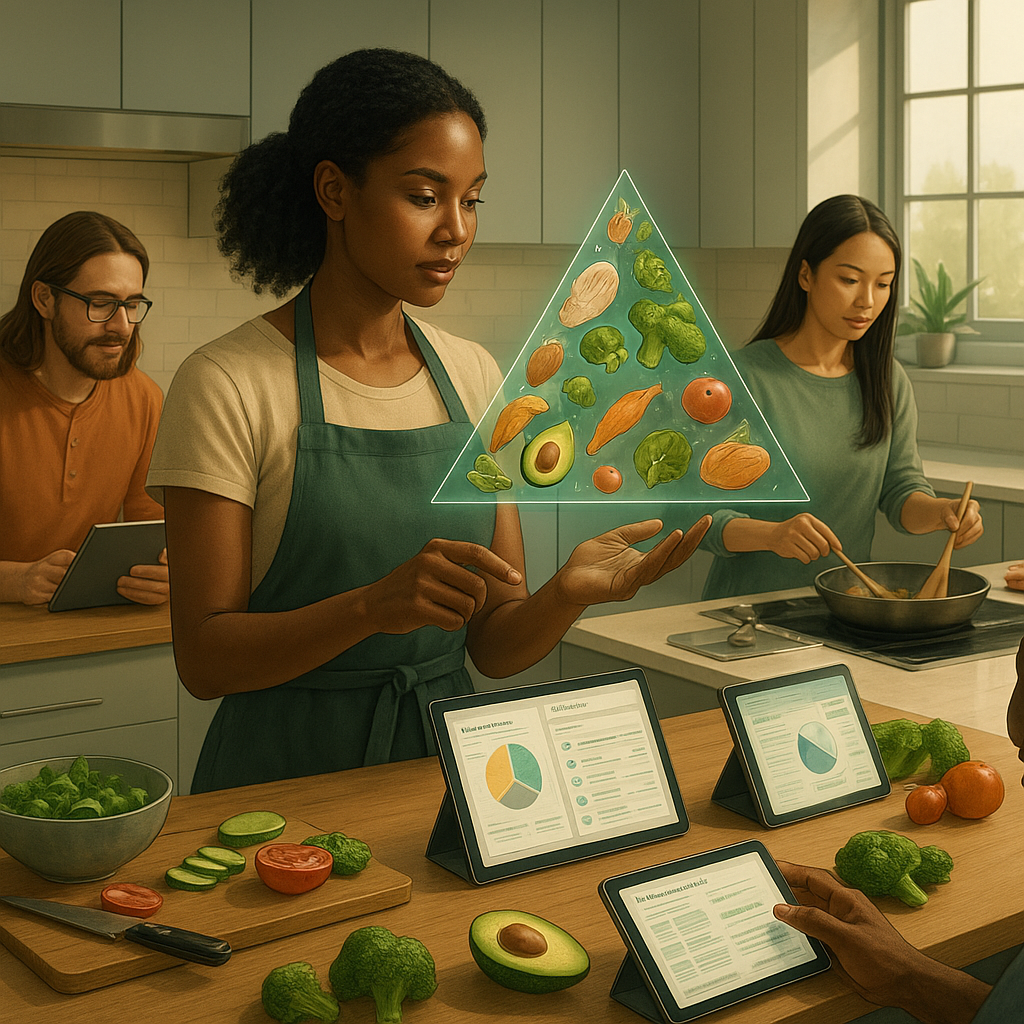
Unlocking the Power of Nutrition: A New Era of Personal Health
Imagine walking into a clinic where, instead of generic dietary advice, you receive a meal plan tailored precisely to your genetic makeup, lifestyle, and microbiome profile. This isn’t a futuristic fantasy—it’s rapidly becoming the standard in nutritional science as of 2026. The global nutrition landscape has shifted dramatically over the past decade, driven by breakthroughs in genomics, metabolomics, and artificial intelligence. Nutrition is no longer about one-size-fits-all recommendations but about precision strategies that respect individual differences.
According to the International Nutrition Society’s 2026 report, over 60% of health-conscious consumers now seek personalized nutrition solutions, a dramatic rise from just 15% in 2017. This surge reflects growing awareness that traditional dietary guidelines often fail to address the nuances of personal metabolic responses and chronic disease risks. Such tailored approaches promise not just improved wellness but also a potential reduction in healthcare costs linked to diet-related illnesses.
“The future of nutrition lies in understanding the unique interplay between our genes, environment, and food,” says Dr. Marissa Bellamy, a leading nutrigenomics researcher. “This personalized approach is revolutionizing how we think about health maintenance and disease prevention.”
Yet, the journey toward widespread personalized nutrition is complex, involving scientific, technological, and societal challenges. To appreciate this transformation, it’s critical to explore the historical context and the scientific advances that catalyzed this shift.
Tracing Nutrition’s Evolution: From Broad Guidelines to Individualized Care
The concept of nutrition as a science dates back to the early 20th century when vitamins and minerals were first isolated and linked to deficiency diseases. For decades, government agencies worldwide issued dietary guidelines focused on populations, emphasizing macronutrient ratios and recommended daily allowances for vitamins and minerals. These guidelines were invaluable in combating malnutrition and communicable diseases but often overlooked individual variability.
By the late 20th century, epidemiological studies highlighted the complex relationship between diet and chronic diseases such as obesity, diabetes, and cardiovascular disease. Despite the abundance of data, nutrition advice remained largely generalized, anchored in population averages. This approach often led to inconsistent results at the individual level, frustrating both practitioners and patients.
It was not until the genomics revolution of the 2000s that nutrition science began to embrace personalization. Mapping the human genome opened new pathways for understanding how genetic variants influence nutrient metabolism, absorption, and disease susceptibility. Parallel advances in microbiome research revealed how gut bacteria modulate nutritional effects, adding another layer of complexity.
In the 2010s and early 2020s, technological innovations in high-throughput sequencing, wearable health devices, and machine learning accelerated the integration of multi-omic data into nutrition research. The transition from observational studies to mechanistic insights empowered scientists to move beyond correlation to causation, enabling the design of targeted nutritional interventions.
“The maturation of systems biology combined with AI analytics has turned nutrition science from art to precision engineering,” notes Prof. Daniel Kwan, author of Precision Nutrition and Health (2025).
This evolution set the stage for the transformative breakthroughs we witness in 2026, where personalized nutrition is becoming an accessible reality for millions worldwide.
Data-Driven Nutrition: Insights, Comparisons, and Impact
The core of personalized nutrition lies in understanding individual metabolic responses to foods, which vary widely due to genetic, epigenetic, and environmental factors. Recent large-scale studies have quantified this variability with unprecedented precision.
A landmark 2025 meta-analysis published in the Journal of Nutritional Science analyzed over 100,000 participants from diverse ethnic backgrounds, revealing that genetic factors account for approximately 40% of interindividual variation in nutrient metabolism. For example, polymorphisms in the MTHFR gene impact folate metabolism, influencing cardiovascular risk, while variations in the FTO gene relate to obesity susceptibility in response to dietary fat intake.
Moreover, the gut microbiome’s role has been illuminated by the American Gut Project’s 2026 update, which correlated specific bacterial profiles with differential glycemic responses to identical meals. This discovery challenges longstanding assumptions about universal carbohydrate recommendations.
These insights have practical implications for both clinical nutrition and wellness industry strategies:
- Optimized Macronutrient Ratios: Personalized plans adjust protein, fat, and carbohydrate intake based on individual metabolic pathways, improving energy efficiency and reducing inflammation.
- Micronutrient Tailoring: Genetic screening identifies nutrient deficiencies or toxicities risk, enabling precise supplementation.
- Microbiome Modulation: Diets are designed to nurture beneficial bacteria, enhancing digestion and immunity.
- Behavioral Adaptation: AI-driven coaching provides personalized feedback to improve adherence and lifestyle integration.
These approaches contrast sharply with traditional guidelines that recommend broad macronutrient ranges and generic food groups. The personalized model represents a paradigm shift, supported by robust data and clinical outcomes.
“Our data confirm that a cookie-cutter diet is ineffective for many,” states Dr. Eleanor Zhang, lead analyst at the Nutritional Metabolomics Consortium. “Personalized nutrition reduces chronic disease markers by up to 30% compared to standard advice.”
Such evidence is fueling investments in precision nutrition startups, with global funding reaching $3.5 billion in 2026, according to industry reports.
2026 Breakthroughs: Technology and Innovation Driving Nutrition Forward
This year marks a watershed for nutrition innovation. Several technological advancements have converged to accelerate personalized nutrition adoption.
- Next-Gen Nutrigenomic Testing: Companies now offer whole-genome sequencing combined with real-time metabolite monitoring through minimally invasive wearable sensors. These devices provide continuous feedback on nutrient status and metabolic flux.
- AI-Powered Dietary Platforms: Advanced algorithms integrate multi-omic data with lifestyle inputs to generate dynamic meal plans and behavioral nudges, helping users optimize nutrition in real time.
- Microbiome Therapeutics: Novel prebiotic and probiotic formulations tailored to individual gut profiles are being prescribed clinically to manage metabolic disorders and enhance immune function.
Healthcare systems are also integrating personalized nutrition into preventive care. For instance, the Department of Health in the UK launched the NutriMap initiative in 2025, providing personalized dietary guidance through the National Health Service (NHS) based on genetic and microbiome data.
Meanwhile, nutritional psychiatry has gained traction, with targeted diets showing promise in managing depression and anxiety by modulating neuroinflammation and neurotransmitter synthesis. This interdisciplinary approach exemplifies the expanding scope of nutrition science.
Despite these advances, challenges remain. Data privacy concerns, regulatory frameworks for personalized supplements, and equitable access are ongoing issues requiring coordinated policy responses.
For those interested in detailed strategies on integrating personalized nutrition into daily life, TheOmniBuzz’s Harnessing Precision: Advanced Strategies Revolutionizing Nutrition Today offers comprehensive guidance.
Expert Perspectives: Shaping the Future of Nutrition Practice and Industry
Leading nutritionists and healthcare innovators emphasize that personalized nutrition is not a luxury but a necessity to address the global burden of chronic diseases, which account for over 70% of deaths worldwide, as per the World Health Organization’s 2026 data.
Dr. Linda Moreno, Chief Medical Officer at NutriGen Health, highlights the industry's evolving role:
“Nutrition professionals must embrace new tools and interdisciplinary collaboration to deliver truly personalized care. Technology is an enabler but human expertise remains irreplaceable.”
In the consumer space, personalized nutrition services are reshaping market dynamics. Companies like NutrifyAI and BioMeal have reported user retention rates exceeding 85%, driven by customized meal delivery and coaching. This trend signals a shift from reactive diet culture to proactive health management.
Health insurers are also adapting, with several offering premium discounts for clients who engage in personalized nutrition programs that demonstrably improve biomarkers. This integration of nutrition data into insurance underwriting represents a novel incentive structure.
Academia is responding by developing specialized curricula for nutritionists, incorporating genomics, data science, and behavioral psychology. The launch of the International Consortium for Personalized Nutrition Education (ICPN) in 2026 exemplifies this commitment.
For readers seeking expert tips to master nutrition fundamentals in this new landscape, see our detailed guide Unlocking Optimal Health: Expert Tips for Mastering Nutrition.
Looking Ahead: What to Watch in Personalized Nutrition’s Next Frontier
As personalized nutrition matures, several trends warrant close attention:
- Integration with Digital Health Ecosystems: The convergence of nutrition data with electronic health records and wearable health monitors will enable seamless, holistic health management.
- Expansion of Nutritional Epigenetics: Understanding how diet influences gene expression across the lifespan will open new preventive strategies.
- Global Equity Initiatives: Efforts to democratize access to personalized nutrition, particularly in underserved populations, will shape future policy and funding priorities.
- Sustainability Focus: Aligning personalized diets with environmental impact considerations will become increasingly important amid climate challenges.
- Regulatory Evolution: Governments and agencies will refine guidelines for data use, supplement safety, and marketing claims in the personalized nutrition sector.
Consumers and practitioners alike should embrace these developments with critical engagement, balancing innovation with evidence-based caution.
“Personalized nutrition is a journey, not a destination. Staying informed and adaptable is key,” advises Dr. Bellamy.
For those beginning to explore personalized nutrition, our article Starting Strong: Essential Steps to Embrace Nutrition with Confidence provides actionable first steps to navigate this evolving field.
Ultimately, the nutrition revolution of 2026 offers an unprecedented opportunity to redefine health outcomes globally. With continued research, technological refinement, and inclusive policies, personalized nutrition promises to transform how we nourish ourselves for decades to come.