
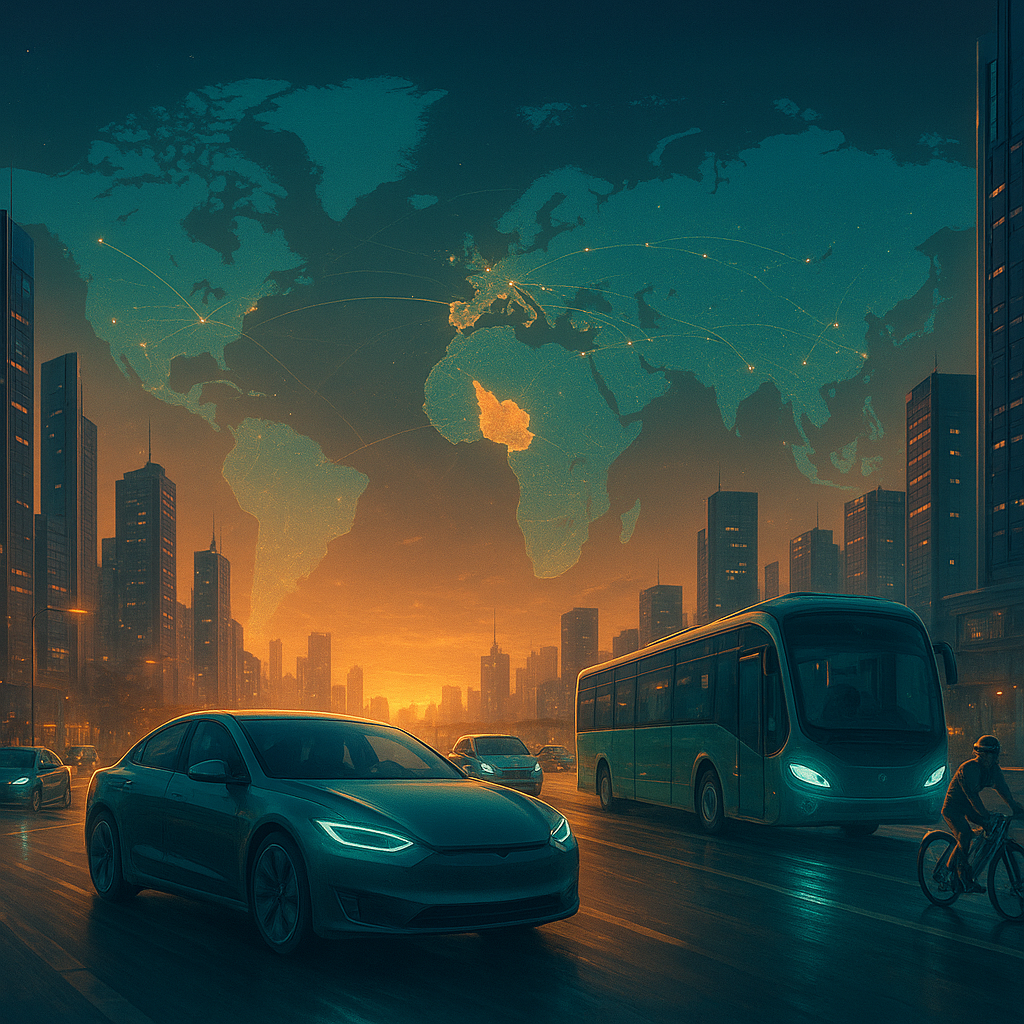
From Conflict to Catalyst: The Iran War's Unexpected Role in EV Demand
In early 2026, a seismic shift rippled through the global automotive industry. The ongoing Iran War, initially perceived primarily as a geopolitical crisis, has rapidly evolved into a pivotal moment for electric vehicles (EVs). The conflict's disruption of oil supplies and the ensuing volatility in fuel prices have driven governments, consumers, and manufacturers to accelerate their shift toward electrification at an unprecedented pace.
Consider this: global oil prices surged by nearly 40% between January and August 2026, according to data compiled by the International Energy Agency (IEA). This spike directly correlates to the Iran War’s escalation and the resulting uncertainty in Middle Eastern oil exports. As traditional fossil fuel costs soared, millions of consumers worldwide reconsidered their transportation choices, sparking a wave of interest in EVs that transcends previous market trends.
Meanwhile, EV manufacturers reported record-breaking order volumes. Tesla's global deliveries increased by 65% in Q3 2026 compared to the same period in 2025, while Chinese EV giant BYD saw a 72% increase in sales, a testament to the geopolitical conflict’s tangible influence on consumer behavior. This surge is not a mere temporary reaction but an indicator of a structural pivot in the automotive sector.
“The Iran War has fundamentally reshaped the global energy landscape, accelerating the transition to electric vehicles far beyond prior projections,” stated Dr. Helena McCarthy, senior analyst at the Global Energy Institute.
To understand the depth and breadth of this transformation, it is essential to trace the historical context leading to today’s dynamics and assess the multifaceted impact of the Iran War on the EV ecosystem.
Historical Context: How Global Tensions Have Long Influenced Energy Choices
The interplay between geopolitical instability and energy policy is hardly new. Throughout the 20th and 21st centuries, conflicts in the Middle East have repeatedly triggered energy crises that reverberated across global markets. The oil embargo of the 1970s, for instance, was a seminal moment that spurred early interest in alternative fuels and energy conservation.
Despite these early signals, the automotive world remained largely tethered to internal combustion engines (ICE) fueled by petroleum for decades. Major barriers such as battery technology limitations, high EV costs, and inadequate charging infrastructure delayed widespread adoption. However, the 2010s and early 2020s saw a gradual but steady shift, fueled by climate change awareness, government incentives, and technological breakthroughs.
The Iran War of 2026, however, has injected a new urgency into the equation. Unlike previous conflicts, this war has caused a more sustained disruption in oil supply chains. Sanctions, blockades, and targeted attacks on oil infrastructure have reduced Iran’s export capacity significantly, exacerbating global supply shortages. This has led to:
- Increased fuel prices globally, especially in oil-importing nations
- Heightened consumer anxiety about fuel availability and cost stability
- Accelerated government strategies to reduce fossil fuel dependence
- Stimulated investment in alternative energy and EV sectors
These factors combined have created a unique market environment where electric vehicles are not just environmentally preferred but economically imperative.
Analyzing the Data: How the Iran War Has Shifted Market Dynamics
Quantifying the Iran War’s impact on the electric vehicle market requires a multifaceted approach. First, fuel price volatility has been a primary driver. According to the Energy Information Administration (EIA), the average global gasoline price jumped from $1.05 per liter in December 2025 to $1.47 per liter by September 2026—a 40% increase directly linked to Iran-related supply constraints.
This surge has substantially altered consumer cost calculations. For many, the total cost of ownership (TCO) of ICE vehicles has become less favorable compared to EVs, especially as electricity prices in many countries remain stable or even decline due to expanded renewable energy use. For example, in Germany, where electricity grids have been rapidly greened, the cost per kilometer for EVs is now approximately 30% lower than for gasoline cars.
Furthermore, government policies have intensified. The European Union, spurred by energy security concerns, announced in mid-2026 an accelerated phase-out of ICE vehicles by 2030, five years earlier than planned. Meanwhile, the United States and China increased subsidies for EV purchases and battery production.
On the manufacturing side, companies have responded by ramping up production capacity and innovating supply chain resilience. The global lithium-ion battery production capacity expanded by 35% in the first half of 2026, with investments pouring into alternative battery chemistries to reduce reliance on cobalt and nickel—minerals vulnerable to geopolitical supply risks.
“We are witnessing a supply chain revolution in response to geopolitical pressures. Battery technology and raw material sourcing strategies are being redesigned to withstand future shocks,” explained Dr. Raj Patel, CTO at VoltEdge Technologies.
Consumer sentiment data also reveals shifting preferences. A 2026 survey by the International Automotive Federation found that 68% of global consumers now consider electric vehicles as their next car choice, up from 45% in 2024. This surge reflects a growing recognition that EVs offer both environmental benefits and protection against fuel market volatility.
Current Developments in 2026: Industry and Policy Responses
As the Iran War continues to influence energy markets, automakers and governments have accelerated initiatives to capitalize on the EV momentum. Tesla's launch of its new $25,000 model in late 2025, combined with expanded manufacturing facilities in Texas and Shanghai, has positioned the company to meet soaring demand. Meanwhile, legacy automakers such as Volkswagen and Ford have unveiled aggressive electrification roadmaps, committing to fully electric lineups within the next decade.
Infrastructure is also evolving rapidly. Public and private investments in charging networks have surged. In the U.S., the Biden administration's $15 billion EV infrastructure program has deployed over 150,000 new fast chargers nationwide by October 2026. Europe’s Green Deal funding has similarly expanded charging station density, especially in urban and highway corridors.
Energy sector developments complement this shift. The expansion of renewable energy capacity—solar, wind, and green hydrogen—is critical to ensuring that EV adoption translates into genuine emissions reductions. Notably, Saudi Arabia and the UAE have announced cooperative projects with European firms to build battery-grade lithium extraction and processing plants, aiming to diversify raw material sources away from conflict-affected regions.
International collaboration has also intensified. The International Energy Agency's Global EV Outlook 2026 highlights a new multilateral framework focused on standardizing EV charging protocols and battery recycling, designed to reduce costs and environmental impacts while securing supply chains.
- EV sales in 2026 are projected to reach 15 million units globally, up 50% from 2025
- Battery recycling capacity is expected to triple by 2028, reducing dependence on virgin minerals
- Several nations, including Japan and South Korea, have introduced mandates requiring automakers to source at least 40% of battery materials from conflict-free zones by 2027
“The Iran War has been a grim reminder of the vulnerabilities in our energy dependencies. The response we are seeing across the automotive and energy sectors is both swift and transformative,” said Dr. Emily Chen, Director of the International Renewable Energy Agency.
Expert Perspectives and Industry Impact
Industry experts largely agree that the Iran War has catalyzed a structural shift in global transportation energy. Dr. Marcus Lee, a senior automotive strategist at GreenDrive Consulting, emphasizes that while the conflict is tragic, it has accelerated trends toward sustainability and energy independence that were already underway.
“The geopolitical shock has compressed what would have been a decade-long transition into a few years. Companies that invested early in EVs and battery technology are now reaping the benefits, while laggards face existential risks,” Lee explained.
Automakers have had to innovate not only in technology but also in supply chain management. The war exposed vulnerabilities in lithium, cobalt, and nickel sourcing, prompting a scramble to diversify suppliers, develop battery chemistries with fewer critical minerals, and invest in domestic mining and recycling capabilities.
Financial markets have responded accordingly. EV-related stocks, battery producers, and renewable energy firms have seen sustained price gains through 2026, reflecting investor confidence in the sector’s growth. Conversely, traditional oil and gas companies have experienced increased volatility, underscoring the strategic risks of fossil fuel dependency.
Moreover, consumer attitudes have evolved. The increased awareness of geopolitical risks has made EVs more appealing as a hedge against fuel price shocks. Urban planners and policymakers are also embracing EVs as part of broader energy security and climate resilience strategies.
Looking Forward: What to Watch in the EV Revolution
As 2026 draws to a close, several critical trends and uncertainties will shape the trajectory of the EV surge driven by the Iran War. First, the conflict’s duration and outcomes remain unpredictable. A prolonged war could further destabilize oil markets, spurring even greater EV adoption. Alternatively, a resolution might moderate fuel price pressures, potentially slowing momentum.
Secondly, technology innovation will continue to be a decisive factor. Breakthroughs in solid-state batteries, hydrogen fuel cells, and grid integration could redefine EV performance and affordability. Industry watchers should monitor announcements from major players such as Panasonic, CATL, and QuantumScape.
Third, infrastructure development will be pivotal. The scale and speed of public charging network expansions, grid upgrades, and renewable energy integration will determine whether EV growth can be sustained without creating new bottlenecks.
Lastly, policy environments will remain key. Governments worldwide are under pressure to balance energy security, climate goals, and economic considerations. Emerging regulations on battery sourcing, vehicle emissions, and recycling will likely shape market dynamics in the coming years.
- Expansion of domestic raw material mining and processing facilities to reduce geopolitical risks
- Increased investment in second-life battery applications and recycling technologies
- Growing integration of EVs with smart grids and vehicle-to-grid (V2G) technologies
- Potential new alliances among automakers, energy companies, and governments to secure supply chains and infrastructure
To track these developments, readers may find valuable insights in related TheOmniBuzz coverage, such as How the Iran War Ignited a Global Shift Toward Electric Vehicles and How the Iran War Is Steering the Global Electric Vehicle Revolution.
The Iran War’s role as a catalyst for electric vehicle adoption underscores a broader truth: geopolitical events can rapidly reshape technological and economic landscapes. For the automotive industry, 2026 marks a watershed year where conflict has accelerated a global drive toward cleaner, more resilient transportation.