
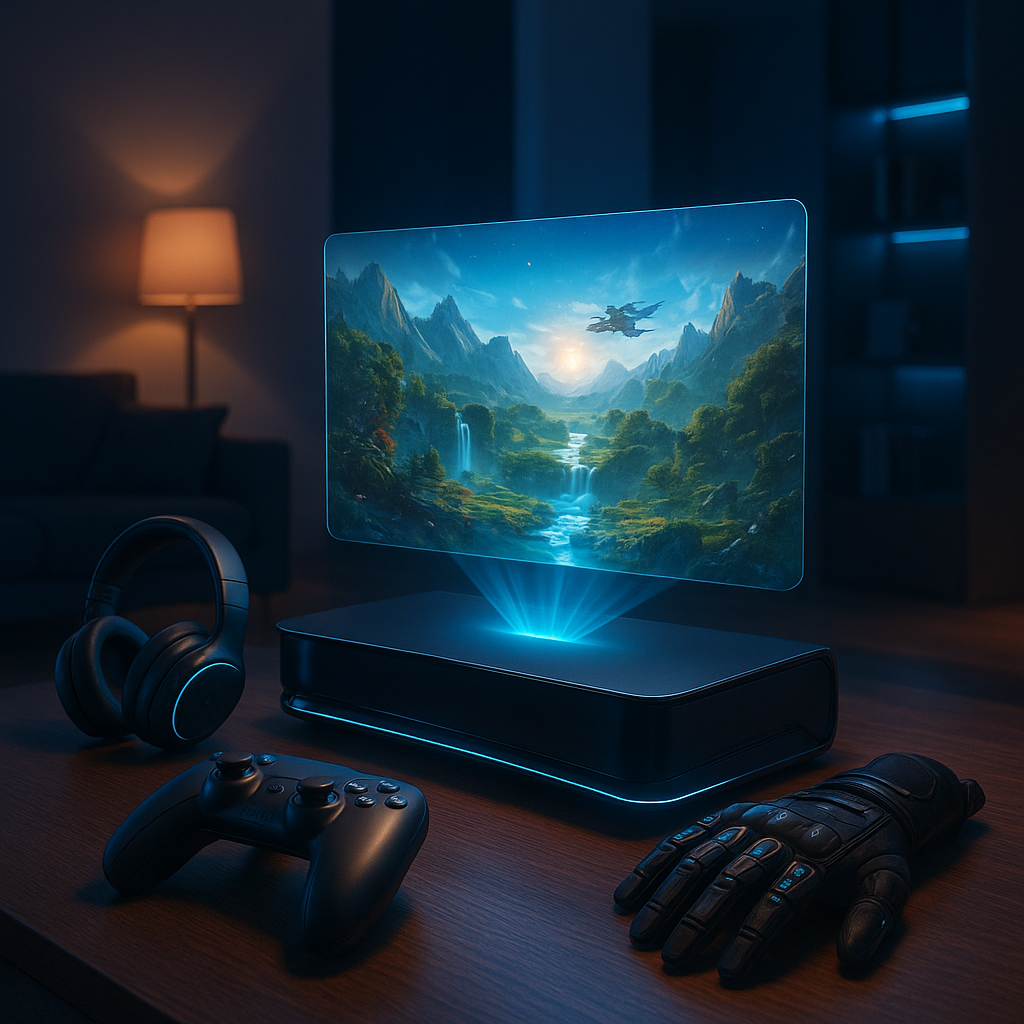
Hook: A Transformative June for Gaming Hardware
June 2026 has marked a pivotal moment in gaming technology, with a surge of innovations reshaping the hardware landscape. Major manufacturers unveiled components that not only push raw power boundaries but also emphasize sustainability, accessibility, and immersive experiences. At the heart of these shifts is the rising appetite for ultra-realistic graphics, seamless cloud integration, and AI-powered performance optimization. Consider the recent launch of the "Vortex GPU Series X" by TitanTech, boasting a 60% increase in rendering speed over its predecessor, alongside an energy consumption reduction of 35%. This exemplifies the dual commitment to power and eco-efficiency that defines this period. These advancements are not just incremental upgrades; they signal a fundamental rethinking of how gaming machines operate and interact with users.
The excitement is palpable among enthusiasts and developers alike. Global gaming hardware sales in the first half of 2026 surged by 18% compared to 2025, according to industry reports. This growth is driven by a combination of next-gen console releases, breakthrough PC components, and a renewed focus on VR and AR peripherals. Even as the market matures, innovation continues unabated, indicating that 2026 could be remembered as a watershed year in gaming hardware evolution.
Background: The Path to 2026's Hardware Revolution
The current breakthroughs have deep roots stretching back to the early 2020s, when chip fabrication technologies reached unprecedented 3nm and sub-3nm nodes. Companies like TitanTech, NovaChip, and QuantumCircuits raced to leverage these processes, enabling denser transistor packing and significant power efficiency gains. Concurrently, the rise of AI-assisted hardware design and optimization helped accelerate development cycles.
Another key trend leading up to 2026 was the increasing integration of cloud computing with local hardware. Hybrid architectures emerged, where local GPUs handle latency-sensitive tasks while cloud servers manage complex AI computations or physics simulations. This distributed approach has unlocked new performance tiers without necessitating prohibitively expensive consumer rigs.
Meanwhile, sustainability concerns began influencing hardware design philosophies. The gaming industry, historically criticized for its energy consumption, saw a push from both consumers and regulators toward greener solutions. This led to innovations such as modular components for easier upgrades, recyclable materials, and power management algorithms tailored to gaming workloads. These contextual factors set the stage for the remarkable developments witnessed this June.
Core Analysis: Key Innovations and Market Impact
The June 2026 releases center around three main pillars: performance, immersion, and sustainability. The latest graphics cards, CPUs, and peripherals demonstrate these themes vividly.
Performance Breakthroughs
- Vortex GPU Series X: Utilizing quantum tunneling transistors, this GPU achieves a 60% boost in ray-tracing throughput while reducing power draw by over a third.
- NovaChip X9 CPU: Incorporating a new silicon photonics interconnect, it delivers 25% faster multi-thread performance and drastically lowers thermal output.
- Adaptive Memory Modules: These DDR6 modules dynamically adjust speeds and voltages based on game demands, optimizing energy use without sacrificing frame rates.
The financial impact is substantial. TitanTech reported a 23% revenue increase in Q2 2026, citing strong sales of the Vortex GPU Series X. Market analysts expect these innovations to pressure competitors to accelerate their own release cycles, potentially compressing typical hardware generation lifespans from three years to two or less.
Immersive Experience Enhancements
Peripheral manufacturers are also redefining immersion. The "SpectraSense VR Headset" launched this June offers unparalleled 8K resolution per eye, integrated eye-tracking, and haptic feedback that simulates texture and temperature changes. Paired with TitanTech’s GPU, it enables truly photorealistic virtual environments.
Furthermore, the "SonicWave 5D Audio System," debuting alongside the headset, delivers spatial sound with machine-learning-driven environmental adaptation, enhancing player situational awareness in competitive and narrative-driven games.
Sustainability and Accessibility
Green initiatives are evident across product lines. The new hardware includes components certified by the Global Electronics Sustainability Alliance (GESA), a standard now gaining traction in gaming. Modular designs facilitate repair and upgrades, extending device lifespans and reducing e-waste.
Accessibility has improved too. For example, the "Adaptive Controller Pro" supports a wider range of physical inputs and is compatible with AI-powered customization software that tailors controls to individual abilities, advancing inclusivity for disabled gamers.
"Our goal was to create hardware that not only elevates gaming performance but also respects the planet and embraces all players," said Mira Takahashi, TitanTech’s Chief Hardware Architect.
Current Developments: What June 2026 Brings to Gamers
This month’s product launches coincide with increased collaboration between hardware companies and game developers. Studios are optimizing titles to exploit the new hardware capabilities fully. For instance, the upcoming blockbuster RPG "Eclipse Horizon" integrates real-time ray tracing and adaptive AI NPCs that respond uniquely to player behavior, made possible by the Vortex GPU Series X and NovaChip X9 CPU.
Cloud streaming services have also upgraded their server farms with these new components, enhancing game streaming quality and reducing latency worldwide. This has made high-fidelity gaming accessible to users with modest local setups, broadening the player base.
Another notable trend is the rise in customizable hardware bundles. Consumers can now select combinations of GPUs, CPUs, VR kits, and audio systems tailored to their preferences and budgets, purchased directly from manufacturers or authorized resellers.
- Increased focus on hybrid hardware-cloud ecosystems
- Expansion of AI-driven optimization tools for gamers
- Proliferation of eco-friendly certifications and repairability mandates
According to industry analyst Jonas Evers, "June 2026 represents a confluence of technology, ethics, and user-centric design in gaming hardware, setting a new standard for the sector."
Expert Perspectives and Industry Impact
Experts emphasize that 2026’s hardware advances are not isolated improvements but part of a holistic shift toward sustainable innovation and inclusivity. Dr. Lila Morgan, a leading game hardware researcher, notes: "The integration of quantum transistor technology and silicon photonics is a milestone that will ripple through the entire computing industry, not just gaming."
Industry-wide, these developments have accelerated competition. Smaller companies are investing in niche segments such as ultra-portable gaming rigs and specialized VR peripherals, while giants focus on flagship products and cloud partnerships.
From an economic standpoint, the hardware upgrades have invigorated the global supply chain, boosting component manufacturing and creating new jobs in high-tech sectors. However, challenges remain, including semiconductor resource constraints and geopolitical tensions affecting production logistics.
TheOmniBuzz’s coverage of "How Gaming Hardware in 2026 Is Shaping the Next Era of Immersive Play" provides detailed insights into these trends, underscoring the significance of this moment in gaming evolution.
What to Watch: Future Outlook and Takeaways
Looking ahead, several trajectories are emerging that will define gaming hardware beyond 2026:
- Continued miniaturization: Expect even smaller, more energy-efficient components that maintain or increase performance.
- AI-driven customization: Hardware will increasingly adapt in real-time to player preferences and physiological feedback.
- Greater cloud dependency: Hybrid models will become the norm, blending local power with cloud scalability.
- Enhanced sustainability standards: Stricter regulations and consumer demand will push manufacturers toward zero-waste production.
- Expanding accessibility: Inclusive design will be central, with more adaptive peripherals and interfaces.
Gamers and industry observers should monitor how these trends influence game development, user experience, and market dynamics. The rapid pace of innovation implies that staying informed is essential for both consumers and professionals.
For further context on how these hardware trends are reshaping player experience and market strategies, see our in-depth article Why Cutting-Edge Gaming Hardware Is Redefining Player Experience Today.
Moreover, the evolving hardware landscape has parallels in other tech sectors, including green technology innovations, as discussed in June 2026: Green Tech's Transformative Momentum and What It Means for Our Planet.