
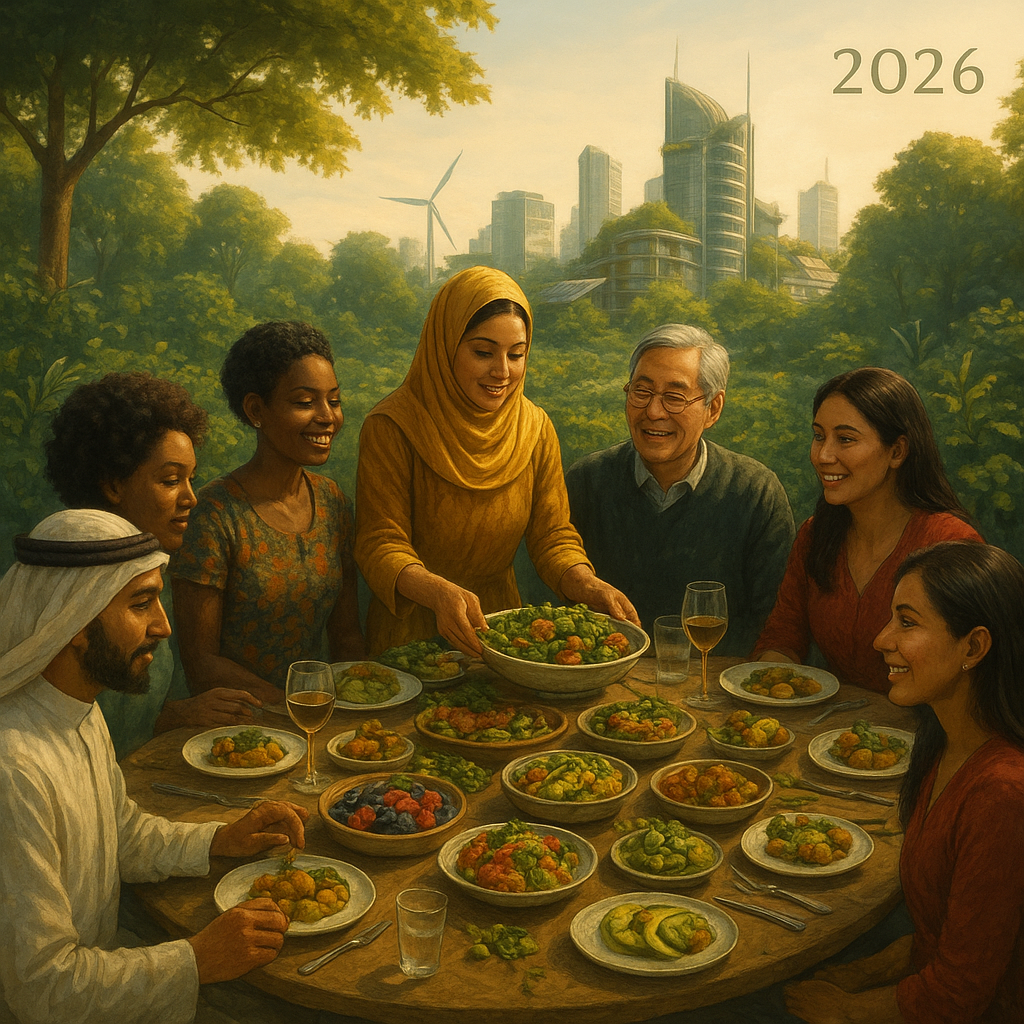
A Bite of Reality: How Our Plates Reflect Global Challenges
Imagine a bustling street market in Mexico City, where vibrant stalls overflow with fresh produce, artisan cheeses, and sizzling meats. Nearby, a tech-driven urban farm in Singapore uses AI to optimize microgreens production, feeding thousands sustainably. These scenes, seemingly worlds apart, illustrate a profound truth about food in 2026: it is no longer just sustenance but a mirror reflecting health, culture, technology, and environmental urgency. In a year marked by climate extremes and shifting consumer values, the simple act of choosing what to eat has become a potent statement with ripple effects across societies and ecosystems.
Global food systems now account for nearly 40% of total greenhouse gas emissions, according to recent estimates by the United Nations Food and Agriculture Organization. Meanwhile, chronic diseases linked to diet, such as diabetes and heart conditions, continue to rise worldwide, pressuring healthcare systems. Against this backdrop, food has emerged as a nexus where personal well-being intersects with planetary health and cultural identity.
“Food is more than nutrients; it’s a story of heritage, innovation, and responsibility,” says Dr. Elena Marquez, a leading food systems analyst. “Our choices today determine the legacy we leave for tomorrow.”
Tracing the Roots: How Food Systems Evolved to This Crossroads
The last century witnessed dramatic shifts in how food is produced, distributed, and consumed. The Green Revolution of the mid-20th century introduced high-yield crops and mechanized farming, dramatically boosting global food supply but also accelerating environmental degradation and monoculture practices. Industrialized food systems prioritized efficiency and scale over diversity and resilience. By the early 2000s, the consequences became undeniable: soil depletion, water scarcity, biodiversity loss, and the spread of ultra-processed foods contributing to public health crises.
Simultaneously, globalization transformed food culture. International cuisines became more accessible, but homogenization threatened local culinary traditions. The rise of fast food chains and convenience-oriented lifestyles shifted diets toward calorie-dense, nutrient-poor options. However, consumer awareness gradually grew, catalyzing a wave of movements advocating for organic farming, fair trade, and sustainable fisheries.
Technological advances such as vertical farming and lab-grown meat began as niche innovations in the 2010s. By the 2020s, they matured into viable alternatives addressing meat consumption’s environmental footprint and urban food deserts. The COVID-19 pandemic further exposed food supply vulnerabilities, accelerating investments in automation, blockchain traceability, and localized food networks.
“The food system's trajectory is a complex dance between tradition and innovation, crises and solutions,” notes food historian Dr. Rajiv Nair.
Analyzing the Plate: Data and Trends Shaping 2026 Food Choices
Data from the Global Food Institute underscores several prevailing trends redefining what people eat and why. Plant-based alternatives now represent nearly 15% of global protein consumption, tripling over the past five years. This shift is driven by a combination of environmental concerns, animal welfare considerations, and health benefits. Meanwhile, regenerative agriculture practices, which emphasize soil health and biodiversity, have expanded to cover over 20 million hectares worldwide as farmers respond to both market demand and climate adaptation imperatives.
Consumer purchasing patterns reveal a rising preference for transparency and provenance. According to NielsenIQ, 62% of shoppers in North America and Europe actively seek certifications such as organic, fair trade, or carbon-neutral labels. Digital food passports and blockchain technologies provide verifiable sourcing data, enhancing trust and accountability.
Urbanization continues to influence diets. Approximately 70% of the global population now lives in cities, where access to fresh, affordable food remains a challenge. To bridge this gap, urban agriculture, including rooftop gardens, hydroponics, and community-supported agriculture (CSA), has become more mainstream. These systems reduce food miles and foster community engagement.
- Key quantitative highlights:
- Global food waste reduced by 18% since 2020, thanks to AI-driven supply chain optimizations.
- Alternative protein market valued at $25 billion in 2026, projected to grow 12% annually.
- Regenerative farming adoption increased by 40% in the last three years.
Nevertheless, disparities persist. Food insecurity affects over 800 million people globally, exacerbated by geopolitical conflicts and climate shocks. This stark contrast between abundance and scarcity underscores the urgency for equitable solutions.
2026’s Innovations and Shifts: What’s New on Our Tables?
This year has seen an acceleration of several key developments shaping food culture and sustainability. The integration of AI and machine learning into food systems is no longer experimental but operational at scale. Companies like VerdantTech and UrbanGro deploy AI to optimize crop yields while minimizing inputs, making vertical farms more profitable and accessible.
Lab-grown seafood has emerged as a front-runner in alternative proteins, with companies such as BlueHarvest scaling production to commercial volumes. Their cellular tuna and salmon now rival wild-caught counterparts in taste tests and retail availability. This breakthrough is critical, given that overfishing threatens marine biodiversity and the livelihoods of coastal communities.
Meanwhile, traditional food cultures are experiencing revitalization. Movements to protect indigenous food knowledge and heirloom crop varieties have gained momentum, supported by NGOs and government programs. This not only preserves biodiversity but also reinforces cultural identity, as explored in our piece on Why Food Culture Is More Than What’s on Your Plate.
Food waste technologies have matured, with anaerobic digesters and edible packaging becoming commonplace in urban centers. Smart refrigerators and apps help consumers manage food stocks better, reducing household waste—a sector responsible for nearly 40% of total food wastage.
- 2026 key developments include:
- Commercial-scale lab-grown seafood hitting supermarket shelves in 15 countries.
- AI-driven personalized nutrition plans based on genetic data gaining mainstream adoption.
- Global regulatory frameworks for sustainable labeling harmonized across major markets.
Voices at the Table: Experts Weigh In on Food’s Role in Society and the Planet
To understand the multifaceted impact of food today, we spoke with several experts from nutritionists to environmental scientists and cultural anthropologists. Dr. Amina Yusuf, a nutrition epidemiologist, emphasized the transformative potential of personalized nutrition, stating,
Her research supports the growing trend of AI-assisted meal planning apps, which adapt to users’ health data and environmental goals.“Tailoring diets to individual metabolic profiles can drastically reduce diet-related illnesses, saving billions in healthcare costs.”
From an environmental perspective, Professor Lars Gelb of the Climate and Agriculture Institute highlights how food choices directly influence climate resilience:
He notes that policy incentives are increasingly aligned with these practices, leading to significant emissions reductions.“Adopting regenerative farming and reducing reliance on carbon-intensive foods like beef are among the most effective climate actions available to consumers and policymakers alike.”
Culturally, Dr. Sofia Kim, an anthropologist specializing in food heritage, points out that food is a vital social glue: “In preserving culinary traditions, communities maintain continuity and identity amid rapid modernization.” Her work aligns with themes in our article on How Food Innovation and Sustainability Are Shaping 2026’s Culinary Scene, which highlights a renaissance of local food movements worldwide.
Looking Forward: What Food Trends and Challenges Lie Ahead?
As we progress deeper into the 2020s, several critical trajectories and uncertainties will shape the future of food. Climate change remains the overarching threat, with extreme weather events disrupting supply chains and crop yields. Adaptation strategies like drought-resistant crops and diversified farming systems will be essential.
Technological innovation will continue to accelerate. We can expect further integration of biotechnology, including gene-edited crops designed for nutrition and resilience, though ethical and regulatory debates will intensify. The expanding role of AI in agriculture and nutrition personalization promises efficiency but raises concerns about data privacy and equity.
On the consumer side, sustainability credentials will become baseline expectations rather than differentiators. Brands failing to meet rigorous environmental and social standards risk losing market share. Simultaneously, global food justice movements will push for policies addressing hunger and access disparities.
- Key future considerations:
- Scaling sustainable protein alternatives to meet growing population demands.
- Addressing food deserts through urban farming and digital food hubs.
- Implementing international standards on carbon labeling and food system transparency.
Ultimately, the choices we make—individually and collectively—will define whether food can be a force for health, cultural richness, and planetary stewardship. Reflecting on these themes helps us appreciate why food matters far beyond the plate.
For readers interested in deeper insights into food's broader impact, our article Unlocking Food’s True Impact: What Everyone Should Understand Today offers a comprehensive exploration of food’s environmental, social, and economic dimensions.