In a busy print shop, every minute counts. Orders need to move from design and printing to finishing without unnecessary delays, and even a small task such as preparing holes in printed sheets can affect the overall workflow. When documents must be organized in binders, ring folders, or other filing systems, clean and consistently positioned holes make the finished product easier to use. This is where a reliable paper drilling machine becomes an important part of a professional print finishing setup.
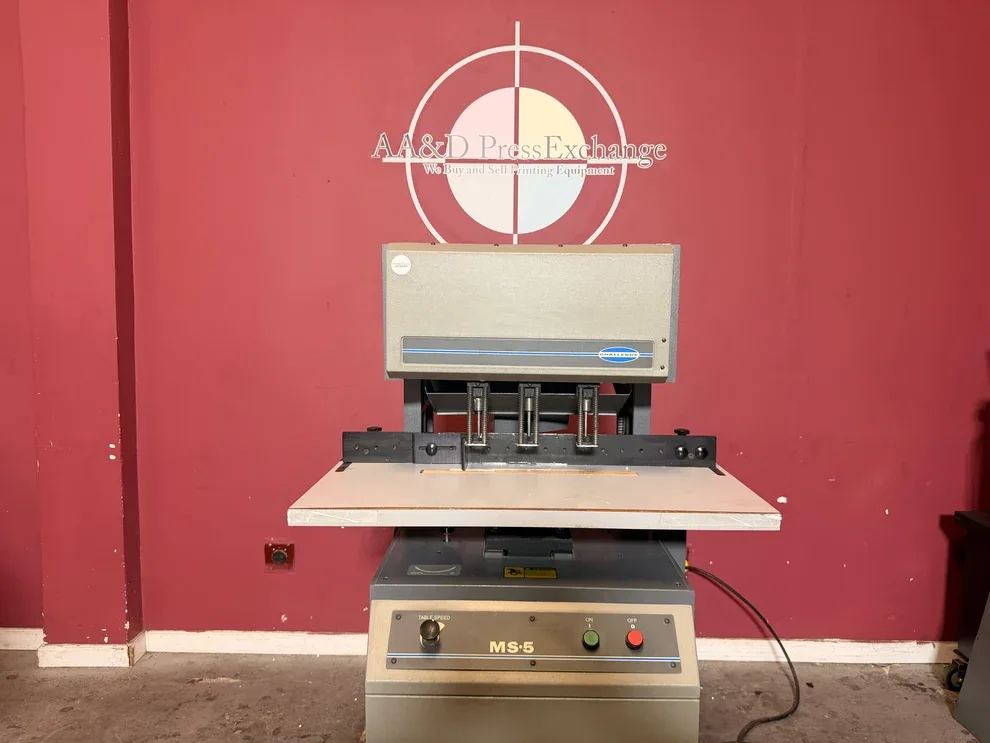
The Used Challenge MS-5 Paper Drill for Sale is an option worth considering for print shops, commercial printers, bindery departments, and businesses that regularly process stacks of paper. Designed around a hydraulic drilling system and a five-hole configuration, this machine can be relevant for operations that need to prepare multiple holes in paper stacks as part of their finishing work.
Buying used equipment can also help businesses expand their production capabilities without committing to the cost of a brand-new machine. However, understanding the machine's intended purpose, the advantages of hydraulic operation, and the factors to check before purchasing is essential.
This guide explores the Challenge MS-5 hydraulic 5-hole paper drill, its role in print finishing, its potential benefits for commercial operations, and what buyers should consider when looking for a used machine.
What Is the Challenge MS-5 Paper Drill?
A paper drill is a machine that creates clean, round holes through sheets of paper. These holes allow documents to be secured in ring binders, filing folders, notebooks, and other products that require punched pages.
Unlike a small office hole punch, an industrial paper drill is designed for use in professional paper-handling environments. It can process stacks of sheets, helping businesses prepare larger quantities of documents more efficiently.
The Challenge MS-5 paper drill belongs to the category of hydraulic paper drilling equipment. Its five-hole configuration is an important feature for buyers whose finishing requirements involve multiple holes arranged across a sheet or stack.
Imagine a print shop producing a batch of training manuals for a company. Each manual needs holes in the same positions so that the pages fit correctly into a particular binding system. Preparing every sheet individually would take considerable time and make consistent positioning more difficult. A paper drill allows operators to process stacks together, provided the stack thickness and material are within the machine's operating limits.
The result is a more organized finishing process, with less dependence on repetitive manual punching.
Understanding the Hydraulic 5-Hole Configuration
Two features deserve attention when evaluating this machine: its hydraulic operating system and its five-hole arrangement.
How Hydraulic Paper Drilling Works
Hydraulic equipment uses pressurized fluid to generate force. In a paper drilling machine, that force helps operate the drilling mechanism that moves the drilling tools through the paper stack.
An everyday comparison is the difference between trying to push through a thick pile of paper with a small handheld punch and using a machine designed to perform the same task with controlled mechanical assistance. The machine is built to make the operation more suitable for repeated production work.
Hydraulic operation can be useful in professional environments where operators regularly process substantial quantities of paper. However, the actual performance of any individual machine depends on its design, maintenance condition, tooling, and operating specifications.
Buyers should therefore avoid assuming that every hydraulic paper drill has the same drilling capacity or production speed.
What Does Five-Hole Mean?
The five-hole designation identifies a configuration intended for drilling five holes in an operation or setup, depending on the machine's design and tooling arrangement.
This can be useful when preparing documents that require several holes in consistent positions. For example, a business producing specialized binders or organized document sets may need a particular hole pattern rather than the standard two-hole arrangement used in many office folders.
It is important to distinguish between the number of holes and their spacing. Five holes do not automatically mean that the machine can accommodate every five-hole binding format. The required hole pattern, drill positions, tooling, and paper dimensions must be compatible with the intended application.
Before purchasing a used Challenge MS-5 hydraulic paper drill, buyers should confirm the available drilling configuration and whether it matches their production requirements.
Why Paper Drilling Matters in Commercial Printing
Printing is only one stage in the production of a finished document. After sheets come off a printing press, they may need to be cut, folded, collated, drilled, bound, or packaged.
Paper drilling supports this finishing process by preparing printed materials for storage, assembly, and everyday use.
Preparing Documents for Binders
Businesses frequently need printed documents that can be added to binders or filing systems. Examples include employee handbooks, training materials, internal reports, reference documents, and instructional manuals.
When the holes are correctly positioned, the pages fit more easily into their intended folders. Consistent drilling also helps maintain a professional appearance across a large batch of documents.
Supporting Repeated Production Jobs
A commercial printer may receive repeat orders from the same customer. If those orders require identical document formats, a suitable drilling machine can help make the finishing process more predictable.
Once the correct setup has been established, operators can process subsequent jobs according to the required specifications. Proper setup and quality checks remain necessary, especially when switching between paper sizes or different hole patterns.
Reducing Repetitive Manual Work
Manual punching may be practical for a handful of sheets. The situation changes when a business must prepare hundreds or thousands of pages.
A production paper drill helps move this repetitive task into a dedicated machine-based workflow. This can reduce the amount of individual handling required and free employees to concentrate on other finishing activities.
The time saved will depend on the machine's capabilities, the size of each job, the operator's experience, and how the surrounding workflow is organized.
Who Should Consider a Used Challenge MS-5?
The Challenge MS-5 hydraulic 5-hole paper drill may be worth evaluating for several types of businesses, particularly those that have regular paper drilling requirements.
Commercial Printing Companies
Commercial printers often handle a mixture of customer orders, from promotional documents to business reports and printed reference materials. A suitable paper drill can support finishing tasks that require accurate hole placement.
For companies already producing bindable documents, a dedicated drilling machine may complement their existing equipment.
Bindery and Finishing Departments
Bindery departments handle the work that turns printed sheets into usable products. Depending on the job, this can include folding, trimming, collating, drilling, and binding.
A paper drill can form part of this process when customers request products that require punched pages. The machine should be selected according to the department's usual paper sizes, drilling patterns, and production volume.
In-House Printing Operations
Large organizations sometimes maintain internal printing departments to prepare training documents, manuals, administrative materials, and reference publications.
For these operations, owning suitable finishing equipment may help reduce dependence on outside providers for routine drilling work. Whether purchasing used equipment makes financial sense depends on how frequently the machine will be used and the cost of alternative arrangements.
Businesses Expanding Their Finishing Capabilities
A print shop that currently outsources certain finishing tasks may be considering whether to bring them in-house.
Before investing, the business should compare the purchase price, installation, maintenance, tooling, operator requirements, and expected workload against the cost of outsourcing. A used paper drill can be attractive when it meets a clearly defined production need, but the decision should be based on the complete operating picture rather than the purchase price alone.
Advantages of Buying a Used Paper Drill
New industrial equipment can require a substantial capital investment. Used machinery offers another route for businesses that want to add equipment while controlling their initial spending.
A Potentially Lower Purchase Cost
A used machine may cost less than a comparable new unit. This can make specialized finishing equipment more accessible to smaller printing businesses or companies working within a fixed budget.
The actual savings depend on the machine's age, condition, included accessories, service history, and current market value.
A lower asking price should not automatically be treated as a better deal. Equipment that needs extensive repairs may ultimately cost more than a better-maintained alternative.
Access to Established Industrial Equipment
Some businesses prefer to evaluate previously operated machinery because it may already have a known service history and established role in commercial production.
However, a machine's past use does not guarantee its present reliability. Buyers should examine its condition and verify the availability of suitable replacement parts, tooling, and technical support before making a decision.
An Opportunity to Expand Production
Adding a paper drill may allow a business to accept work that it previously declined or outsourced.
For instance, a print shop that receives recurring orders for drilled documents could use an appropriate machine to incorporate drilling into its own finishing process. The commercial benefit depends on whether enough suitable work exists to justify the investment.
More Flexibility in Equipment Budgeting
Purchasing used equipment can leave more capital available for other business needs, such as consumables, maintenance, employee training, or improvements to existing production machinery.
Nevertheless, buyers should reserve funds for delivery, installation, inspection, and any required repairs. A realistic budget considers the full cost of putting the machine into productive service.
Important Things to Check Before Purchasing
When searching for a used Challenge MS-5 paper drill for sale, buyers should evaluate more than the model name and advertised price. The following checks can help reduce uncertainty.
1. Overall Mechanical Condition
Ask about the machine's operating history and maintenance records. Look for signs of excessive wear, visible damage, corrosion, or previous repairs.
If possible, arrange an inspection by someone familiar with industrial paper drilling equipment. A visual inspection is useful, but it cannot replace a proper operational assessment.
2. Hydraulic System Condition
Because the machine uses hydraulic operation, its hydraulic components deserve particular attention.
A qualified technician should inspect the system for fluid leaks, damaged hoses, unusual noises, inconsistent movement, and other signs of possible problems. The machine should operate according to the manufacturer's safety and performance requirements.
Hydraulic repairs can affect the overall cost of ownership, so unresolved issues should be understood before a purchase is finalized.
3. Drilling Performance
Whenever practical, request a demonstration using suitable paper stock.
Check whether the machine produces clean holes and whether the drilling results remain consistent across the test stack. Pay attention to paper movement, alignment, and any signs of tearing or incomplete drilling.
The test should use an appropriate stack thickness and compatible materials. Do not exceed the manufacturer's stated operating limits.
4. Hole Pattern and Tooling
Confirm that the five-hole configuration suits the work you intend to produce.
Ask which drill bits, heads, accessories, or other tooling are included, as applicable to the machine's design. Verify that the necessary components are present and suitable for the required paper sizes and hole spacing.
Additional tooling may create an extra expense if it is not included in the sale.
5. Safety Features
Industrial drilling machinery should be operated only with the appropriate safeguards and operating procedures in place.
Ask whether the original safety guards and relevant controls are present and functioning. Any safety-related concerns should be assessed and corrected by a qualified professional before production use.
Do not operate the equipment with missing guards or bypassed safety mechanisms.
6. Service and Parts Availability
Before purchasing older equipment, investigate whether replacement parts, compatible tooling, and qualified service support are available.
A machine that performs well today may still create difficulties if essential components cannot be sourced when maintenance is required.
The seller should be able to explain what documentation, service records, and accessories accompany the equipment.
7. Delivery and Installation
Industrial machines can be heavy and require appropriate handling during transportation and installation.
Confirm the machine's dimensions, weight, loading arrangements, delivery costs, and installation requirements. The destination facility should have sufficient space and the necessary utilities and floor conditions for safe operation.
A clear delivery plan helps prevent unexpected costs after the purchase.
How to Assess the Value of a Used Challenge MS-5
A sensible purchase decision involves comparing the complete cost of ownership with the expected business benefit.
Start by identifying how often the machine will be used. A business with regular drilling jobs may benefit more than one that needs the function only occasionally.
Next, calculate the total initial expenditure. Include the machine price, transportation, inspection, installation, required tooling, and any immediate maintenance.
Then consider ongoing expenses, including routine servicing, replacement drill bits, operator time, and potential downtime.
Finally, compare these costs with the expense of outsourcing the same work or using the equipment already available in your shop.
For example, imagine a print business that repeatedly sends document batches to an outside finishing provider. If bringing drilling in-house reduces outsourcing expenses and improves scheduling, the investment may become worthwhile over time. If drilling orders are infrequent, outsourcing may remain the more economical choice.
There is no universal payback period for a used paper drill. It depends on actual job volumes, operating costs, and the machine's condition.
Integrating the Paper Drill into Your Existing Workflow
The machine's value also depends on how effectively it fits into the rest of the production process.
A typical job might begin with printing, followed by cutting or trimming, sorting, and stacking the sheets. The paper drilling stage then prepares the material for the required binding or filing system. After drilling, the sheets can move to binding, final inspection, and packaging.
Planning the sequence carefully helps reduce unnecessary movement and handling.
Operators should also follow a consistent setup procedure. Confirm the paper dimensions, stack thickness, hole arrangement, and required finished quality before beginning a production run. Test the setup on a small quantity of material and inspect the results before processing the full order.
For repeat jobs, recording the relevant setup details can help the team reproduce the same results more consistently. Staff training and routine maintenance are equally important for keeping production organized.
Finding the Right Used Paper Drill for Your Business
When evaluating available machinery, buyers should focus on suitability rather than simply choosing the least expensive option.
Consider your normal job sizes, the paper materials you process, the required hole pattern, and the number of sheets you need to drill during a typical shift. These details provide a practical starting point for determining whether a five-hole hydraulic machine is appropriate.
It is also useful to compare the machine's condition, included accessories, seller documentation, and support arrangements with those of other available options.
AA&D PressExchange is a marketplace to explore when researching used printing, bindery, and finishing equipment. Buyers can review available machinery and investigate listings that may fit their operational requirements.
Before committing to a particular listing, confirm the exact machine configuration, current availability, price, included tooling, and condition directly with the seller. Specifications and accessories should be verified rather than assumed from the model designation alone.
Conclusion
The Used Challenge MS-5 Paper Drill for Sale | Hydraulic 5-Hole is a machine worth considering for printing businesses and bindery operations that regularly prepare paper stacks for multi-hole binding or filing applications.
Its hydraulic operating system and five-hole configuration make it a candidate for professional finishing work where consistent hole placement is important. A suitable machine may help reduce repetitive manual handling, support in-house production, and provide an alternative to outsourcing certain finishing tasks.
The key to a successful purchase is careful evaluation. Check the hydraulic system, mechanical condition, drilling quality, hole pattern, tooling, safety features, and availability of service support. Include transportation, installation, and maintenance in your budget before comparing the purchase price with other options.
Ultimately, the right used paper drill is one that matches your actual workload, fits into your production process, and can be operated safely and economically. With the right checks and realistic expectations, businesses can make a more informed decision when considering a Challenge MS-5 hydraulic 5-hole paper drill for their finishing department.