If your work happens outdoors, on rough ground or under heavy loads, a diesel forklift is often the first machine that comes to mind. It is built for long shifts, steady power and tough surroundings, which is why you see it in timber yards, steel plants, ports, construction sites and large warehouses across India.
But "tough" is not the same as "right for you". The wrong machine costs money every single day, in fuel, downtime and repairs. This guide explains how a diesel forklift works, where it makes sense, where it does not, and what to check before you commit.
Quick answer: what is a diesel forklift?
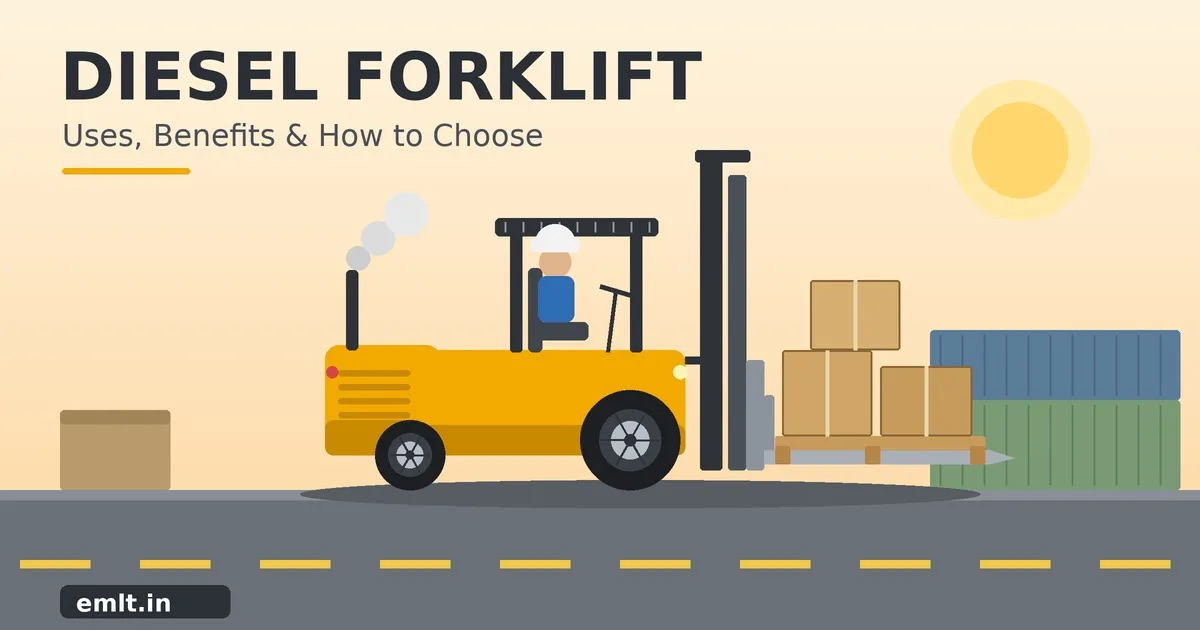
A diesel forklift is an internal combustion lift truck powered by a diesel engine. The engine drives the wheels and the hydraulic pump that raises and lowers the mast. Because diesel delivers strong torque at low engine speeds, these machines handle heavy loads, ramps and uneven surfaces with ease.
In short:
- Best for: outdoor yards, heavy loads, long shifts, rough terrain
- Typical strengths: high lifting power, quick refuelling, no battery charging
- Typical limits: exhaust emissions, noise, and not ideal for closed, poorly ventilated spaces
How does a diesel forklift work?
The principle is simple. Fuel burns in the engine, and the engine's power is split into two jobs. One part moves the truck through the transmission and drive axle. The other part runs a hydraulic pump that pushes oil to the lift and tilt cylinders. When the operator pulls the lever, oil moves, the mast rises, and the forks carry the load.
Most units use pneumatic or solid cushion tyres and a counterbalance design, where the weight of the truck's rear end offsets the weight on the forks. That design is why a counterbalance machine needs no outriggers and can work comfortably around trucks, docks and open yards.
Where a diesel forklift performs best
1. Outdoor yards and open storage
Gravel, mud, slopes and cracked concrete are tough on small electric trucks. Large pneumatic tyres and strong ground clearance help the machine keep moving where other machines struggle.
2. Heavy and bulky loads
Steel coils, timber stacks, precast blocks, machinery and containers need real lifting capacity. Diesel models are widely available across the heavier capacity ranges, which is why they dominate heavy industry.
3. Ports, logistics hubs and construction sites
Trucks keep arriving, loads keep changing and the day rarely ends on schedule. Refuelling takes a few minutes, so there is no waiting for a battery to charge between shifts.
4. Multi-shift operations
A single tank can carry a machine through a long working day. For businesses running two or three shifts, that continuity is a real advantage.
Key benefits of choosing a diesel forklift
- Strong torque and lifting power: Handles heavy loads and ramps with confidence.
- Fast refuelling: A quick fill-up keeps the machine on the job instead of on a charger.
- Durable build: Designed for dust, heat, rain and rough surfaces.
- Long working hours: Suits continuous, high-utilisation operations.
- Familiar servicing: Diesel engines are well understood, and parts and mechanics are easy to find in most Indian cities.
- Full Blog of Benefits of using Diesel Forklift you can read
Diesel vs electric vs LPG: how to decide
FactorDieselElectricLPGBest environmentOutdoors, rough groundIndoors, clean floorsMixed indoor and outdoorPower for heavy loadsVery highModerate to highModerateRefuelling or chargingQuick refuelCharging or battery swapCylinder changeEmissions at point of useYesNoneLower than dieselNoiseHigherLowMediumRunning cost patternFuel and engine servicingElectricity and battery careGas and engine servicingRule of thumb: if the work is mostly indoors in clean, enclosed areas such as food, pharma or electronics, an electric truck is usually the better fit. If the work is mostly outside or involves heavy, rugged tasks, a diesel forklift is usually the safer choice. Many large sites run both.
What to check before you buy a diesel forklift
Rated capacity and load centre
Choose a capacity that comfortably covers your heaviest regular load, not just your average one. Also confirm the load centre, because a long or awkward load reduces the safe lifting capacity.
Mast height and lift height
Check the maximum height your racks or trucks require. A taller mast changes visibility and stability, so match it to the real job.
Tyre type
Pneumatic tyres suit rough, outdoor surfaces. Solid tyres suit mixed or paved surfaces and reduce puncture risk.
Engine and emission compliance
Look for an engine that meets current emission norms for your region and offers good fuel efficiency. A modern, well-tuned engine saves money over the machine's life.
Operator comfort and safety
Seat design, visibility, lighting, backup alarm and overload protection all affect productivity and accident risk. Comfortable operators work better and make fewer mistakes.
After-sales support
Fast service matters more than a small saving on the purchase price. Ask about spare-part availability, service response time, warranty terms and operator training.
How to keep your machine running longer
Regular care is the cheapest way to extend machine life and avoid surprise breakdowns.
- Do a daily walk-around. Check tyres, forks, chains, mast, hoses, fluid levels and lights before every shift.
- Follow the service schedule. Change engine oil, oil filters, fuel filters and air filters on time.
- Use clean fuel. Dirty fuel damages injectors and pumps. Store fuel properly and drain water separators.
- Watch hydraulic oil and leaks. A small leak is easier to fix than a failed cylinder.
- Train operators. Smooth starts, controlled braking and correct fork positioning reduce wear.
- Keep records. A service log helps you spot patterns and plan repairs.
Safety basics every site should follow
- Allow only trained and authorised operators to drive.
- Never exceed the rated capacity shown on the data plate.
- Travel with the forks low and the mast slightly tilted back.
- Keep pedestrians out of the working zone and use marked walkways.
- Avoid running one for long periods in closed spaces without proper ventilation.
New or used: which one makes sense?
A new machine gives you a warranty, the latest engine technology and predictable running costs. A used one lowers the upfront cost, which can suit seasonal work or a tight budget. If you go used, inspect the engine hours, mast and chain condition, hydraulic leaks and service history, and insist on a proper test run. For rental or short projects, hiring can be cheaper than owning.
Frequently asked questions
What is a diesel forklift used for?
It is used to lift, move and stack heavy goods in yards, factories, ports, construction sites and warehouses, especially where the ground is rough or the work is outdoors.
How much weight can a diesel lift truck handle?
Capacity depends on the model. Compact units handle a couple of tonnes, while heavy-duty versions lift far more. Always read the data plate and check the load centre before lifting.
Is a diesel forklift better than an electric forklift?
Neither is better in every case. Diesel suits heavy, outdoor and long-shift work. Electric suits clean, indoor and low-noise environments. The right answer depends on where and how you work.
Can a diesel forklift be used indoors?
It can be used in well-ventilated areas, but enclosed spaces with poor airflow are not suitable because of exhaust fumes. Many indoor sites prefer electric or LPG trucks.
How often should a diesel lift truck be serviced?
Follow the manufacturer's schedule, which is commonly based on running hours. Daily checks by the operator and periodic servicing by a trained technician keep the machine reliable.
What affects the price of a diesel forklift?
Capacity, mast height, brand, engine type, attachments, tyres and whether the machine is new or used all influence the price. Compare the total cost of ownership, not only the purchase price.
Final thoughts
For heavy loads, rough ground and long working hours, a diesel forklift remains one of the most dependable material handling machines you can buy. The best results come from matching capacity, mast height, tyres and support to your real working conditions, then maintaining the machine well.
Not sure which model suits your site? Share your load weight, lift height and working environment with the EMLT team and get a recommendation based on your actual requirement.
Contact EMLT: Enquiry Now