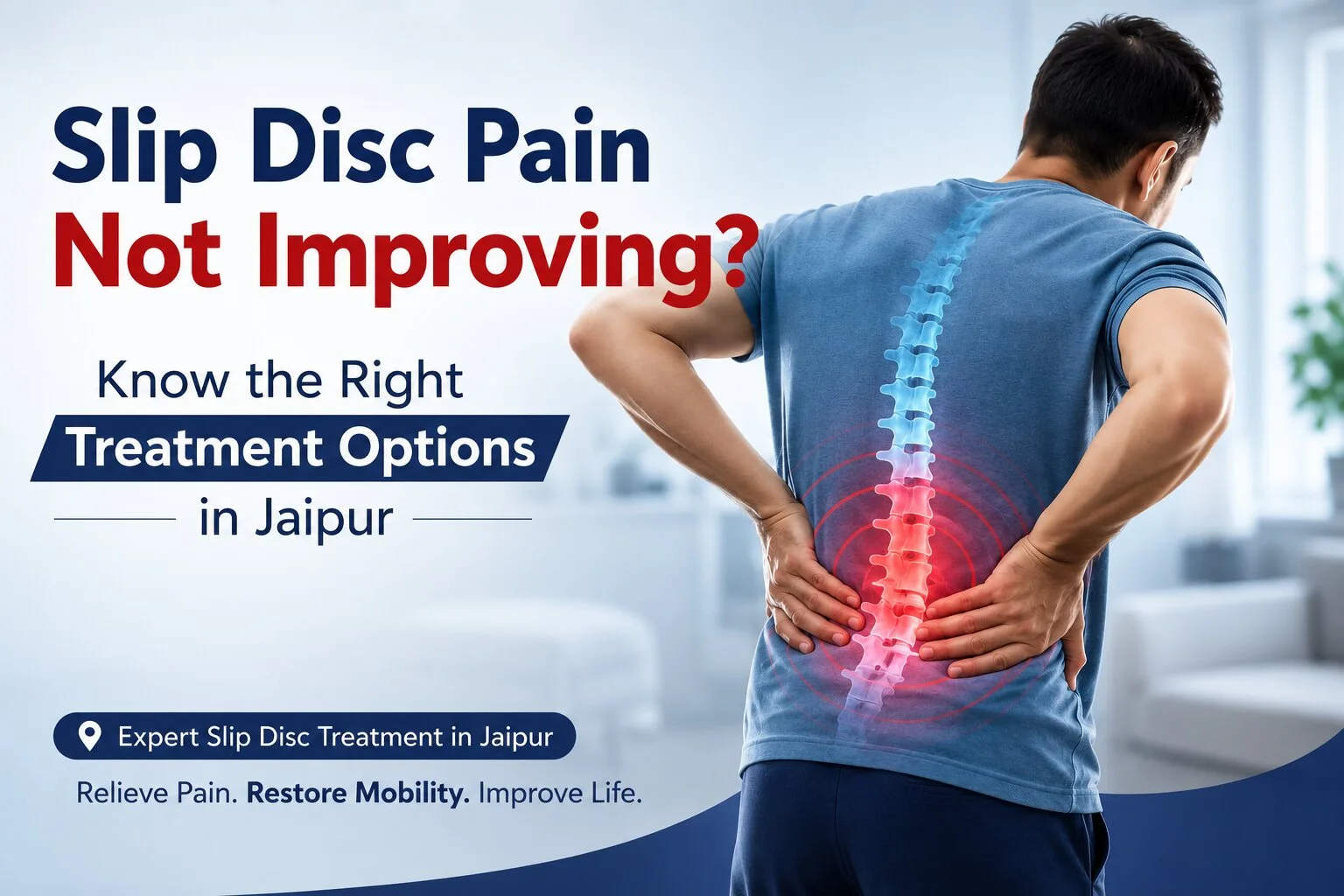
Back pain can affect your daily routine, work productivity, sleep, and overall quality of life. While mild back pain may improve with rest and basic care, persistent pain that travels to the legs, causes numbness, or makes movement difficult may indicate a spinal problem such as a slip disc.If your slip disc pain is not improving despite rest, medicines, or home remedies, it may be time to understand the actual cause and explore appropriate treatment options. With timely diagnosis and a personalized treatment plan, many patients can effectively manage their symptoms and return to normal activities.
For people searching for Slip disc treatment in Jaipur, understanding the available non-surgical and surgical options can help them make informed decisions about their spine health.
What Is a Slip Disc?
The human spine consists of multiple bones called vertebrae. Between these vertebrae are soft, cushion-like structures known as intervertebral discs. These discs act as shock absorbers and provide flexibility to the spine.
A slip disc, medically known as a herniated or prolapsed disc, occurs when the soft inner material of a spinal disc pushes through its outer layer. The displaced disc material may put pressure on nearby spinal nerves, resulting in pain, numbness, tingling, or weakness.
Slip discs commonly affect the lower back or lumbar spine. However, they can also develop in the neck or cervical spine.
The severity of symptoms can vary depending on the location of the affected disc and the amount of pressure placed on the nerves.
Why Is Your Slip Disc Pain Not Improving?
Many people expect back pain to disappear after a few days of rest. However, slip disc pain may continue when the underlying nerve compression or spinal problem is not properly addressed.
Several factors may contribute to persistent slip disc pain.
1. Continuous Pressure on the Spinal Nerve
A herniated disc can press against a spinal nerve. If this pressure continues, pain may remain or gradually worsen. Patients may experience shooting pain that travels from the lower back to the buttocks, thighs, or legs.
This type of radiating pain is often associated with sciatica.
2. Delayed Medical Diagnosis
Ignoring back pain for weeks or months may allow the condition to become more severe. Many patients depend only on painkillers without identifying the exact cause of their symptoms.
A consultation with a Slip disc doctor in Jaipur can help determine whether the pain is caused by a herniated disc, spinal stenosis, muscle strain, or another spine condition.
3. Poor Posture
Long hours of sitting, incorrect working posture, and improper lifting techniques can place excessive pressure on the spine.
People who work at desks for several hours may unknowingly increase stress on their lumbar discs.
4. Lack of Proper Physiotherapy
Exercises can help strengthen the muscles supporting the spine. However, performing incorrect exercises without professional guidance may increase pain.
A structured physiotherapy program should be designed according to the patient's condition and MRI findings.
5. Severe Disc Herniation
In some cases, the disc may be significantly herniated and place considerable pressure on the spinal nerves. Such conditions may not respond adequately to basic medicines or rest.
Advanced medical or surgical treatment may be required.
Common Symptoms of a Slip Disc
Slip disc symptoms depend on the affected area of the spine. Some people experience mild discomfort, while others may develop severe pain and neurological symptoms.
Common symptoms include:
- Persistent lower back pain
- Neck pain
- Pain radiating to the arms or legs
- Sciatica or shooting leg pain
- Tingling sensation
- Numbness in the hands, feet, or legs
- Muscle weakness
- Difficulty walking
- Pain while bending or lifting objects
- Increased pain after prolonged sitting
- Reduced flexibility of the spine
If these symptoms continue for several weeks or gradually worsen, a medical evaluation is recommended.
When Should You See a Slip Disc Doctor?
Occasional back pain is common and may improve with basic care. However, certain symptoms should not be ignored.
You should consider consulting a Slip disc doctor in Jaipur if:
- Back pain continues for several weeks
- Pain travels from the back to the legs
- You experience numbness or tingling
- Muscle weakness develops
- Walking becomes difficult
- Pain interferes with sleep
- Medicines provide only temporary relief
- Symptoms are gradually worsening
Early diagnosis can help identify nerve compression and prevent potential complications.
In rare situations, patients may develop loss of bladder or bowel control, severe leg weakness, or numbness around the groin area. These symptoms require immediate medical attention.
How Is a Slip Disc Diagnosed?
Proper diagnosis plays an important role in determining the appropriate treatment.
A spine specialist usually begins with a detailed medical history and physical examination.
Physical Examination
The doctor may evaluate:
- Spine movement
- Muscle strength
- Reflexes
- Sensation
- Walking pattern
- Areas of pain or numbness
Certain movement tests may also be performed to identify nerve irritation.
MRI Scan
Magnetic Resonance Imaging or MRI is commonly used to examine spinal discs and nerves.
An MRI can help identify:
- Location of the herniated disc
- Severity of disc damage
- Nerve compression
- Spinal canal narrowing
The findings help the doctor develop a personalized treatment plan.
X-Ray
An X-ray cannot directly show a herniated disc, but it may help identify other spinal problems such as bone changes or alignment issues.
Non-Surgical Slip Disc Treatment Options
Many patients with a slip disc can improve without surgery. Treatment usually depends on the severity of pain, neurological symptoms, and diagnostic findings.
For patients looking for Slip disc treatment in Jaipur, non-surgical management may be recommended as the initial approach.
1. Medications
Doctors may prescribe medicines to reduce pain and inflammation.
Depending on the patient's symptoms, treatment may include pain-relieving or anti-inflammatory medications.
Medicines should always be taken according to medical advice.
2. Physiotherapy
Physiotherapy is an important part of slip disc management.
A physiotherapist may recommend exercises designed to:
- Strengthen the back muscles
- Improve spinal flexibility
- Reduce nerve pressure
- Improve posture
- Increase mobility
Regular physiotherapy may help patients gradually return to normal activities.
3. Posture Correction
Poor posture can increase pressure on spinal discs.
Patients may be advised to improve their sitting and standing posture. Ergonomic chairs and proper computer positioning can also help people who spend long hours working at a desk.
4. Lifestyle Modifications
Simple lifestyle changes can reduce stress on the spine.
These may include:
- Maintaining a healthy body weight
- Avoiding heavy lifting
- Taking regular breaks from sitting
- Using proper lifting techniques
- Staying physically active
- Following recommended exercises
These habits may also help reduce the risk of future spine problems.
5. Spinal Injections
When severe pain does not improve with medicines or physiotherapy, certain patients may be considered for spinal injections.
These injections may help reduce inflammation around irritated spinal nerves.
However, the suitability of injections depends on the patient's symptoms and diagnostic findings.
When Is Surgery Required for a Slip Disc?
Surgery is not required for every slip disc patient. Many people improve with conservative treatment.
However, surgery may be considered when:
- Severe pain continues despite treatment
- Nerve compression is significant
- Muscle weakness is increasing
- Walking is becoming difficult
- Daily activities are severely affected
- Neurological symptoms are worsening
A spine or neurosurgery specialist evaluates the patient's symptoms, examination findings, and MRI results before recommending surgery.
Surgical Treatment Options for Slip Disc
Advancements in spine surgery have introduced techniques designed to relieve nerve pressure while minimizing damage to surrounding tissues.
Microdiscectomy
Microdiscectomy is a commonly performed procedure for selected patients with a herniated disc.
During the procedure, the portion of the disc pressing on the nerve is removed.
The main goal is to relieve nerve compression and reduce radiating leg pain.
Endoscopic Spine Surgery
Endoscopic spine surgery is a minimally invasive technique performed through a small incision using specialized instruments and a camera.
Potential advantages in selected cases may include:
- Smaller incision
- Reduced tissue disruption
- Shorter hospital stay
- Faster recovery
However, not every patient is suitable for endoscopic surgery. The treatment approach depends on the location and severity of the disc problem.
Other Spine Procedures
In complex cases involving spinal instability or multiple spine problems, additional surgical procedures may be considered.
The specific procedure is selected after a detailed evaluation of the patient's spinal condition.
Non-Surgical vs Surgical Treatment: Which Is Right for You?
There is no single treatment that is suitable for every slip disc patient.
Patients with mild or moderate symptoms may respond well to medications, physiotherapy, and lifestyle changes.
Surgery may be considered when significant nerve compression causes persistent pain, weakness, or neurological problems.
A detailed consultation with a Slip disc doctor in Jaipur can help determine the appropriate treatment based on:
- Duration of symptoms
- Severity of pain
- MRI findings
- Degree of nerve compression
- Muscle strength
- Overall health
- Response to previous treatment
The treatment decision should always be personalized.
Recovery After Slip Disc Surgery
Recovery time varies depending on the severity of the condition and the treatment method.
Patients receiving non-surgical treatment may gradually improve with regular physiotherapy and lifestyle modifications.
After spine surgery, patients are usually advised to follow specific recovery guidelines.
These may include:
- Avoiding heavy lifting
- Walking regularly
- Following physiotherapy exercises
- Maintaining proper posture
- Taking prescribed medicines
- Attending follow-up appointments
Following the doctor's instructions can support the recovery process and help patients safely return to daily activities.
How Can You Reduce the Risk of Slip Disc Problems?
Although every spinal problem cannot be prevented, certain habits may help protect your spine.
Maintain Good Posture
Sit with your back properly supported and keep your computer screen at eye level.
Exercise Regularly
Exercises that strengthen the core and back muscles can provide better spinal support.
Lift Objects Correctly
Avoid bending directly from the waist. Bend your knees and keep heavy objects close to your body while lifting.
Maintain a Healthy Weight
Excess body weight may place additional pressure on the lower spine.
Avoid Prolonged Sitting
Take short breaks and walk regularly if your work requires long hours of sitting.
These preventive measures can support long-term spine health.
Consult Dr. Sandeep Bhardwaj for Slip Disc Treatment in Jaipur
If persistent back pain, sciatica, numbness, or weakness is affecting your daily life, a detailed spine evaluation may help identify the underlying cause.
Dr. Sandeep Bhardwaj provides consultation and treatment for various brain and spine-related conditions. Patients searching for Slip disc treatment in Jaipur can consult him for an evaluation of their symptoms and appropriate treatment options based on diagnostic findings.
The treatment approach may include non-surgical management or advanced surgical procedures depending on the severity of the spinal condition.
Consulting an experienced specialist can help patients understand their diagnosis, available treatment options, and expected recovery process.
Conclusion
Slip disc pain should not be ignored when it continues for several weeks or begins to affect movement and daily activities. Persistent pain may indicate ongoing nerve compression that requires proper diagnosis and medical evaluation.
Treatment options can range from medications, physiotherapy, posture correction, and lifestyle modifications to minimally invasive or surgical procedures in selected cases.
If your back pain is not improving, consulting a Slip disc doctor in Jaipur can help identify the cause and determine a personalized treatment plan. Timely Slip disc treatment in Jaipur may help relieve symptoms, improve mobility, and support a return to normal daily activities.
Frequently Asked Questions About Slip Disc
1. Can a slip disc heal without surgery?
Yes. Many patients with mild to moderate slip disc symptoms may improve with medications, physiotherapy, and lifestyle modifications. Surgery is generally considered when conservative treatment does not provide adequate relief or neurological symptoms worsen.
2. How long does slip disc pain last?
The duration of pain varies from patient to patient. Some people may improve within a few weeks, while others with significant nerve compression may experience symptoms for a longer period.
3. Is walking good for a slip disc?
Gentle walking may be beneficial for some patients because it supports mobility and physical activity. However, exercise recommendations should depend on the severity of the condition and medical advice.
4. When should I consult a slip disc doctor?
You should seek medical evaluation if back pain persists, travels to the legs, or is associated with numbness, tingling, muscle weakness, or difficulty walking.
5. Where can I get Slip disc treatment in Jaipur?
Patients experiencing persistent slip disc symptoms can consult Dr. Sandeep Bhardwaj for a detailed evaluation and discussion of suitable non-surgical or surgical treatment options in Jaipur.