Breast augmentation is a personal decision.
Some women consider it after changes in breast volume following pregnancy or weight loss. Others may want to change breast size, shape, symmetry, or overall body proportions.
Whatever the reason, one of the common questions during research is:
Are silicone breast implants safe?
Silicone implants have been used for breast augmentation and reconstructive procedures for many years. However, they are medical devices, and deciding whether they are appropriate requires an understanding of how they work, the possible benefits, potential risks, recovery, and long-term follow-up.
For someone researching breast augmentation in Bangalore, understanding these points before consultation can make the decision-making process clearer.
What Are Silicone Breast Implants?
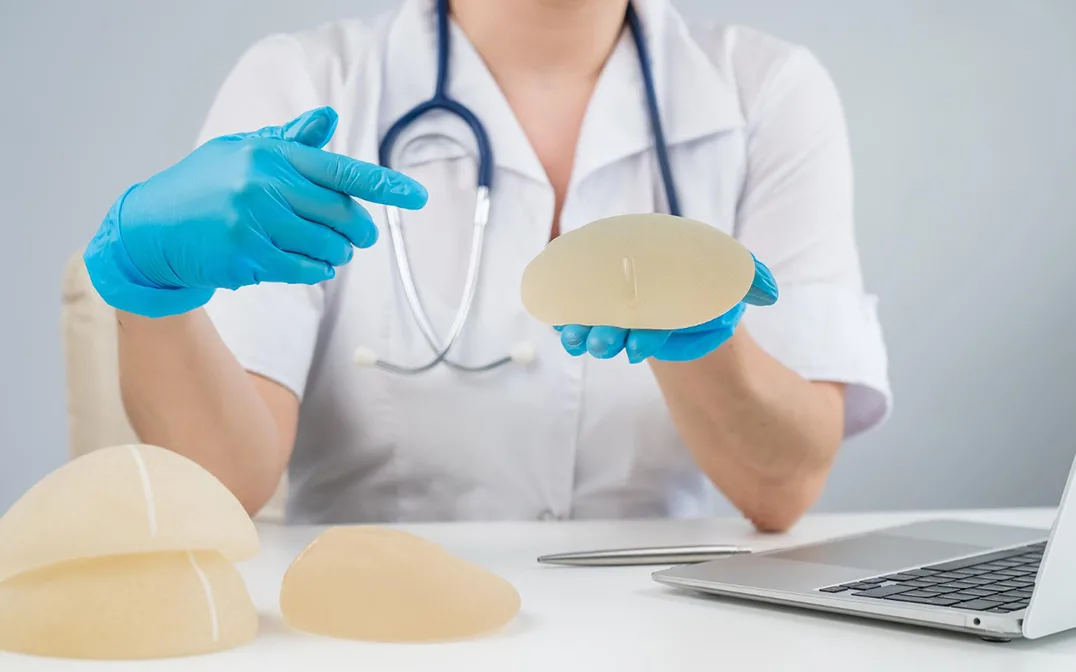
Silicone breast implants consist of an outer silicone shell filled with cohesive silicone gel.
The gel is designed to provide softness and shape while allowing the implant to add breast volume.
Silicone implants are available in different:
- Sizes
- Shapes
- Profiles
- Degrees of projection
The implant selected depends on factors such as breast anatomy, chest width, existing breast tissue, and the degree of volume change being considered.
Silicone implants are only one approach to breast augmentation. Other options, including fat transfer, may also be discussed depending on the patient's anatomy and treatment goals.
Are Silicone Breast Implants Safe?
Questions around implant safety are understandable because breast implants remain in the body for an extended period.
The source article notes that modern silicone implants are manufactured differently from earlier generations and are designed with cohesive silicone gel and stronger outer shells.
However, no surgical procedure or implant is completely without risk.
Several factors influence the overall treatment plan, including:
- Patient selection
- Medical history
- Breast anatomy
- Implant selection
- Surgical technique
- Post-operative care
- Long-term follow-up
This is why breast augmentation should begin with an individual medical assessment rather than simply choosing an implant size.
Common Questions About Silicone Implants
Many concerns surrounding breast implants come from information patients encounter online.
It helps to look at some of these questions more carefully.
Can Silicone Implants Rupture?
Yes, implant rupture is a recognised possibility.
Modern silicone implants contain cohesive gel, which is designed to remain together rather than behaving like a free-flowing liquid.
However, implants are still medical devices and can become damaged or rupture over time.
This is one reason long-term follow-up may be recommended.
Patients should ask what symptoms could indicate an implant problem and whether imaging may be advised during follow-up.
Do Breast Implants Last Forever?
No.
Breast implants should not automatically be considered lifetime devices.
Some patients may have their implants for many years without requiring another operation, while others may eventually need implant removal, replacement, or revision.
Reasons for further surgery can vary and may include:
- Implant rupture
- Changes around the implant
- Changes in breast shape
- Ageing
- Pregnancy
- Weight changes
- Personal preference
Patients considering implants should therefore think beyond the initial surgery and understand the possibility of future treatment.
Will Silicone Implants Feel Natural?
The feel of the breast after augmentation depends on several factors.
These can include:
- Amount of existing breast tissue
- Implant size
- Implant position
- Implant profile
- Skin and tissue characteristics
Silicone gel is designed to provide a soft feel, but the final result differs between patients.
The goal during consultation should be to understand what may realistically be achievable based on the individual's anatomy rather than assuming that one implant will feel the same in every person.
Why Do Some Patients Consider Silicone Implants?
Silicone implants can provide a more noticeable increase in breast volume than some other augmentation methods.
They may be considered when the patient wants to change:
- Breast size
- Breast projection
- Breast shape
- Symmetry
- Overall body proportion
Implants are available in different dimensions, which allows the surgical plan to be adjusted according to body frame and existing breast anatomy.
Possible Advantages of Silicone Implants
The source article identifies several characteristics that patients may discuss when considering silicone implants.
These can include:
Greater Volume Change
Silicone implants can provide a more noticeable increase in breast volume compared with fat transfer alone.
Different Size and Profile Choices
Implants are available in different sizes and profiles, allowing the plan to be adjusted according to the patient's anatomy.
Shape and Projection
Implants can be used when greater breast projection or a particular contour is being considered.
Suitability Across Different Body Types
Different implant dimensions mean they may be considered for a range of body frames.
These potential advantages need to be considered alongside the risks and long-term responsibilities associated with having an implant.
What Are the Possible Risks?
All surgery involves risk.
The source article specifically identifies general surgical concerns such as infection and bleeding, along with implant-related risks including capsular contracture and implant rupture.
Patients considering breast implants should discuss potential complications before surgery.
Capsular Contracture
When a breast implant is placed in the body, scar tissue naturally forms around it.
This tissue creates a capsule around the implant.
In some patients, the capsule may tighten around the implant. This is known as capsular contracture.
Depending on its severity, it may affect breast firmness, shape, comfort, or appearance.
Further treatment may sometimes be required.
Implant Rupture
An implant can rupture or become damaged.
The way this presents can vary, which is why follow-up may include clinical assessment and, in selected situations, imaging.
Patients should understand how implant integrity may be monitored over time.
Infection and Bleeding
As with other surgical procedures, infection and bleeding can occur following breast augmentation.
The surgeon should explain the signs patients should watch for during recovery and when medical attention is required.
Future Surgery
Another important consideration is the possibility that breast implants may require additional surgery later.
This should be discussed before the first procedure rather than considered only if a problem develops.
Choosing an Implant Is More Than Choosing a Size
It is common to think breast augmentation planning starts with selecting a cup size.
In reality, several anatomical factors need to be considered.
These can include:
- Chest width
- Existing breast tissue
- Breast shape
- Skin characteristics
- Breast symmetry
- Desired projection
- Overall body proportions
Someone looking for a Plastic surgeon Whitefield can use the consultation to discuss how these factors influence implant selection and whether implant-based augmentation is appropriate.
A larger implant is not automatically more suitable.
The implant needs to relate to the patient's anatomy and treatment goals.
Implant Placement Also Matters
Silicone implants can be placed in different positions depending on the surgical plan.
The appropriate placement may be influenced by:
- Existing breast tissue
- Chest anatomy
- Implant dimensions
- Desired degree of projection
- Surgical approach
This should be discussed during consultation along with implant size and profile.
What Happens During a Breast Augmentation Consultation?
The source article describes the process as beginning with evaluation of implant type, size, placement, breast anatomy, and tissue characteristics.
A consultation may therefore include:
- Medical history
- Breast examination
- Chest measurements
- Discussion of treatment goals
- Implant options
- Implant size and profile
- Placement options
- Surgical risks
- Recovery expectations
- Long-term follow-up
It is also an opportunity to discuss what level of change would be realistic.
What Does Surgery Involve?
According to the source article, breast augmentation is generally performed under general anaesthesia, with the surgical plan determined beforehand based on breast anatomy and implant choice.
The exact duration and hospital requirements can vary according to the procedure and individual circumstances.
Patients should ask:
- How long the procedure may take
- Whether hospital observation may be required
- What type of incision is planned
- Where the implant will be positioned
- What will happen immediately after surgery
What Is Recovery Like?
Recovery differs from patient to patient.
In the early period after surgery, there may be:
- Swelling
- Tightness
- Bruising
- Discomfort
- Temporary activity restrictions
The breasts can also continue to change in appearance as swelling settles and the implants adjust within the tissues.
Patients should receive specific instructions regarding wound care, support garments, activity, and follow-up.
Questions to Ask About Recovery
Before scheduling surgery, consider asking:
When can I return to work?
This can depend on the type of work and individual recovery.
When can I exercise?
Exercise may need to be restricted temporarily.
When can I lift heavy objects?
Heavy lifting may need to be avoided during early healing.
Will I need a support bra?
Ask what garment may be recommended and how long it should be worn.
When are follow-up appointments?
Understand how healing and implant position will be monitored.
Who May Be Considered for Silicone Breast Implants?
The source article notes that suitability includes considerations such as physical health, expectations, lifestyle, personal motivation, and informed consent.
A consultation can help assess:
- General health
- Breast anatomy
- Treatment expectations
- Reasons for considering surgery
- Ability to understand possible risks
- Willingness to follow recovery and long-term care advice
Not everyone considering breast augmentation will necessarily be suited to the same procedure or implant.
Silicone Implants or Fat Transfer?
Silicone implants are not the only breast augmentation option.
Fat transfer uses the patient's own fat, which is removed from another area of the body through liposuction and transferred to the breasts.
The two approaches have different characteristics.
Silicone Implants
May be considered when:
- A more noticeable volume increase is desired
- More predictable projection is being discussed
- The patient is comfortable having a medical implant
Fat Transfer
May be considered when:
- A more modest volume increase is desired
- Enough donor fat is available
- The patient prefers using their own tissue
Neither method is automatically suitable for everyone.
The decision should be based on anatomy, treatment goals, and medical assessment.
Long-Term Follow-Up Matters
Breast augmentation does not end when the initial recovery period is complete.
The source article emphasises routine follow-up and notes that imaging may sometimes be considered to assess implant integrity.
Patients should understand:
- Whether future imaging may be recommended
- What changes should be reported
- How often follow-up may be needed
- When implant revision or replacement might be considered
Long-term awareness is part of having breast implants.
Questions Worth Asking Before Breast Augmentation
Before making a decision, consider asking:
- Am I suitable for silicone breast implants?
- What implant size and profile may suit my anatomy?
- Where would the implant be positioned?
- What incision may be required?
- What are the main risks in my case?
- What is capsular contracture?
- How would implant rupture be detected?
- Will I need future imaging?
- Could I need implant replacement or revision later?
- What will recovery involve?
- When can I return to exercise and normal activities?
- Are there other augmentation options I should consider?
These questions can help make the consultation more useful.
Final Thoughts
Silicone breast implants are one option for changing breast volume, shape, projection, or symmetry.
They can provide a more noticeable volume change and are available in different sizes and profiles, but they also involve surgical risks, implant-specific considerations, and the possibility of future monitoring or additional surgery.
Breast implants should not be viewed as permanent devices that will never require attention.
Before proceeding, it is important to understand the implant being considered, how it will be placed, what recovery may involve, and what long-term follow-up could be required.
A detailed consultation can help determine whether silicone implants are appropriate based on individual anatomy, health, expectations, and treatment goals.