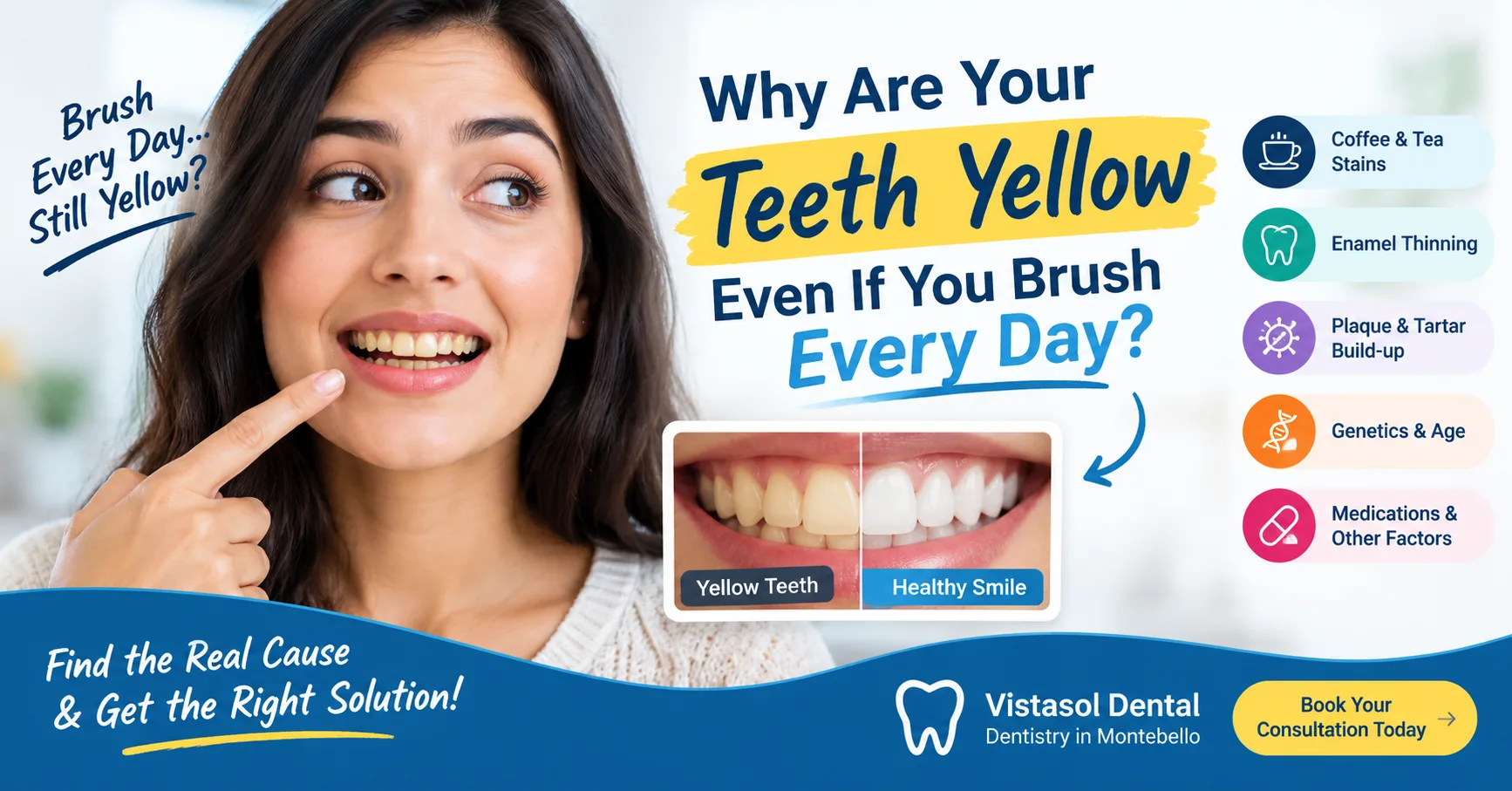
Are your teeth still yellow even though you brush every day? You are not alone. Brushing helps remove plaque and food particles, but it cannot always remove every stain or change the natural colour of your teeth. Yellow teeth may result from enamel thinning, coffee or tea stains, plaque buildup, genetics, or other dental conditions.
The good news is that understanding the cause of teeth yellow discoloration can help you choose the right way to care for your smile. Let’s explore why it happens, what you can do about it, and when to visit a dentist.
1. Why Are Your Teeth Yellow Even After Brushing?
Your teeth have an outer protective layer called enamel and an inner layer called dentin. Enamel is naturally translucent, while dentin has a yellowish colour. When enamel becomes thinner, more of the underlying dentin can show through, making teeth appear yellow.
This means that yellow teeth do not automatically indicate poor oral hygiene. Your natural tooth colour, age, lifestyle, and dental health can all influence how your smile looks.
According to the American Dental Association, tooth discoloration can occur because of external stains or changes within the tooth itself.
2. Five Common Reasons Your Teeth Look Yellow
A. Tea, Coffee, and Other Staining Foods
Do you regularly drink tea or coffee? These beverages contain pigments that can attach to the tooth surface and gradually cause discoloration.
Other common contributors include:
- Dark-coloured sauces and certain highly pigmented foods.
- Cola and other coloured beverages.
- Tobacco products.
- Frequent exposure to staining foods and drinks.
What can you do? Reduce frequent exposure to staining drinks, drink water regularly, and maintain a consistent oral hygiene routine.
B. Enamel Is Becoming Thinner
Enamel protects your teeth, but it can gradually wear away through acid exposure and other factors. When enamel becomes thinner, the yellowish dentin underneath may become more visible.
Acidic drinks, frequent acid exposure, and brushing too aggressively can contribute to enamel wear.
What can you do? Use a soft-bristled toothbrush, fluoride toothpaste, and gentle brushing techniques. If you regularly experience tooth sensitivity, consult a dentist to identify the cause.
C. Plaque and Tartar Buildup
Plaque is a sticky film of bacteria that forms on teeth. If it is not removed effectively, it can harden into tartar, which may appear yellow or brown.
Brushing alone may not remove hardened tartar. It can also accumulate around the gumline and between teeth, where cleaning is more difficult.
What can you do? Brush twice daily for two minutes and clean between your teeth every day. If tartar has already formed, professional dental cleaning may be needed.
D. Natural Tooth Colour and Genetics
Not everyone's teeth have the same natural shade. Genetics influence enamel characteristics and the colour of the underlying dentin.
Some people naturally have teeth that appear more yellowish, even when they maintain good oral hygiene.
What can you do? Focus on keeping your teeth healthy rather than trying to achieve an unnaturally white shade. If you want a brighter smile, ask your dentist which options are appropriate for your teeth.
E. Age, Medications, or Dental Problems
Teeth may become darker with age as enamel changes and the underlying dentin becomes more visible. Certain medications, developmental enamel conditions, tooth injuries, and dental problems can also change tooth colour.
If one tooth suddenly becomes darker than the others, or discoloration appears alongside pain or swelling, arrange a dental examination rather than assuming it is a simple stain.
3. How Can You Reduce Yellow Teeth Safely?
If you are searching for how to whiten yellow teeth, start by identifying the cause. Surface stains require a different approach from discoloration that originates inside the tooth.
Follow these practical steps:
- Brush correctly: Brush twice a day for two minutes using fluoride toothpaste and a soft-bristled toothbrush.
- Clean between your teeth: Use dental floss or another suitable interdental cleaner daily to remove plaque from areas your toothbrush cannot reach.
- Limit staining drinks: Reduce frequent tea and coffee consumption, and drink water after having staining beverages.
- Choose whitening products carefully: Whitening toothpaste may help remove surface stains, but it cannot significantly change the natural colour of teeth or treat every type of discoloration.
- Schedule regular dental checkups: A dentist can identify tartar, enamel wear, cavities, and other causes of tooth discoloration.
Avoid scrubbing your teeth with charcoal, lemon juice, or other abrasive or acidic home remedies. These methods can damage enamel and may make teeth appear even more yellow over time.
4. When Should You Visit a Dentist for Yellow Teeth?
If your teeth remain yellow despite consistent brushing, a dental examination can help determine whether the cause is surface staining, tartar, enamel thinning, or an underlying dental condition.
A dentist may recommend professional cleaning for surface stains and tartar. Depending on your oral health and the type of discoloration, professionally supervised whitening or another suitable treatment may also be considered.
Remember that whitening treatments do not change the colour of crowns, veneers, or fillings in the same way they change natural teeth. A dental assessment can help you understand the likely results before choosing a treatment.
5. Looking for Dentistry in Montebello?
If you are concerned about yellow teeth, professional guidance can help you understand your options without risking unnecessary enamel damage.
Vistasol Dental can be a starting point for exploring dental care in Montebello. A dental professional can assess your teeth, discuss possible causes of discoloration, and explain suitable cleaning or whitening options based on your needs.
Explore Dentistry in Montebello to learn more about dental care and take the next step towards a healthier smile.
Frequently Asked Questions (FAQs)
1. Why are my teeth yellow even though I brush twice a day?
Yellow teeth can result from natural dentin colour, enamel thinning, staining foods and drinks, tartar buildup, genetics, or certain medications. Brushing helps remove plaque but cannot correct every cause of discoloration.
2. Can yellow teeth become white again?
Sometimes. Surface stains may improve with professional cleaning, while suitable whitening treatments can lighten some types of natural tooth discoloration. Results depend on the cause, and not every type of stain responds equally well.
3. Does yellow teeth mean poor oral hygiene?
No. Teeth naturally vary in colour, and healthy teeth are not always bright white. However, plaque and tartar buildup can contribute to discoloration, so regular oral hygiene and dental checkups remain important.
4. Is whitening toothpaste enough to remove yellow teeth?
Whitening toothpaste can help remove some surface stains, but it generally cannot change the underlying colour of dentin or treat deeper discoloration. Ask your dentist before starting a whitening routine, especially if you have sensitive teeth.
5. How can I prevent my teeth from becoming more yellow?
Brush twice daily, clean between your teeth, limit frequent exposure to staining drinks, avoid tobacco, and attend regular dental checkups. Avoid harsh whitening remedies that can damage enamel.
Final Thoughts
Yellow teeth do not always mean you are brushing incorrectly. The real cause may be surface stains, tartar, natural tooth colour, or thinning enamel. The most effective solution depends on what is causing the discoloration.
Maintain good oral hygiene, avoid unsafe whitening remedies, and seek professional advice if the colour changes unexpectedly or does not improve with routine care. A healthy smile starts with understanding your teeth, not simply trying to make them whiter.