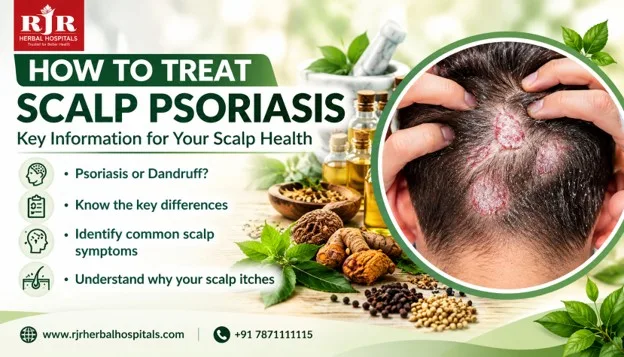
Noticing white flakes on your shoulders or experiencing a persistent itchy scalp? You may assume it is dandruff, but sometimes the cause can be scalp psoriasis. Although both conditions can cause itching and flaking, they have different characteristics and may require different treatments.
Understanding scalp psoriasis vs dandruff can help you recognise the warning signs, choose appropriate scalp care, and know when to consult a dermatologist. RJR Herbal Hospitals encourages individuals experiencing persistent skin concerns to seek appropriate professional guidance.
What Is Scalp Psoriasis?
Scalp psoriasis is a chronic, non-contagious inflammatory skin condition associated with an overactive immune response. It causes skin cells to build up rapidly, creating thick, raised patches covered with scales.
These patches may appear on the scalp, along the hairline, behind the ears, or on the back of the neck. Symptoms can vary from mild flaking to significant itching, soreness, and cracking.
Scalp psoriasis may improve and flare up again over time. Stress, infections, cold weather, and skin irritation can contribute to flare-ups in some individuals.
What Is Dandruff?
Dandruff is a common scalp condition that causes loose flakes of skin to appear in the hair or fall onto the shoulders. It may be associated with an oily or dry scalp and can cause mild to moderate itching.
Dandruff is often manageable with regular hair washing and suitable anti-dandruff shampoos. However, persistent flaking may sometimes indicate another condition, such as seborrhoeic dermatitis, eczema, or psoriasis.
Scalp Psoriasis vs Dandruff: Key Differences
Understanding the differences between these conditions can help you decide when to seek professional advice.
1. Appearance of Flakes
Dandruff usually produces small, loose white or yellowish flakes. Scalp psoriasis more commonly causes thick, firmly attached scales that may look silvery-white.
2. Skin Patches
Dandruff generally causes flaking without clearly defined, thick plaques. Scalp psoriasis often creates raised, well-defined patches that may look red, purple, or darker depending on skin tone.
3. Itching and Discomfort
Both conditions can cause itching. However, scalp psoriasis may also cause burning, soreness, skin cracking, or bleeding, particularly when the affected areas are scratched.
4. Areas Affected
Dandruff usually remains around the scalp. Scalp psoriasis may extend beyond the hairline to the forehead, behind the ears, or the neck. Psoriasis may also affect the elbows, knees, or nails.
5. Response to Shampoo
Dandruff often improves with an appropriate medicated shampoo. Scalp psoriasis may not respond adequately to ordinary anti-dandruff products and may require specific medical treatment.
These differences are useful clues, but they cannot confirm a diagnosis. A dermatologist can examine your scalp and recommend appropriate care.
Common Symptoms of Scalp Psoriasis
Recognising scalp psoriasis symptoms early can help prevent irritation from becoming more troublesome. Common signs include:
● Thick, scaly patches on the scalp
● Persistent itching or burning
● Dry skin that cracks or bleeds
● Scaling around the hairline and behind the ears
● Temporary hair loss associated with inflammation or scratching
Avoid picking scales or scratching affected areas aggressively. This can worsen irritation and contribute to temporary hair loss.
Scalp Psoriasis vs Dandruff: Treatment Options
Treatment depends on the underlying condition, symptom severity, and individual needs.
Dandruff treatment: Mild dandruff may improve with medicated shampoos containing ingredients such as ketoconazole, selenium sulfide, or zinc pyrithione, depending on the product and local availability. Follow the product instructions and seek medical advice if symptoms persist.
Scalp psoriasis treatment: A dermatologist may recommend prescription topical corticosteroids, medicated shampoos, scale-softening products, vitamin D-based treatments, phototherapy, or other medicines for more severe cases. The appropriate option depends on the extent and severity of the condition.
Some individuals also explore Siddha and Ayurvedic approaches to skin health. At RJR Herbal Hospitals, patients can enquire about available traditional healthcare services and discuss suitable options with a qualified practitioner. Evidence for individual herbal treatments varies, so traditional therapies should not replace necessary medical care or prescribed treatment without professional advice.
When Should You Consult a Dermatologist?
Consult a dermatologist if your scalp remains itchy or flaky despite appropriate dandruff care, or if you notice thick patches, bleeding, significant redness, or scaling beyond the hairline.
You should also seek medical advice if you experience unexplained hair loss, recurring scalp irritation, nail changes, or joint pain and stiffness alongside suspected psoriasis.
A healthcare professional can distinguish psoriasis from dandruff and other scalp conditions, helping you avoid unsuitable products and unnecessary delays in treatment.
Tips for Maintaining a Healthy Scalp
Follow these simple habits to support scalp health:
● Use gentle hair care products suited to your scalp.
● Avoid scratching, harsh scrubbing, and forcibly removing scales.
● Follow the instructions for medicated shampoos and prescribed treatments.
● Identify possible triggers, such as stress or irritating hair products.
● Seek professional advice if symptoms persist or worsen.
Get Guidance for Your Scalp Health at RJR Herbal Hospitals
Knowing the difference between scalp psoriasis and dandruff is an important first step towards managing persistent scalp problems. While dandruff often responds to suitable shampoos, scalp psoriasis may require a more specific treatment plan.
RJR Herbal Hospitals offers Siddha and Ayurvedic healthcare approaches for individuals exploring traditional care for skin concerns. Contact the hospital to learn about available services and discuss your needs with a qualified practitioner. Individual responses vary, and treatment outcomes cannot be guaranteed.