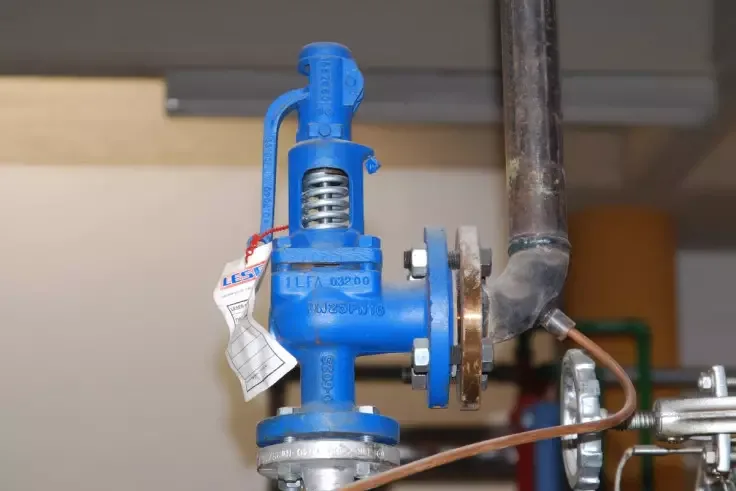
A safety valve is an automatic device that protects industrial systems from excess pressure. It works as the last line of defense by opening automatically when the pressure becomes too high and closing once it returns to a safe level. Since it operates without electricity or manual control, it helps prevent equipment damage, costly downtime, and serious safety risks.
When looking for a leading Safety Valve Manufacturer in India, Speciality Valve stands out for its focus on quality, performance, and customer satisfaction. The company manufactures a wide range of safety valves, including spring-loaded, pilot-operated, and balanced bellows designs, to meet the needs of industries such as oil and gas, power plants, petrochemicals, and chemical processing. Made from high quality materials like carbon steel, stainless steel, duplex steel, and special alloys, Speciality Valve products are built for long lasting performance even in demanding environments With strict quality checks, international standards, customized solutions, competitive pricing, and timely delivery, Speciality Valve has earned the trust of customers in both Indian and global markets.
Working and Construction of Safety valves:
- Active Venting State: During an active overpressure event, the safety valve stays wide open because the continuous upward force of the escaping fluid easily overpowers the downward resistance of the compressed calibrated spring.
- Pressure Decline: As the excess volume rapidly exits through the discharge port, the internal system pressure drops back down toward its normal operational baseline.
- Spring Force Domination: Once the pressure drops slightly below the initial set point (known as the blowdown pressure), the downward mechanical force of the spring becomes stronger than the fading upward pressure of the liquid or gas.
- Downward Displacing: This shift in forces causes the spring to instantly expand, driving the spindle and the attached disc rapidly downward through the valve body.
- System Resealing: The moving disc lands squarely back against the stationary valve seat, cutting off the exhaust path and tightly resealing the system to prevent further leaks.
Types of safety valves at Speciality valve:
- Bellow Safety Valve – A safety valve that uses a bellow to protect the spring and internal parts from the corrosive or temperature effects of the process fluid.
- Conventional Safety Valve – The standard type of safety valve where the operational characteristics (like opening and closing pressures) are directly affected by changes in the backpressure.
- Pilot Operated Safety Valve – A valve that combines a main valve with an auxiliary pilot mechanism to control the opening and closing, allowing for tighter operation close to set pressure.
- Pressure Safety Valve – A general safety valve designed to open automatically when a predetermined pressure is reached to prevent system over-pressurization.
- Steam Safety Valve – A safety valve specifically engineered to handle the high temperatures and rapid expansion properties of steam applications.
- Thermal Safety Valve – Designed to relieve pressure buildup caused exclusively by thermal expansion of trapped liquids in a pipeline or vessel
.
Materials Available:
- Cast Iron
- Ductile Iron
- Cast Steel / Carbon Steel
- Stainless Steel
- Brass
- Bronze
Industries it is used in:
- Oil and Gas: Onshore and offshore production, refineries, and LNG terminals.
- Power Generation: Thermal, nuclear, and renewable energy power plants.
- Petrochemical and Chemical: Process plants handling highly corrosive chemical lines.
- Boilers and Utilities: Steam generation networks and industrial utilities.
- Water Treatment: Desalination facilities and water systems.
Technical Details of Safety Valves:
- Size Range: ½” to 40”
- Pressure Rating: PN10 to PN450, ANSI Class 150 to Class 2500
- Operation: Spring Loaded, Pilot Operated, and Balanced Bellows
- Media: Steam, Gas, Vapor, Liquid, and Process Fluids
- End Connections: Flanged, Threaded, Socket Weld, and Butt Weld
- Set Pressure: Adjustable according to system requirements
- Testing: Hydrostatic, Seat Leakage, Set Pressure, and Functional Testing
- Standards: ASME Section I, ASME Section VIII, API, and ISO as applicable
Benefits of Buying Safety valves From Specialty Valves:
- Flexible Metallurgy Grades: These safety valves are made using different types of metallurgy grades, depending on certain specifications like Cast Iron, Ductile Iron, Carbon Steel (WCB, WCC,LCB, LCC) and top quality Stainless Steel (SS304, SS316, CF8, CF8M).
- Strict Regulations and Certification Standards: They are manufactured following all
international codes of practice, including ASME Section I (boiler designs) and ASME Section VIII(pressure vessels) along with regular API / ISO regulations.
- Excellent High Parameters: Safety valves are designed for working in a broad range of nominal pressures (PN10 up to PN450 [Class 150 up to 2500]) and available in a size of 1/2” up to 40”.
- Multi Phased Operation: Hybrid safety relief valves were specially designed for gas/vapor phase service (pop action) and liquid phase service (proportional relief).
Speciality Valve is a prominent brand in India which produces High quality safety valves that can be used to protect pipelines from bursting and damage caused by sudden pressure increase.Safety valves serve as a security valve that opens to release extra pressure and then closes tightly to avoid any leakage.Made from tough material that cannot rust in different conditions, these valves can endure high heat as well as low temperature.With their strict adherence to safety standards, Speciality Valve a topmost Safety Valve Manufacturer in India guarantees reliable security of pipelines used by factories, water facilities and gas stations.
To know more, visit us at https://www.specialityvalve.com/product-category/safety-valve/