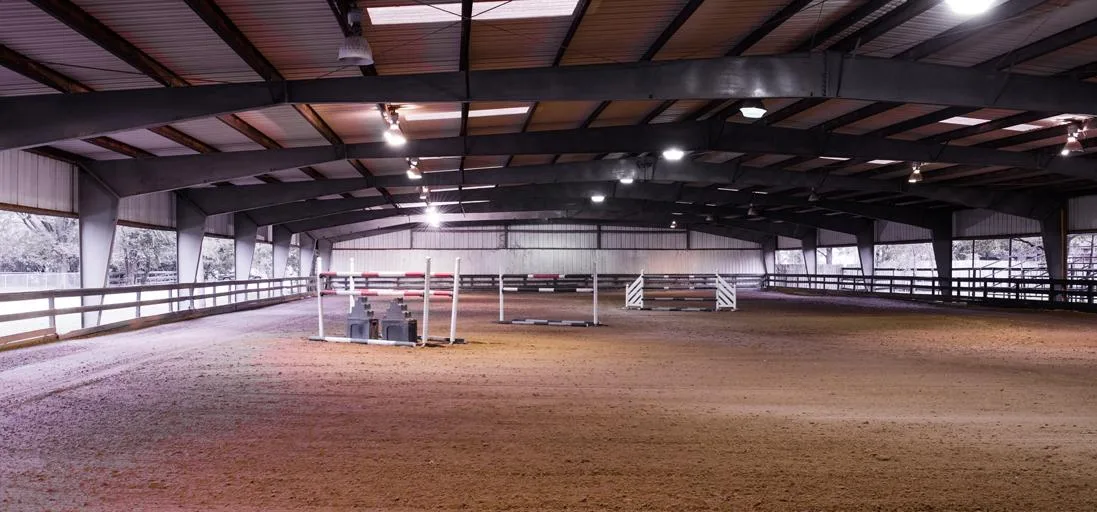
Expanding an existing horse arena can provide more room for training, accommodate additional riders, and improve an equestrian facility's functionality. However, increasing the arena's dimensions requires more than adding space. Owners must consider the existing base, drainage patterns, footing compatibility, and fencing adjustments. Suitable arena grooming equipment also helps maintain a consistent riding surface after construction.
Careful planning can prevent uneven ground, water accumulation, and unnecessary maintenance. Addressing these factors before work begins helps create an expanded arena that remains practical to maintain.
Start With the Right Layout and Site Preparation
Before construction, determine how the additional space will be used. An arena intended for jumping may require different dimensions from one used for dressage or general schooling. The layout should accommodate the intended activities while preserving safe access around the perimeter.
Examine the surrounding land for slopes, trees, structures, and areas where water collects. The existing arena should also be inspected for low spots, compacted footing, and drainage problems that need attention before expansion.
The Penn State Extension guide to horse farm design discusses planning considerations for equestrian facilities, including property layout and riding areas.
Connect the Existing and New Base Materials
Joining the original arena to the new section requires careful preparation. Differences in soil composition, compaction, and settlement can cause the surfaces to behave differently, potentially creating ridges or depressions where they meet.
Contractors should assess the existing base before preparing the extension. Depending on site conditions, work may involve removing unsuitable soil, preparing the subgrade, and compacting the new base appropriately. Simply adding footing beside the original surface will not resolve problems beneath the ground.
Footing compatibility matters, too. Differences in material composition, particle size, and moisture retention can affect traction and cushioning. The University of Georgia's guide to arena footing explains the relationship between arena footing layers and surface performance.
Get Grading and Drainage Right
Expanding an arena can change how water moves across the property. Poor grading may direct runoff toward the existing surface, nearby structures, or low-lying areas.
The site should be graded to move water away from the riding surface. Depending on the terrain and soil conditions, drainage channels or additional drainage infrastructure may be necessary. The entire property should be considered so that solving a problem in the new section does not create another elsewhere.
The University of Kentucky's guide to horse arena footing provides information about footing characteristics and arena surface considerations. For substantial grading or drainage changes, qualified professionals can evaluate the site and recommend appropriate solutions.
Maintain Consistent Footing Across the Expanded Arena
The new section should perform similarly to the existing riding surface. If the materials differ significantly, horses may experience inconsistent traction and cushioning when moving between the two areas.
Before purchasing additional footing, assess the existing material and its suitability for the arena's intended activities. After construction, inspect the transition regularly for uneven depth, compacted sections, and material accumulation.
A horse arena groomer can help redistribute footing and maintain a more uniform surface.
Review Fencing and Equipment Access
An expanded arena usually requires changes to its perimeter. Existing fencing may need extending or relocating, while gates and access routes should accommodate the new dimensions.
Inspect fence posts, rails, gates, and hardware before construction. Maintenance access also matters: grooming equipment needs enough room to enter, maneuver, and exit safely.
Choosing a suitable riding arena groomer and planning equipment access early can make routine maintenance easier after the expansion is complete.
Establish a Maintenance Routine
A larger arena may require adjustments to the existing grooming schedule. Regularly inspect the surface for uneven areas, changes in footing depth, compaction, and water accumulation. Pay particular attention to the connection between the old and new sections, where settlement may become apparent.
Appropriate arena grooming equipment can support consistent surface care. A professional arena groomer may be useful for frequently used facilities, although equipment selection should reflect the arena's dimensions, footing material, and available vehicle.
Grooming cannot correct an unstable base or inadequate drainage. Addressing construction problems first and maintaining the surface afterward supports long-term usability.
Maintain Your Expanded Arena
A successful expansion depends on proper site preparation, a stable base, effective drainage, compatible footing, and appropriate fencing. EZ Groomer LLC offers arena grooming equipment for tractor and ATV/UTV setups, helping arena owners maintain their riding surfaces after construction. They provide grooming solutions for different vehicle configurations.