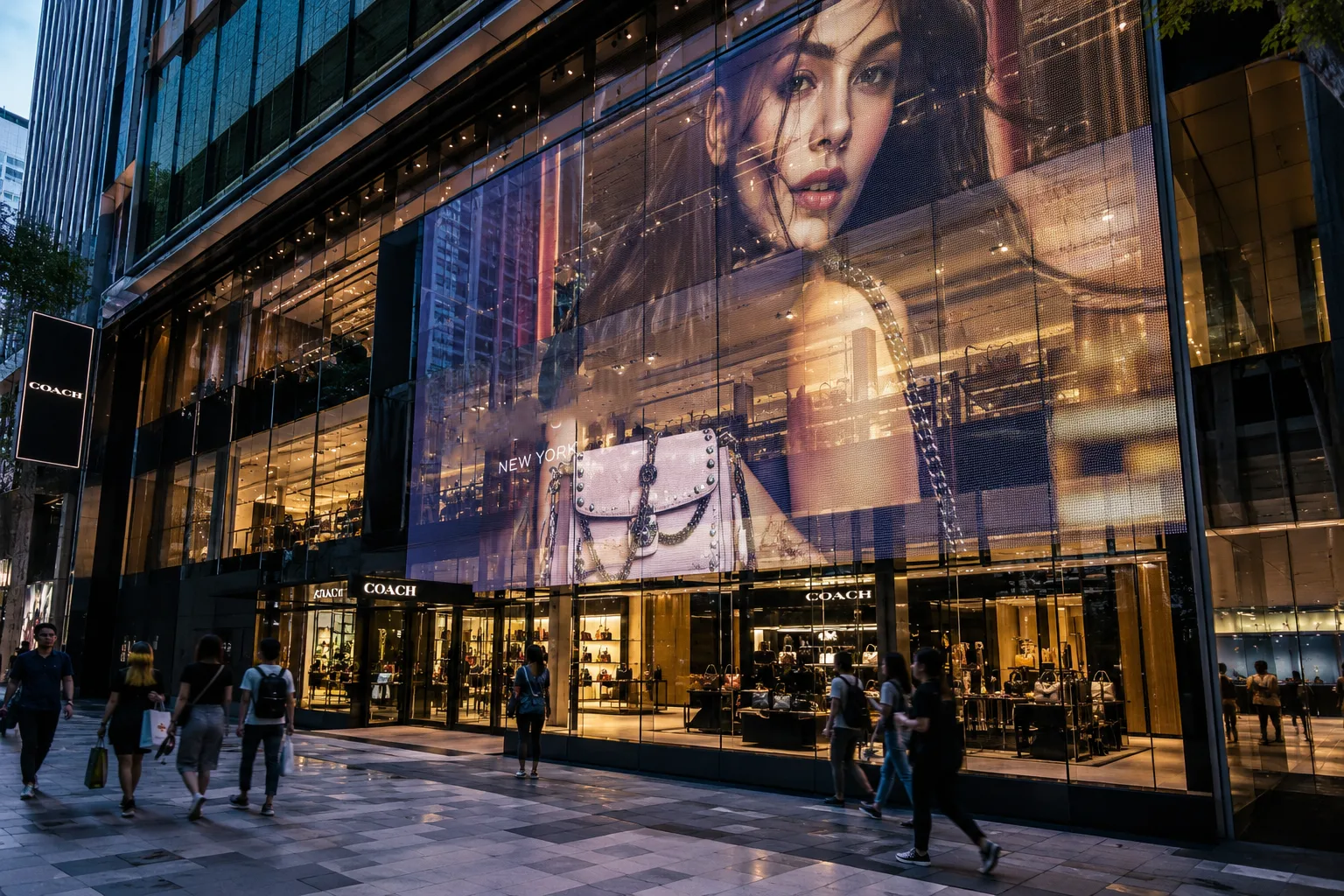
Retail storefront displays are now expected to perform beyond basic branding. Businesses need display systems that attract attention, support dynamic content delivery, maintain storefront visibility, and integrate with modern architectural designs. Traditional LED displays often create visibility obstruction because of their solid cabinet structure, especially when installed on glass façades.
This is where transparent LED technology is becoming increasingly relevant in commercial storefront applications. A transparent LED display allows digital content projection while maintaining partial visibility through the screen structure. For retail businesses operating in malls, high-street commercial zones, automobile showrooms, or premium retail spaces, this creates a balance between digital advertising and architectural openness.
However, selecting the right display configuration requires technical evaluation. Factors such as transparency ratio, pixel pitch, brightness output, viewing distance, structural load, and installation environment directly affect display performance. Working with an experienced transparent LED screen manufacturer becomes critical for selecting a display suitable for storefront operating conditions.
How Transparent LED Screens Function in Storefront Applications
Transparent LED displays use a strip-based LED arrangement with spacing between LED modules that allows light transmission through the display surface. Unlike conventional LED cabinets with solid backing structures, transparent displays reduce visual obstruction while still delivering digital media output.
The transparency percentage generally ranges between 60% and 90% depending on display design and pixel density. Higher transparency improves glass visibility but can also reduce image density and viewing sharpness at closer distances.
A professional transparent LED screen manufacturer usually configures storefront displays based on viewing angle, ambient light exposure, content type, and glass surface dimensions to maintain visual clarity without affecting storefront openness.
Brightness and Visibility Considerations
Brightness calibration is one of the most important technical factors in storefront LED installations. Displays exposed to direct sunlight require significantly higher brightness levels compared to indoor commercial displays.
For storefront environments facing outdoor light exposure, transparent LED displays commonly operate within higher nit ranges to maintain visibility during daytime conditions. However, excessive brightness without proper calibration can reduce content clarity and affect customer viewing comfort during evening hours.
An experienced transparent LED screen manufacturer evaluates environmental lighting conditions before recommending brightness specifications, pixel pitch, and display orientation for commercial storefront applications.
Pixel Pitch and Viewing Distance
Pixel pitch directly affects image sharpness, viewing quality, and display transparency. Smaller pixel pitch provides better image resolution for close-viewing applications but reduces transparency percentage due to tighter LED spacing.
For storefront installations viewed from short pedestrian distances, lower pixel pitch configurations are generally preferred for maintaining content readability and image quality. Larger pixel pitch displays are more suitable for long-distance viewing environments where transparency becomes a higher priority than close-range image density.
Bottom Line
A transparent LED display can be a technically effective storefront solution when visibility, architectural integration, and digital advertising need to operate simultaneously.
Partnering with an experienced transparent LED screen manufacturer helps businesses evaluate these technical parameters correctly before installation.