Camping has always been about escaping the noise of daily life and reconnecting with nature. Whether you're setting up a tent in a remote forest, parking an RV near a mountain range, or exploring off-grid destinations, the freedom of camping is unmatched. However, modern travelers often need reliable internet access for navigation, communication, remote work, entertainment, and emergency situations. This is where satellite internet for camping has become a game-changer.
Unlike traditional cellular networks that rely on nearby towers, satellite internet connects users directly to satellites orbiting the Earth. This technology allows campers to stay connected even in locations where mobile signals are weak or completely unavailable. As outdoor enthusiasts increasingly seek both adventure and connectivity, satellite internet has emerged as one of the most valuable tools for modern camping.
The Growing Need for Internet Connectivity While Camping
Today's campers are not always looking to disconnect entirely. Many travelers work remotely, manage online businesses, attend virtual meetings, or simply want to stay in touch with family and friends. Reliable internet access has become a necessity rather than a luxury.
For digital nomads and remote workers, camping no longer means taking time off from work. With a dependable connection, they can answer emails, join video conferences, upload files, and manage projects from virtually anywhere. Families traveling with children often rely on internet access for educational content, entertainment, and communication.
Additionally, internet connectivity enhances safety during outdoor adventures. Access to weather updates, GPS navigation, emergency services, and campground information can make a significant difference when exploring unfamiliar locations.
How Satellite Internet Works
Satellite internet functions by transmitting data between a satellite dish and satellites positioned in orbit. Unlike cellular internet, which depends on terrestrial infrastructure, satellite technology covers vast geographical areas, including remote regions where traditional networks struggle to reach.
Modern satellite internet systems have significantly improved in speed, reliability, and latency. Many providers now offer broadband-level performance that supports video streaming, online gaming, video conferencing, and other bandwidth-intensive activities.
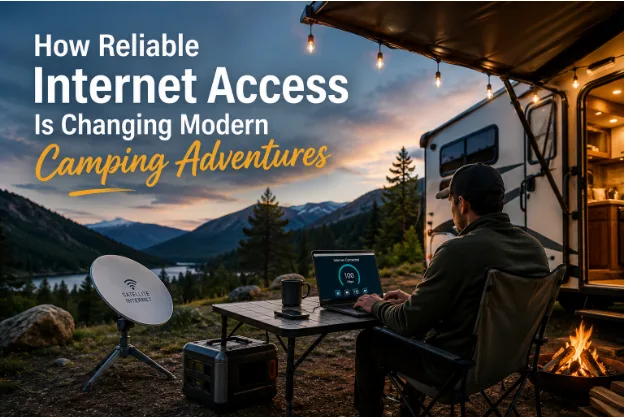
The equipment typically includes a portable satellite dish, modem, power source, and Wi-Fi router. Once set up, users can create a wireless network that connects multiple devices such as laptops, smartphones, tablets, and smart TVs. This portability and ease of setup make satellite internet for camping an ideal solution for travelers who need reliable connectivity while exploring remote destinations beyond the reach of traditional cellular networks.
Benefits of Satellite Internet for Campers
Access in Remote Locations
One of the biggest advantages of satellite internet is its ability to provide connectivity in areas where cellular networks fail. National parks, deserts, mountain regions, and remote campsites often lack reliable mobile coverage. Satellite technology bridges this gap and ensures campers remain connected regardless of their location.
Reliable Communication
Staying in touch with loved ones is important, especially during extended trips. Satellite internet allows campers to make internet-based calls, send messages, share photos, and update family members about their travel plans.
Enhanced Safety
Weather conditions can change rapidly in outdoor environments. With internet access, campers can monitor forecasts, receive emergency alerts, and access critical information when needed. Reliable connectivity can be particularly valuable during severe weather events or unexpected emergencies.
Support for Remote Work
The rise of remote work has encouraged many professionals to embrace a mobile lifestyle. Campers who work online can maintain productivity while enjoying the outdoors. Video conferencing, cloud collaboration, and business communications become possible even in remote destinations.
Entertainment Options
After a long day of hiking, fishing, or exploring, campers often enjoy relaxing with online entertainment. Streaming movies, listening to music, browsing social media, or reading digital content becomes much easier with a dependable internet connection.
Choosing the Right Satellite Internet Solution
Not all satellite internet services are the same. Campers should evaluate several factors before selecting a provider.
Coverage Area
The first consideration is coverage. A provider should offer service in the regions where you plan to travel. Some services provide nationwide coverage, while others may focus on specific geographic areas.
Internet Speed
Speed requirements vary depending on usage. Basic browsing and messaging require minimal bandwidth, while video streaming and remote work demand faster connections. Understanding your internet needs will help you choose the right plan.
Portability
Campers benefit from lightweight, portable equipment that is easy to transport and set up. Modern satellite systems have become increasingly compact and user-friendly, making them ideal for travelers.
Power Requirements
Since many campsites operate off-grid, power consumption is an important factor. Some satellite systems can run efficiently using portable power stations, solar panels, or RV battery systems.
Data Limits
Certain satellite providers impose data caps that may restrict heavy usage. Campers who stream videos frequently or work online should look for plans that offer sufficient data allowances.
Best Practices for Using Satellite Internet While Camping
To maximize performance, campers should position their satellite equipment in areas with a clear view of the sky. Trees, mountains, and other obstacles can interfere with signal quality.
It is also helpful to monitor data usage, especially when using limited plans. Downloading maps, media files, and important documents before arriving at the campsite can reduce bandwidth consumption.
Investing in backup power solutions can further enhance reliability. Portable solar panels and battery stations help maintain internet connectivity during extended off-grid stays.
The Future of Camping Connectivity
Satellite technology continues to evolve rapidly. New satellite constellations are expanding coverage, improving speeds, and reducing latency. As these advancements continue, campers can expect even more reliable internet access in remote locations.
The future of outdoor travel will likely combine adventure and connectivity more seamlessly than ever before. Campers will enjoy the freedom to explore remote destinations without sacrificing access to essential online services.
Conclusion
The modern camping experience has evolved significantly, and internet connectivity now plays an important role in travel, safety, work, and entertainment. Whether you're a weekend adventurer, full-time RVer, or digital nomad, having dependable internet access can enhance your overall experience.
Investing in satellite internet for camping allows travelers to stay connected beyond the reach of traditional cellular networks. With reliable coverage, improved safety, and support for remote work and communication, satellite internet is helping campers enjoy the best of both worlds—unforgettable outdoor adventures and dependable connectivity wherever they roam.