
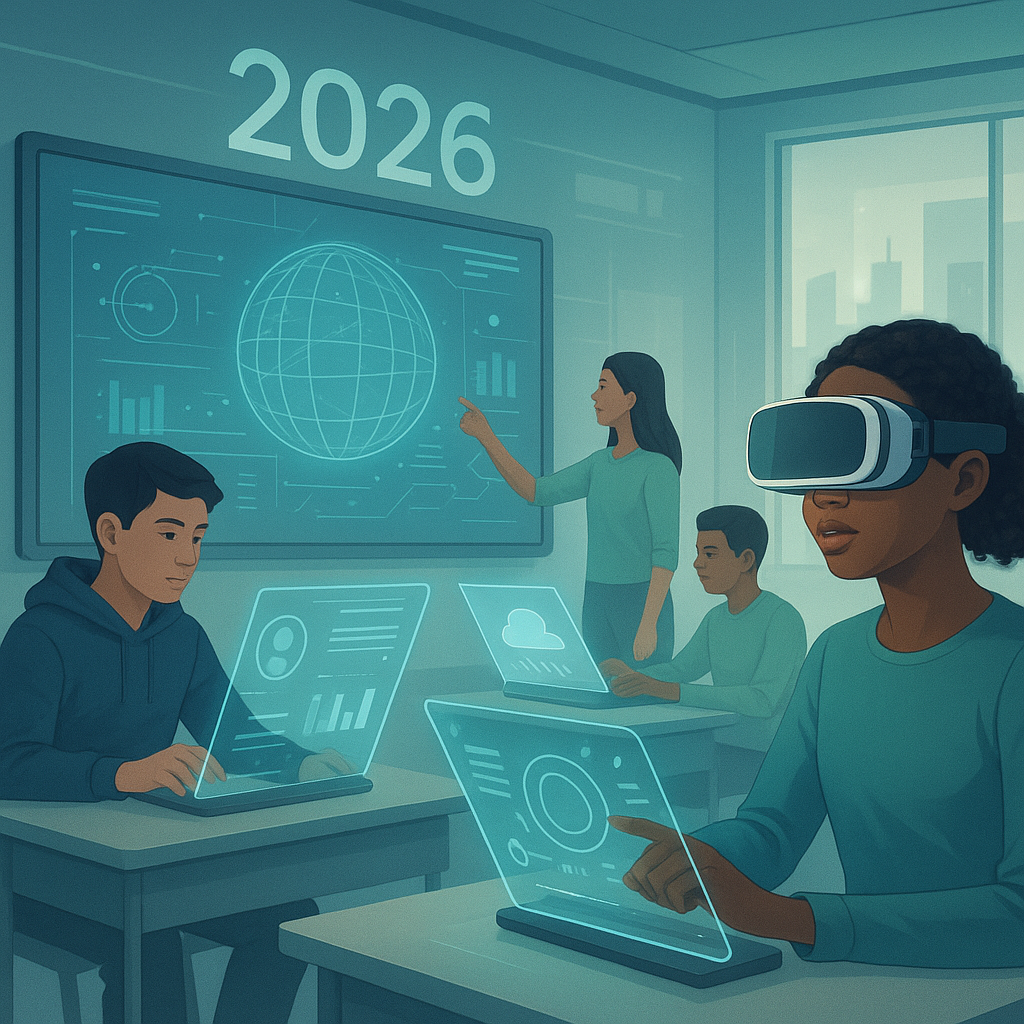
Opening the Digital Classroom: A Snapshot of Online Learning’s Reach
In a bustling co-working space in downtown Singapore, a group of learners from six countries logs into a live virtual seminar on sustainable urban planning. They’re connected by a single platform that supports real-time translation and adaptive learning paths tailored to each participant’s background. This scene is emblematic of online learning’s profound global integration as of 2026. Recent data from the International Education Association highlights that over 65% of higher education students worldwide engage with some form of online learning, a staggering rise from just 20% a decade ago.
The rise is not just quantitative but qualitative. Learning experiences are becoming more immersive, personalized, and accessible. The COVID-19 pandemic accelerated this shift, but it is the technological innovations since 2022 that have truly cemented online education as a dominant mode of learning. This article examines the evolution, current state, and future trajectory of online learning, drawing on expert insights, data analysis, and real-world examples.
“Online learning has transitioned from an emergency solution to a strategic imperative for global education systems,” states Dr. Lina Torres, Director of Digital Education Initiatives at UNESCO.
From Correspondence Courses to AI Tutors: Tracing the Evolution of Online Learning
Online learning’s roots trace back to the 19th century with correspondence courses, but the digital revolution in the late 20th century laid its foundation. The 2000s saw the emergence of MOOCs (Massive Open Online Courses), with platforms like Coursera and edX pioneering free access to university-level content. However, these early models often suffered from low engagement and completion rates.
The 2010s introduced blended learning, combining online content with traditional classrooms, improving outcomes. By the early 2020s, a surge in mobile learning, micro-credentials, and AI-driven platforms began reshaping pedagogy. The pandemic was a watershed moment, forcing institutions globally to adopt virtual classrooms overnight. Yet, this rapid shift exposed digital divides and pedagogical gaps.
In response, 2023–2026 have been characterized by significant investments in infrastructure, AI tutors, adaptive learning algorithms, and VR/AR-enhanced classrooms. TheOmniBuzz’s analysis in Rethinking Learning: How 2026 Is Transforming Online Education Forever highlights how these changes have propelled online education from peripheral to central in global education strategies.
Data-Driven Insights: Measuring Online Learning’s Impact and Challenges
To understand online learning’s transformative role, it is critical to examine empirical data. According to the Global Online Education Report 2026, the following trends stand out:
- Enrollment Growth: Online course enrollments have grown by 18% annually since 2022, with Asia-Pacific leading at a 25% increase.
- Completion Rates: Adaptive learning technologies have boosted course completion rates to 68% on average, up from 42% five years ago.
- Skills Acquisition: 73% of learners report gaining new job-relevant skills within six months of completing online courses.
- Access Equity: Internet accessibility improvements have reduced the urban-rural learning gap from 40% to 15% in emerging economies.
- Cost Efficiency: Institutions report a 30% reduction in per-student instructional costs through hybrid and fully online models.
However, challenges remain. Digital fatigue, varying content quality, and the absence of hands-on experience in certain disciplines continue to hinder some learners. Moreover, assessment integrity and credential recognition are ongoing concerns in academia and industry.
“The promise of online learning is immense, but it requires continuous innovation and robust policy frameworks to ensure quality and inclusivity,” argues Prof. Samuel Ortiz of the Global Education Policy Institute.
2026 Innovations: What’s New in Online Learning This Year?
The current year marks a milestone in online education innovation. Several breakthroughs have redefined how learners and educators interact:
- AI-Powered Personalized Learning: Platforms now employ sophisticated large language models and machine learning to customize content pacing, style, and assessments in real time.
- Immersive Technologies: Virtual reality (VR) and augmented reality (AR) have become mainstream tools, especially for STEM and medical training, offering hands-on simulations previously impossible remotely.
- Credentialing and Blockchain: Blockchain-based digital diplomas and micro-credentials ensure tamper-proof certification, enhancing employer trust.
- Global Learning Communities: Social learning platforms foster peer-to-peer interaction across borders, emphasizing cultural exchange and collaborative problem-solving.
- Hybrid Campus Models: Universities increasingly adopt hybrid models combining in-person labs with online theoretical modules to optimize resource use and learner flexibility.
Leading universities like MIT, University of Cape Town, and National University of Singapore have launched integrated platforms reflecting these trends. Corporate training has also embraced these technologies, with firms like Siemens and Accenture embedding AI tutors and VR scenarios into employee upskilling programs.
These developments are extensively covered in TheOmniBuzz's recent feature How Online Learning Is Shaping Education’s Next Frontier, which explores how these tools democratize education access globally.
Voices from the Field: Educators and Learners on the Digital Transformation
Experts and users alike provide valuable perspectives on online learning’s evolving landscape. Dr. Meera Patel, an instructional designer at a leading online university, highlights the shift in educator roles:
“Teachers are no longer just content deliverers. They are facilitators, mentors, and analysts of learner data, ensuring each student’s journey is meaningful.”
From the learner side, Maria Gonzales, a software developer who reskilled through an online bootcamp, shares:
“Online learning gave me flexibility to balance work and study. The AI tutor’s instant feedback was crucial in mastering complex coding concepts.”
However, some educators caution against overreliance on technology. Digital literacy gaps among teachers and learners can create disparities, and some subject areas require tactile engagement that online formats struggle to replicate.
Policy makers are responding by funding digital literacy programs and incentivizing blended learning models. Additionally, organizations like UNESCO and the World Bank are partnering with governments to expand broadband access and enhance digital learning infrastructure in underserved regions.
Looking Ahead: The Future of Online Learning and Its Societal Impact
As online learning cements itself within the fabric of education, several trends will shape its future trajectory:
- Integration of AI and Human Expertise: Hybrid human-AI instructional models will optimize personalized learning and emotional support.
- Expansion into Lifelong Learning: Online platforms will cater increasingly to adult learners seeking continuous skill development amid rapidly shifting job markets.
- Global Credential Ecosystems: Cross-border recognition of online qualifications will become standardized, facilitating international mobility.
- Ethical and Privacy Frameworks: As data use deepens, robust regulations ensuring learner privacy and algorithmic fairness will be essential.
- Greater Emphasis on Social and Emotional Learning: Online education will incorporate tools to foster interpersonal skills and mental well-being.
In sum, online learning is not merely an educational tool but a societal transformation agent. Its success depends on collaborative efforts among educators, technologists, policymakers, and learners. For those interested in mastering this evolving field, TheOmniBuzz’s Mastering Online Learning: Proven Strategies for Exceptional Digital Education offers actionable insights.
Ultimately, the digital classroom is becoming a cornerstone of equitable, flexible, and innovative education worldwide. Its ongoing evolution will redefine how knowledge is created, shared, and applied in the decades to come.