Opening the Door to a New Era: AI’s Unseen Pervasiveness
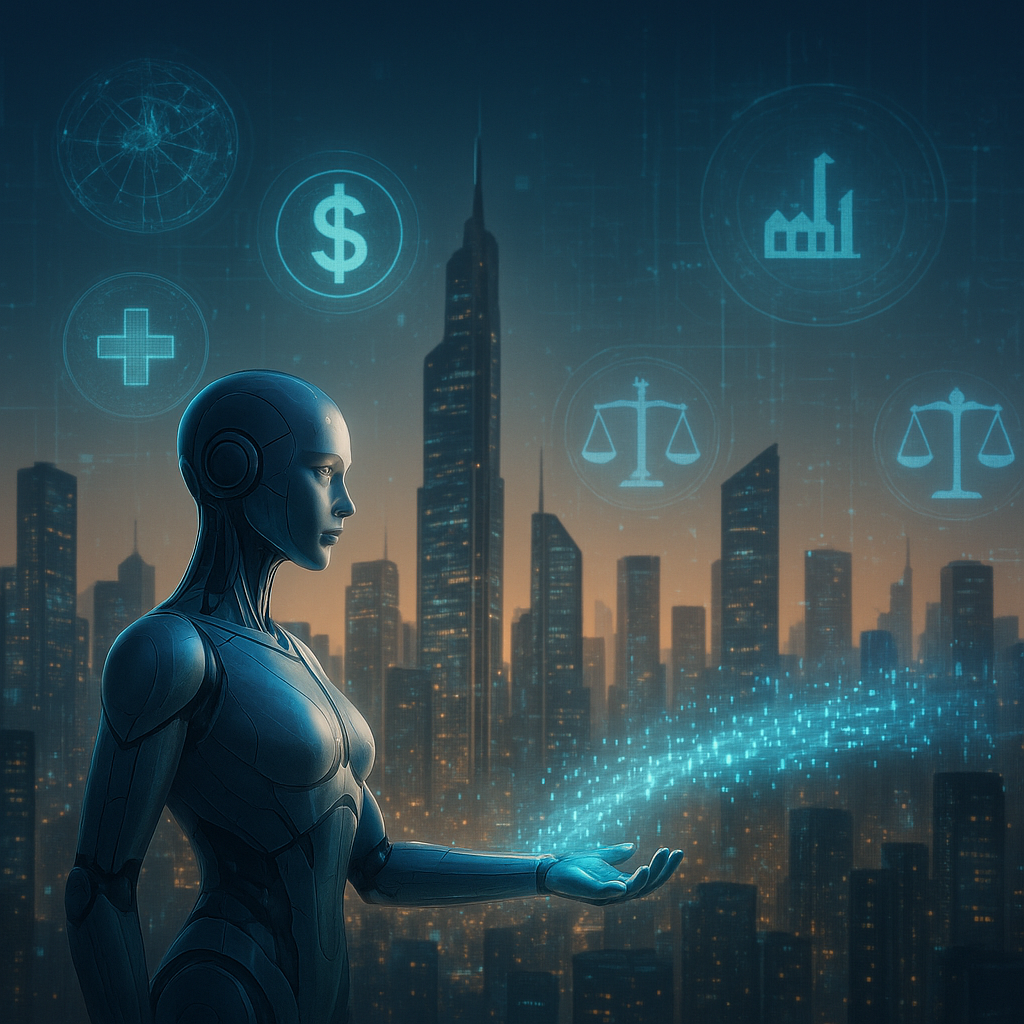
Imagine walking through a city where every device, vehicle, and infrastructure element subtly learns and adapts to your presence. This is not a scene from a sci-fi movie but a near reality in 2026, where artificial intelligence (AI) quietly powers everything from traffic flows in urban centers to personalized healthcare regimens. The global AI market, valued at approximately $340 billion as of early 2026, reflects a staggering compound annual growth rate (CAGR) of 27% over the past five years, according to industry estimates. This growth underscores AI’s transition from experimental tech to a foundational pillar in daily life and commerce.
One cannot overlook the fact that the integration of AI is no longer confined to tech hubs or research labs. It permeates agriculture with precision farming, financial sectors with algorithmic trading, and even creative fields like art and music generation. A report from the World Economic Forum highlights that over 60% of Fortune 100 companies have embedded AI into their core operations, signaling a profound shift in how business is conducted worldwide.
“Artificial intelligence is no longer a futuristic concept; it’s a present reality reshaping every facet of human endeavor.” – Dr. Helena Voss, AI ethicist and policy advisor
However, this surge in AI adoption also brings critical questions about governance, ethics, and societal impact. The interplay of innovation and responsibility defines the current discourse around AI’s role in shaping our future.
Tracing the Trajectory: From Conceptual Roots to Present Breakthroughs
Understanding AI today requires a brief journey through its history. The term 'artificial intelligence' was coined in 1956 at the Dartmouth Conference, where pioneers like John McCarthy envisioned machines capable of simulating human intelligence. Early efforts were largely symbolic, focusing on rule-based systems and logic programming. The decades that followed saw cycles of optimism and 'AI winters' due to limited computational power and data scarcity.
The renaissance of AI began in the 2010s with the rise of machine learning, particularly deep learning architectures powered by neural networks. Breakthroughs such as the 2012 ImageNet competition victory by AlexNet rekindled interest and investment. By the mid-2020s, the convergence of vast datasets, cloud computing infrastructures, and advanced algorithms enabled AI to achieve or surpass human-level performance in diverse domains, from natural language understanding to complex strategic games.
This evolution is well documented in the comprehensive analysis at TheOmniBuzz, particularly in Decoding Artificial Intelligence: From Origins to 2026 Breakthroughs, which contextualizes current capabilities within a rich historical framework. The infusion of AI into everyday technology has accelerated exponentially, propelled by advances in hardware like neuromorphic chips and quantum-assisted AI processors.
Data-Driven Insights: AI’s Expanding Domain and Economic Footprint
AI’s impact is measurable across multiple economic sectors with tangible data supporting its transformative effect. In healthcare, AI-driven diagnostics have improved early disease detection accuracy by up to 40%, according to recent studies published by the National Institutes of Health. Autonomous vehicles, now tested in over 30 countries, have collectively logged more than 10 billion miles, significantly reducing accidents attributed to human error.
Analyzing AI adoption trends reveals key patterns:
- Enterprise Integration: 72% of large enterprises reported deploying AI in customer service, supply chain optimization, or fraud detection by mid-2026.
- Investment Flows: Global AI venture capital funding surpassed $120 billion in 2025, with a focus on generative AI, robotics, and AI security technologies.
- Workforce Impact: AI automation has redefined job roles, with 15% of all jobs globally augmented by AI tools, necessitating upskilling initiatives.
Moreover, cross-sector comparisons highlight AI’s uneven adoption curve. Manufacturing and finance lead in automation and predictive analytics, while sectors like education and government are still developing effective integration strategies. These disparities present both opportunities and challenges for policymakers aiming to foster inclusive growth.
“AI’s economic potential is vast but requires deliberate strategies to ensure equitable benefits across all layers of society.” – Rajiv Malhotra, Chief AI Officer at GlobalTech Innovations
2026 Milestones: The Latest Breakthroughs and Regulatory Moves
The year 2026 has been pivotal for AI, with several landmark developments reshaping the industry landscape. One of the most significant is the widespread deployment of multimodal AI systems capable of seamlessly integrating text, audio, image, and sensor data. These systems power applications from advanced medical imaging diagnostics to real-time environmental monitoring.
On the regulatory front, international bodies have taken unprecedented steps to codify AI governance frameworks. The Global AI Ethics Consortium, formed in 2025, released its second edition of AI operational standards this year, focusing on transparency, accountability, and data privacy. Countries including the United States, European Union members, China, and Japan have begun harmonizing their policies to facilitate safe AI innovation while mitigating risks.
Technological progress is also marked by breakthroughs in explainable AI (XAI). Leading AI providers now offer models with built-in interpretability features, addressing concerns about 'black box' decision-making. This shift has gained traction in high-stakes sectors such as criminal justice, finance, and healthcare, where understanding algorithmic rationale is crucial.
For a detailed exploration of these advances, see TheOmniBuzz’s Artificial Intelligence in 2026: Advances, Impact, and Future Directions, which provides an authoritative update on the state of AI technologies and their societal implications.
Voices from the Field: Experts Weigh In on AI’s Promise and Perils
Industry leaders and scholars offer nuanced perspectives on AI’s trajectory. Dr. Maria Chen, a leading AI researcher at MIT, emphasizes the importance of balancing innovation with ethical safeguards. “AI must be developed with a human-centric approach, ensuring it amplifies human capabilities rather than replaces them,” she asserts.
Corporate executives highlight the competitive edge AI provides. At Synapse Dynamics, CEO Lars Becker notes, “Our AI-driven supply chain solutions have reduced operational costs by 18% while improving delivery times. This efficiency gains translate directly to better customer satisfaction.”
However, concerns around job displacement persist. A recent report by the International Labour Organization estimates that AI could disrupt up to 25% of current jobs by 2030, underscoring the urgency of reskilling programs. Governments and private entities alike are investing heavily in workforce transformation initiatives, integrating AI literacy into education systems worldwide.
- Ethical AI Development: Emphasizing fairness, accountability, and inclusivity.
- Collaboration Across Stakeholders: Bridging academia, industry, and government.
- Human-AI Symbiosis: Designing AI to augment rather than supplant human roles.
These expert insights reiterate that AI’s potential can be harnessed responsibly only through concerted, multidisciplinary efforts.
“The future of AI lies not in replacing humans but in creating synergistic partnerships that expand our collective horizons.” – Dr. Maria Chen, AI researcher
Looking Ahead: What the Next Decade Holds for AI
Forecasting AI’s future is a complex task, but several trends provide direction. Emerging technologies such as quantum computing promise to accelerate AI capabilities beyond current limits. Meanwhile, the growing emphasis on ethical AI frameworks suggests a move toward more transparent and trustworthy systems.
Key developments to watch include:
- AI Democratization: Tools and platforms becoming accessible to wider audiences, empowering small businesses and individual creators.
- AI-Driven Climate Solutions: Leveraging AI for modeling, mitigation, and adaptation strategies to combat global warming.
- Enhanced Human-Machine Interfaces: Brain-computer interfaces and augmented reality integrated with AI for immersive experiences.
- Regulatory Evolution: International treaties and AI-specific laws shaping responsible innovation.
Businesses and policymakers must remain agile to these developments, fostering ecosystems that support sustainable AI growth. The insights from Rethinking Intelligence: What Exactly Is Artificial Intelligence? provide foundational understanding useful for anticipating future shifts.
Ultimately, AI’s evolution will be shaped by human values as much as by technological advancements, demanding vigilance and foresight.