Hemp Apparel Fabric Highlights from Our Fabric Catalogue Book
Hemp apparel fabric has earned its reputation the hard way — through decades of real-world use, not marketing claims. It's biodegradable, strong, and increasingly the material of choice for designers building genuinely sustainable collections. But like most fabrics with a long list of benefits, the details that matter most rarely come through in a product photo. Getting a real sense of what makes hemp apparel fabric worth choosing means looking past the general pitch and into the specifics — weight, weave, feel, and performance — which is exactly where a physical sample earns its keep.
Strength is usually the first thing worth highlighting about hemp as an apparel fabric. It's known for resisting wear and tear better than many other materials, holding its integrity across repeated use in a way that makes it well suited to garments meant to last rather than be replaced each season. What's less obvious until you've handled it is that hemp doesn't wear down the way conventional fabrics do — it actually gets softer and stronger with every wash, improving in comfort over time instead of breaking down. That's a genuinely unusual quality for a fabric to have, and it's one that only really registers once you've felt the difference between a fresh sample and one that's been through a few washes.
Breathability is another highlight worth calling out, particularly for apparel meant for everyday wear. Hemp fabric allows air to circulate freely, keeping the wearer cool in warm weather, and its moisture-wicking properties help maintain comfort across seasons rather than just in summer. It's also naturally hypoallergenic and gentle on the skin, which makes it a sensible option for people with sensitive skin, and it carries inherent UV-resistant properties that add practical value for outdoor-facing apparel. Together, these qualities explain why hemp shows up so often in eco-conscious clothing lines rather than staying confined to niche use cases.
Versatility deserves a highlight of its own, since hemp doesn't behave the same way across every weave and weight. Plain weave hemp fabric offers a smooth, straightforward texture that suits everyday clothing and accessories well, while twill weave brings a diagonal pattern that improves wrinkle resistance, making it a better fit for jackets, workwear, and bags that see heavier use. The fabric itself spans a considerable weight range too, running from lightweight options suited to shirts up through much heavier constructions built for structured garments and accessories. Choosing the right combination of weave and weight for a specific apparel project is far easier to judge with fabric in hand than by reading two separate spec fields on a product page.
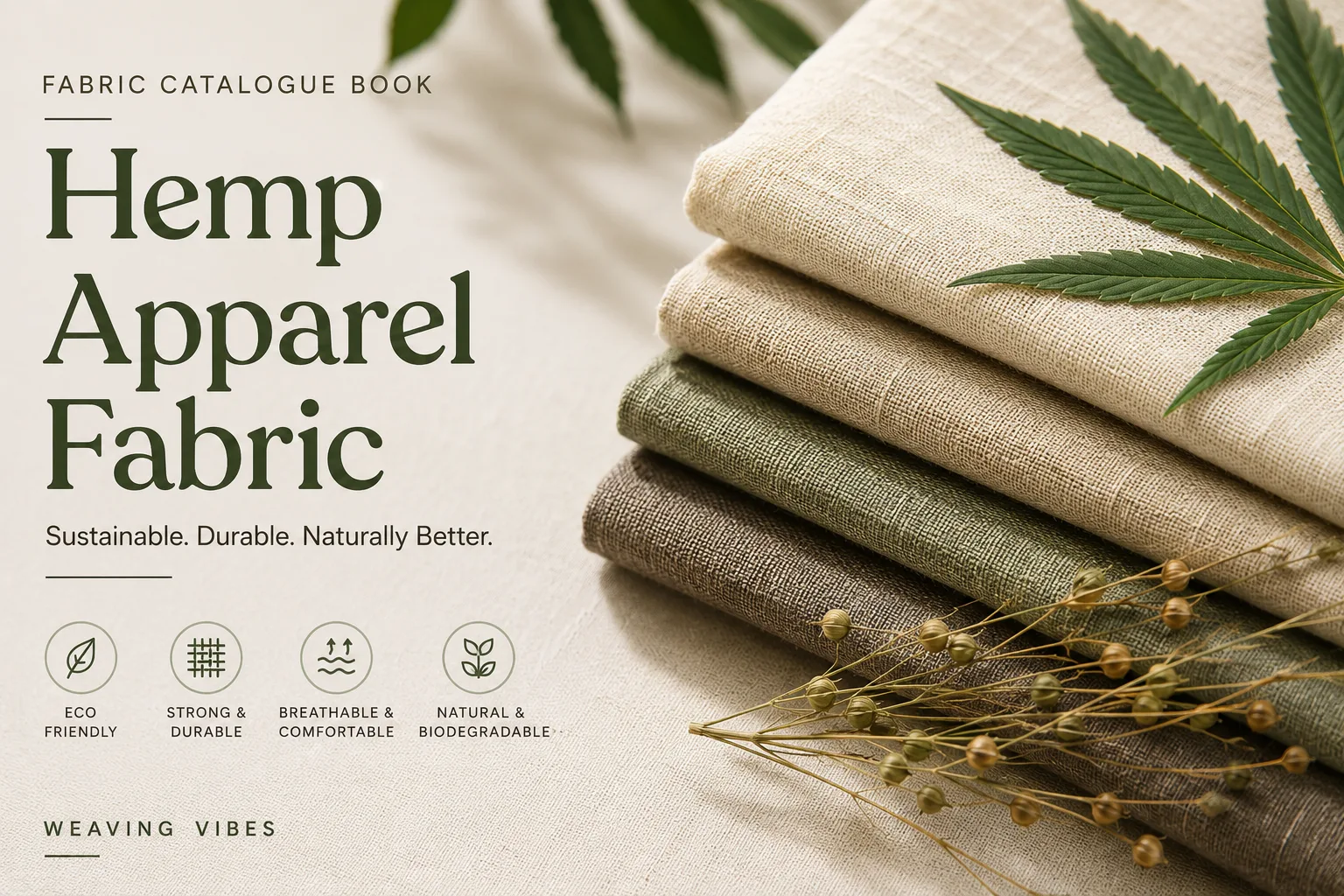
This is exactly the kind of comparison that becomes practical with a curated set of samples on hand. Flipping through a Fabric Catalogue Book lets you check weave, weight, and finish across multiple hemp options in a single sitting, rather than ordering trial lengths separately and waiting on each one. For designers weighing plain weave against twill, or comparing a lighter shirting weight against something heavier meant for accessories, that side-by-side comparison tends to shortcut a decision that would otherwise take several rounds of back-and-forth with a supplier.
Quality is a highlight worth checking carefully too, since not every fabric labelled "hemp" is made to the same standard. Genuine hemp apparel fabric should be exactly what it claims to be, rather than a blend passed off without disclosure, and it typically feels slightly coarser at first than blended alternatives before softening considerably after the first few washes. Certification marks like GOTS or OCS are worth looking for as well, since they confirm the fibre was grown and processed without harmful chemicals — a detail that matters as much for apparel meant for sensitive skin as it does for sustainability claims in general.
Care is the final highlight worth keeping in mind once a hemp apparel fabric has been chosen and put to use. Washing in cold water with a mild detergent helps protect both texture and colour, while air drying instead of high heat prevents shrinkage. Since hemp naturally softens with wear, minimal ironing is usually enough to keep garments looking their best over time.
Taken together, strength, breathability, versatility, and verified quality make a strong case for Hemp Apparel Fabric as a serious option for any apparel project built around durability and sustainability. Checking these highlights against an actual sample, rather than relying on a product description alone, is what turns a promising fabric on paper into a confident, well-informed sourcing decision.