In today’s highly competitive restaurant industry, serving delicious food is no longer the only factor that influences customer satisfaction. Presentation, branding, atmosphere, and visual communication all play an important role in creating a memorable dining experience. One of the most powerful yet often underestimated branding tools is the restaurant menu. A professionally designed menu does much more than simply list food items and prices. It communicates the personality of a restaurant, guides customer choices, highlights profitable dishes, and creates a strong visual connection with the brand.
This is where effective Food Menu Graphic Design becomes essential. A well-designed menu can make a restaurant look more professional, organized, and appealing. Whether you own a fine-dining restaurant, café, bakery, fast-food outlet, bar, food truck, or casual dining establishment, the visual quality of your menu can directly influence how customers perceive your business.
Professional menu design focuses on combining creativity with functionality. The goal is not just to make a menu look attractive but also to ensure that customers can easily understand it and make ordering decisions comfortably. From typography and colors to layout and imagery, every design element plays an important role in creating an effective restaurant menu.
Understand Your Restaurant Brand Before Designing the Menu
The first step in successful Food Menu Graphic Design is understanding the identity of the restaurant. Every restaurant has its own personality, target audience, cuisine style, and brand message. A luxury fine-dining restaurant should not have the same menu design style as a casual burger café or a family-friendly pizza restaurant.
Before beginning the design process, it is important to consider questions such as:
- What type of food does the restaurant serve?
- Who is the target audience?
- What atmosphere does the restaurant want to create?
- Is the brand modern, traditional, premium, playful, or minimal?
- What colors and visual elements represent the brand?
The answers to these questions help create a menu that feels connected to the overall restaurant identity. Consistent branding across the logo, interior, website, packaging, and menu helps customers recognize and remember the business.
A professionally designed menu should feel like a natural extension of the restaurant brand rather than a separate document.
Create a Clear and Organized Menu Layout
One of the most important aspects of Food Menu Graphic Design is layout organization. Customers should be able to quickly scan the menu and find what they are looking for without feeling confused or overwhelmed.
A cluttered menu with too many colors, fonts, borders, and images can make the ordering process difficult. On the other hand, a clean and structured layout creates a comfortable reading experience.
Food categories should be clearly separated into sections such as:
- Appetizers
- Soups
- Salads
- Main Course
- Pizza
- Pasta
- Burgers
- Desserts
- Beverages
- Special Items
Using proper spacing between categories and menu items improves readability. Visual hierarchy can also guide customers toward featured dishes, chef specials, or high-profit items.
A balanced layout helps customers navigate the menu naturally. Instead of placing everything randomly, designers should strategically organize information according to customer reading patterns.
Use Typography That Is Easy to Read
Typography plays a major role in professional Food Menu Graphic Design. The fonts chosen for a menu can communicate personality and influence readability.
Decorative fonts may look attractive, but they should not make food names or descriptions difficult to read. Customers should be able to understand menu content quickly, even in low-light restaurant environments.
A good menu design usually uses a combination of two or three complementary fonts. For example, a stylish font can be used for section headings, while a simple and readable font can be used for food descriptions and prices.
Font size is equally important. Small text may allow more items to fit on a page, but it can create a poor customer experience. Proper spacing and font sizing make the menu more comfortable to read.
Typography should also remain consistent throughout the menu. Using too many different font styles can make the design appear unprofessional and disconnected.
Use Colors Strategically
Colors have a powerful influence on emotions and customer perception. The right color combination can make a menu visually attractive while reinforcing the restaurant's brand identity.
For example, warm colors such as red, orange, and yellow are often associated with energy, appetite, and excitement. Dark colors combined with gold or elegant neutral tones can create a premium and sophisticated feeling.
However, successful Food Menu Graphic Design does not mean using as many colors as possible. A limited and carefully selected color palette usually creates a more professional appearance.
The colors used in the menu should match the restaurant logo and overall branding. Maintaining consistency helps create a stronger visual identity.
Background colors should also provide enough contrast with text. A beautiful menu is not effective if customers struggle to read the content.
Highlight Signature and Popular Dishes
Every restaurant has certain dishes that represent its specialty. These signature items deserve additional visual attention.
Strategic Food Menu Graphic Design can highlight selected dishes using design techniques such as:
- Special icons
- Subtle borders
- Background highlights
- Chef recommendation labels
- Popular item badges
- Featured sections
The purpose is to guide customer attention naturally without making the menu look crowded.
Restaurants can also highlight high-margin dishes by placing them in visually prominent locations. Menu engineering and graphic design can work together to encourage customers to explore specific items.
However, it is important not to highlight too many dishes. If every item is labeled as special, then nothing truly stands out.
Use High-Quality Food Images Carefully
Food photography can make a menu more attractive and tempting, but images should be used strategically. Poor-quality photographs can reduce the professional appearance of an otherwise well-designed menu.
High-resolution images that accurately represent the food can create appetite appeal and help customers understand unfamiliar dishes.
However, placing images beside every menu item can create visual clutter. Premium restaurants often use fewer images and focus on typography and elegant layouts, while fast-food menus may use more visual photography to encourage quick decisions.
The right approach depends on the restaurant type and target audience.
A professional Food Menu Graphic Design strategy considers the balance between photography, illustrations, text, and empty space.
Keep Food Descriptions Short and Appealing
A menu should not only list dish names. Well-written descriptions can help customers understand ingredients and make items sound more appealing.
Instead of writing long paragraphs, descriptions should be concise and informative.
For example, rather than simply writing:
“Grilled Chicken”
A restaurant could write:
“Herb-marinated grilled chicken served with seasonal vegetables and a rich house-made sauce.”
This provides more information while creating a stronger sense of quality.
However, descriptions should remain easy to scan. Too much text can make the menu feel crowded. The best Food Menu Graphic Design combines attractive writing with proper spacing and typography.
Make Pricing Clear and Consistent
Pricing should be easy to locate without dominating the entire menu design.
Restaurants should maintain consistency in how prices are displayed. Using different formats across the menu can create confusion.
For example, if one item is listed as $12.00, another as 12 dollars, and another as $12, the menu may appear inconsistent.
Professional menu design uses a clear pricing system that fits the overall visual style.
The placement of prices can also influence the visual experience. Designers often avoid creating a strong vertical column of prices because customers may begin comparing dishes based only on cost. Instead, prices can be placed naturally alongside food descriptions.
The objective is to create a balanced design that helps customers focus on the overall value and appeal of the food.
Design for Both Print and Digital Menus
Modern restaurants often need more than one menu format. A menu may be displayed in print, on a website, through QR codes, on digital screens, or on social media platforms.
This makes adaptable Food Menu Graphic Design increasingly important.
A printed menu should be optimized for physical readability and printing quality. A digital menu should be easy to navigate on smartphones and tablets.
Responsive design is especially important for QR code menus. Customers should not need to zoom excessively to read menu items.
Restaurants may also use TV menus or LED menu boards. These formats require larger typography and simplified layouts because customers often view them from a distance.
A consistent visual identity across all menu formats helps strengthen the restaurant brand.
Use White Space to Improve Readability
White space is one of the most valuable design elements in professional menu creation. Many restaurant owners make the mistake of trying to fill every available space with text, graphics, and images.
A crowded menu can overwhelm customers.
White space creates breathing room between different elements. It helps organize information and directs attention toward important sections.
Minimal and modern Food Menu Graphic Design often relies heavily on spacing to create a clean and premium appearance.
The goal is not necessarily to leave large empty areas but to create a balanced composition where every element has enough space.
Maintain Consistency Across the Entire Menu
Consistency is essential for professional branding.
The same fonts, colors, icon styles, heading formats, and design elements should be used throughout the menu. A consistent design creates a sense of quality and professionalism.
For restaurants with multiple menu pages, each page should feel connected to the others.
A customer should immediately recognize that every page belongs to the same restaurant brand.
This consistency should also extend beyond the menu. Restaurant signage, packaging, social media graphics, and promotional materials can use similar visual elements.
Work with Professional Menu Designers
While online templates can be useful for simple projects, a custom-designed menu provides greater flexibility and stronger brand identity.
Professional menu designers understand typography, layout balance, color psychology, visual hierarchy, and restaurant branding. They can create menus that are both visually attractive and practical for customers.
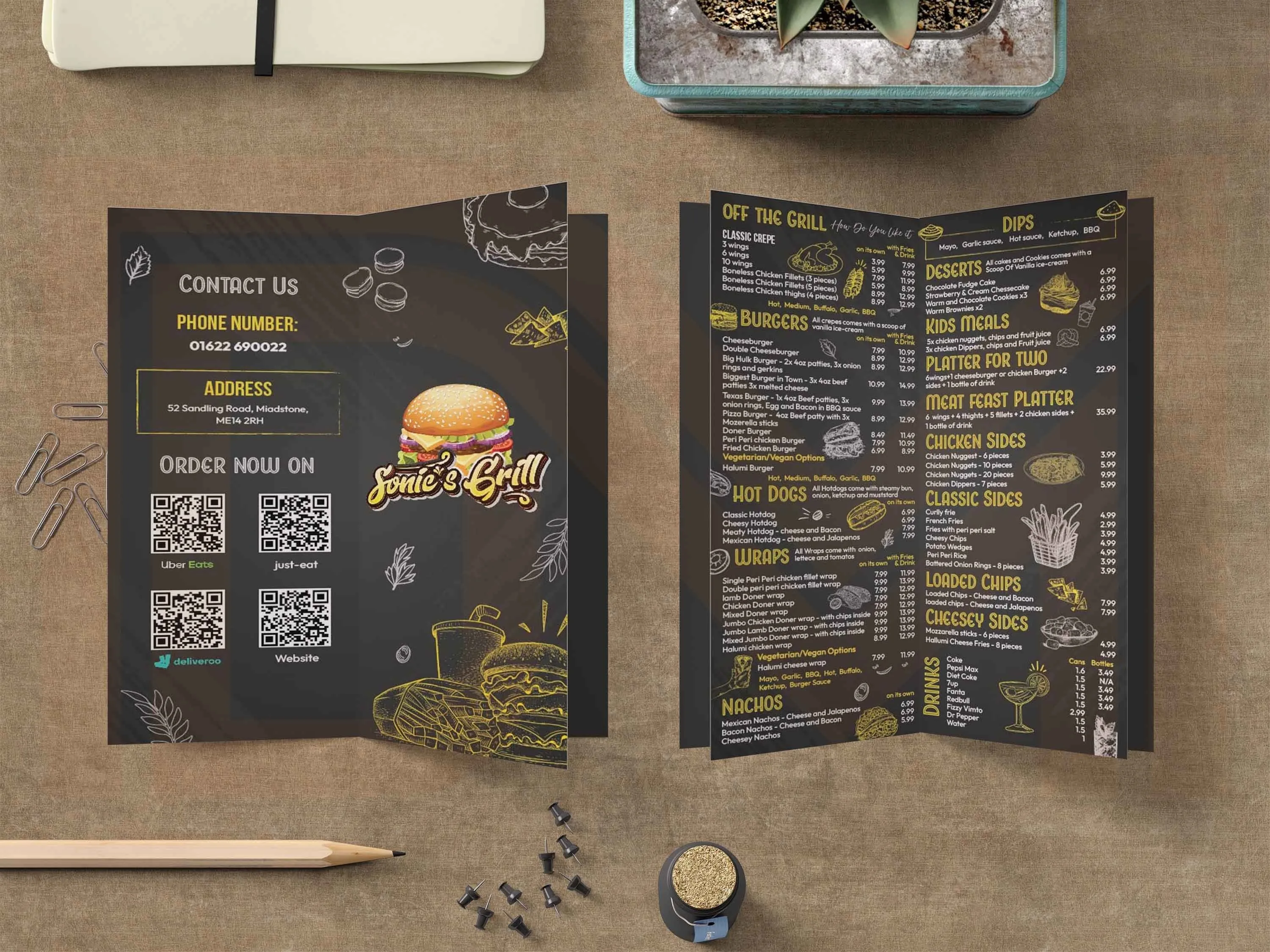
A professional design service such as Design My Menu can help restaurants create customized menu designs that reflect their unique brand personality. From single-page menus and two-sided menus to bi-fold, trifold, digital menus, TV menus, and LED menu designs, professional solutions can be tailored to different restaurant requirements.
Working with experienced designers can save time while ensuring that the final menu looks polished and professional.
Update Your Menu Design Regularly
Restaurant trends and customer expectations continue to change. A menu that looked modern several years ago may now appear outdated.
Regular updates can help keep the menu visually fresh and relevant.
This does not always mean completely redesigning the menu. Small improvements such as updating typography, improving food photography, reorganizing categories, or refreshing colors can make a significant difference.
Seasonal menus and special promotions also provide opportunities to introduce new visual elements.
A modern and updated Food Menu Graphic Design can show customers that a restaurant pays attention to detail and values presentation.
Final Thoughts
A restaurant menu is much more than a list of food items and prices. It is a powerful communication and branding tool that influences customer perception and supports the overall dining experience.
Effective Food Menu Graphic Design combines creativity with functionality. A successful menu should be visually attractive, easy to read, well-organized, and consistent with the restaurant's brand identity.
From choosing the right typography and colors to organizing categories and highlighting signature dishes, every design decision contributes to the final customer experience.
Restaurants that invest in professional menu design can create a stronger visual identity and present their food in a more appealing way. With thoughtful planning and creative expertise from professional services like Design My Menu, businesses can transform ordinary menus into powerful branding tools.
In a competitive restaurant industry, small details can make a significant difference. A carefully designed menu can help a restaurant communicate quality, personality, and professionalism while making it easier for customers to explore and enjoy the food experience.
Frequently Asked Questions
1. What is Food Menu Graphic Design?
Food Menu Graphic Design is the process of visually designing restaurant menus using elements such as typography, colors, layouts, images, icons, and branding. The goal is to create an attractive and easy-to-read menu that improves the customer experience.
2. Why is professional menu design important for restaurants?
Professional menu design helps restaurants present food items clearly, strengthen brand identity, improve readability, and create a positive impression on customers. A well-designed menu can also highlight signature dishes and important menu categories.
3. What should be included in a good food menu design?
A good menu should include clear categories, readable typography, consistent pricing, attractive food descriptions, proper spacing, brand colors, and strategically placed visual elements.
4. How can Food Menu Graphic Design improve restaurant branding?
A professionally designed menu reflects the restaurant's personality and visual identity. Consistent colors, fonts, logos, and layouts help customers recognize and remember the brand.
5. Should restaurants use food images on their menus?
Food images can be useful when they are high quality and strategically placed. However, too many images can make a menu look crowded. The ideal approach depends on the restaurant type and branding style.
6. What types of menus can professional designers create?
Professional designers can create single-page menus, two-sided menus, bi-fold menus, trifold menus, digital menus, QR code menus, TV menus, LED menus, and customized restaurant menu formats.
7. How often should a restaurant update its menu design?
Restaurants should review their menus regularly, especially when changing food items, prices, branding, or seasonal offerings. A visual refresh can also help keep the menu modern and appealing.
8. Why choose Design My Menu for menu design services?
Design My Menu offers professional menu design solutions focused on creating visually appealing and brand-focused menus. Restaurants can choose customized designs based on their menu format, branding style, and business requirements.