
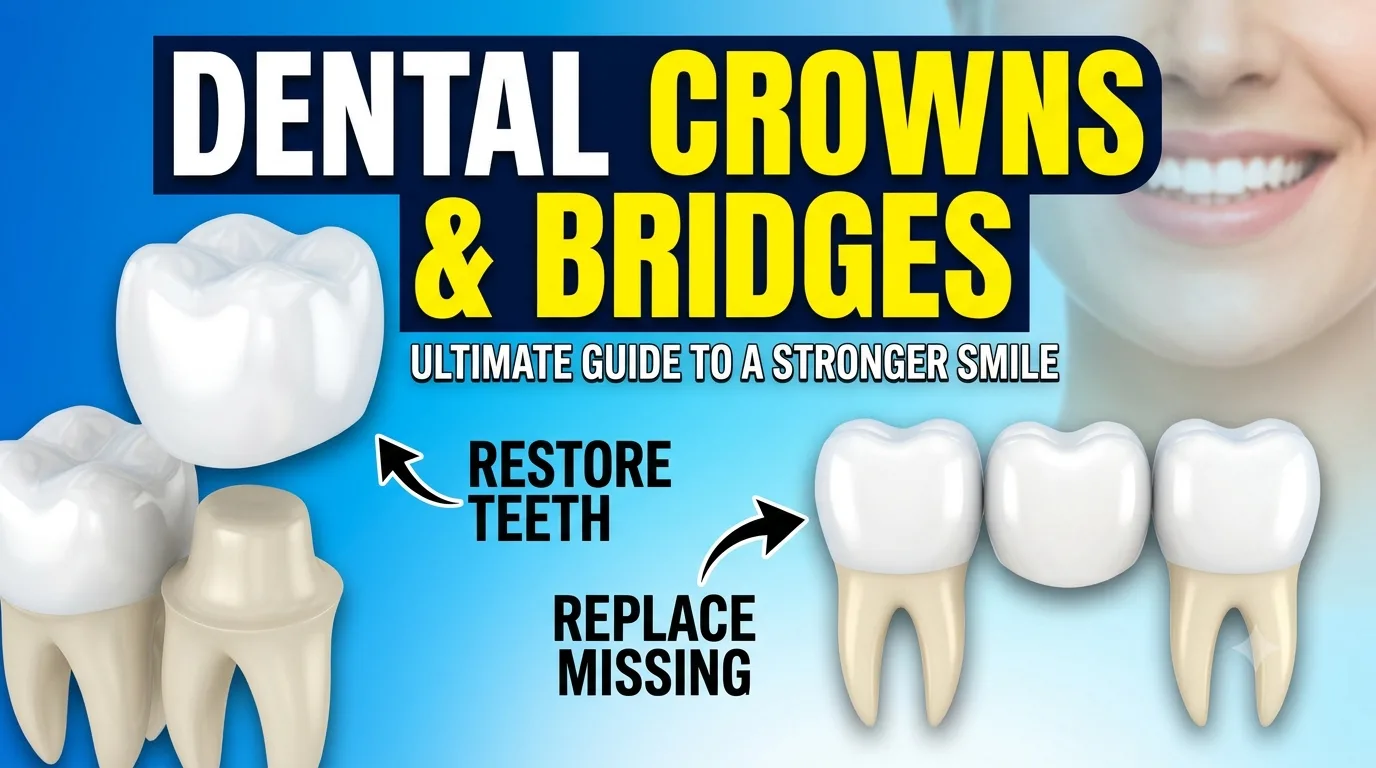
Damaged or missing teeth can affect far more than your appearance—they can make eating, speaking, and maintaining good oral health more difficult. Fortunately, dental crowns and bridges are reliable restorative treatments that help rebuild damaged teeth and replace missing ones while restoring both function and confidence. Whether you've experienced tooth decay, an injury, or tooth loss, understanding how these treatments work can help you make informed decisions about your oral health. Combined with routine dental care and preventive treatments, crowns and bridges provide long-lasting solutions that support a healthy smile.
What Are Dental Crowns?
A dental crown is a custom-made cap that completely covers a damaged or weakened tooth. Crowns are designed to restore the tooth's shape, strength, size, and appearance while protecting it from further damage. They are commonly recommended after large cavities, root canal treatment, cracked teeth, or severe wear.
Modern crowns are crafted from durable materials such as porcelain, ceramic, or zirconia, allowing them to blend naturally with surrounding teeth. With proper care, many crowns can last well over a decade.
What Are Dental Bridges?
Dental bridges replace one or more missing teeth by anchoring an artificial tooth between neighboring teeth or dental implants. The bridge restores chewing ability, improves speech, and helps prevent nearby teeth from shifting into empty spaces.
When a missing tooth is left untreated, surrounding teeth may gradually move, leading to bite problems and uneven tooth wear. Replacing missing teeth with bridges helps maintain proper alignment and overall oral health.
When Are Crowns and Bridges Recommended?
Dentists recommend crowns and bridges for a variety of situations depending on the patient's oral health needs. A crown may be the ideal solution for restoring a tooth weakened by decay or fracture, while bridges are suitable for replacing missing teeth when neighboring teeth can provide support.
For patients missing individual teeth, a dental implant Vancouver treatment may also be recommended. In many cases, crowns can be securely attached to implants, providing an extremely stable and natural-looking replacement.
Benefits of Dental Crowns and Bridges
Restorative treatments provide both cosmetic and functional improvements. Patients often notice immediate benefits after treatment, including improved chewing efficiency, clearer speech, and increased confidence when smiling.
Crowns strengthen weakened teeth and reduce the likelihood of future fractures, while bridges restore bite balance and prevent neighboring teeth from drifting out of position. Together, these treatments contribute to better long-term oral health and overall quality of life.
The Treatment Process
Receiving a crown or bridge typically involves two dental appointments. During the first visit, the dentist examines the affected tooth, removes damaged tissue if necessary, and prepares the area. Impressions are then taken to create a custom restoration that fits comfortably and matches the natural appearance of surrounding teeth.
A temporary restoration protects the prepared tooth until the permanent crown or bridge is ready. During the second appointment, the custom restoration is securely placed, adjusted for a comfortable bite, and permanently bonded.
Caring for Your Restorations
Good oral hygiene plays a major role in extending the lifespan of crowns and bridges. Brushing twice daily, flossing carefully around restorations, and attending regular dental Cleaning Vancouver BC appointments help remove plaque and reduce the risk of gum disease.
Avoiding habits such as chewing ice, biting hard objects, or using teeth as tools also helps protect restorations from unnecessary damage. With proper care, many patients enjoy excellent results for many years.
Crowns, Bridges, and Other Restorative Treatments
Not every damaged tooth requires a crown. Small cavities can often be repaired with a dental filling Vancouver procedure, which preserves more natural tooth structure. However, when a tooth has extensive damage or large existing fillings, a crown usually provides greater long-term strength and protection.
Your dentist will evaluate factors such as the amount of remaining healthy tooth structure, bite forces, and overall oral health before recommending the most appropriate treatment.
Supporting Your Smile with Preventive and Cosmetic Care
Restorative dentistry works best when combined with preventive care. Routine examinations and professional cleanings help detect problems early, reducing the need for complex procedures in the future.
Many patients also choose cosmetic treatments after completing restorative care. For example, Teeth Whitening Vancouver procedures can brighten natural teeth, creating a more balanced smile that complements newly restored teeth. Maintaining excellent oral hygiene before and after cosmetic treatment helps preserve both natural teeth and restorations.
Understanding Long-Term Success
The success of crowns and bridges depends on several factors, including oral hygiene, regular dental visits, and healthy lifestyle choices. Studies have shown that well-maintained dental restorations often remain functional for 10 to 15 years or longer.
Routine dental examinations allow dentists to monitor restorations, detect minor concerns early, and recommend maintenance before larger problems develop. Investing in preventive care significantly increases the longevity of restorative treatments.
Conclusion
Restoring damaged or missing teeth with dental crowns and bridges improves appearance, strengthens oral function, and helps preserve long-term dental health. When combined with preventive care, routine cleanings, and timely restorative treatment, these solutions can provide many years of reliable performance. If you experience sudden pain, a broken restoration, or unexpected dental trauma, seeking prompt care from an emergency dentist in Vancouver BC can prevent further complications and protect your smile.
Frequently Asked Questions
How long do dental crowns and bridges typically last?
With proper oral hygiene and regular dental checkups, crowns and bridges commonly last between 10 and 15 years or even longer.
Are crowns and bridges painful to receive?
The procedure is usually performed under local anesthesia, making treatment comfortable. Mild soreness after the appointment generally resolves within a few days.
Can a dental implant Vancouver replace a dental bridge?
Yes. Dental implants are often an excellent alternative for replacing missing teeth and may support individual crowns instead of traditional bridges, depending on your oral health.
Is a dental filling Vancouver enough instead of a crown?
Small cavities can usually be treated with fillings, but teeth with extensive damage or fractures often require crowns for additional strength and protection.
Will Teeth Whitening Vancouver affect my dental crowns?
No. Whitening treatments brighten natural teeth but do not change the color of crowns or other dental restorations. Your dentist can recommend the best cosmetic approach if color matching is needed.