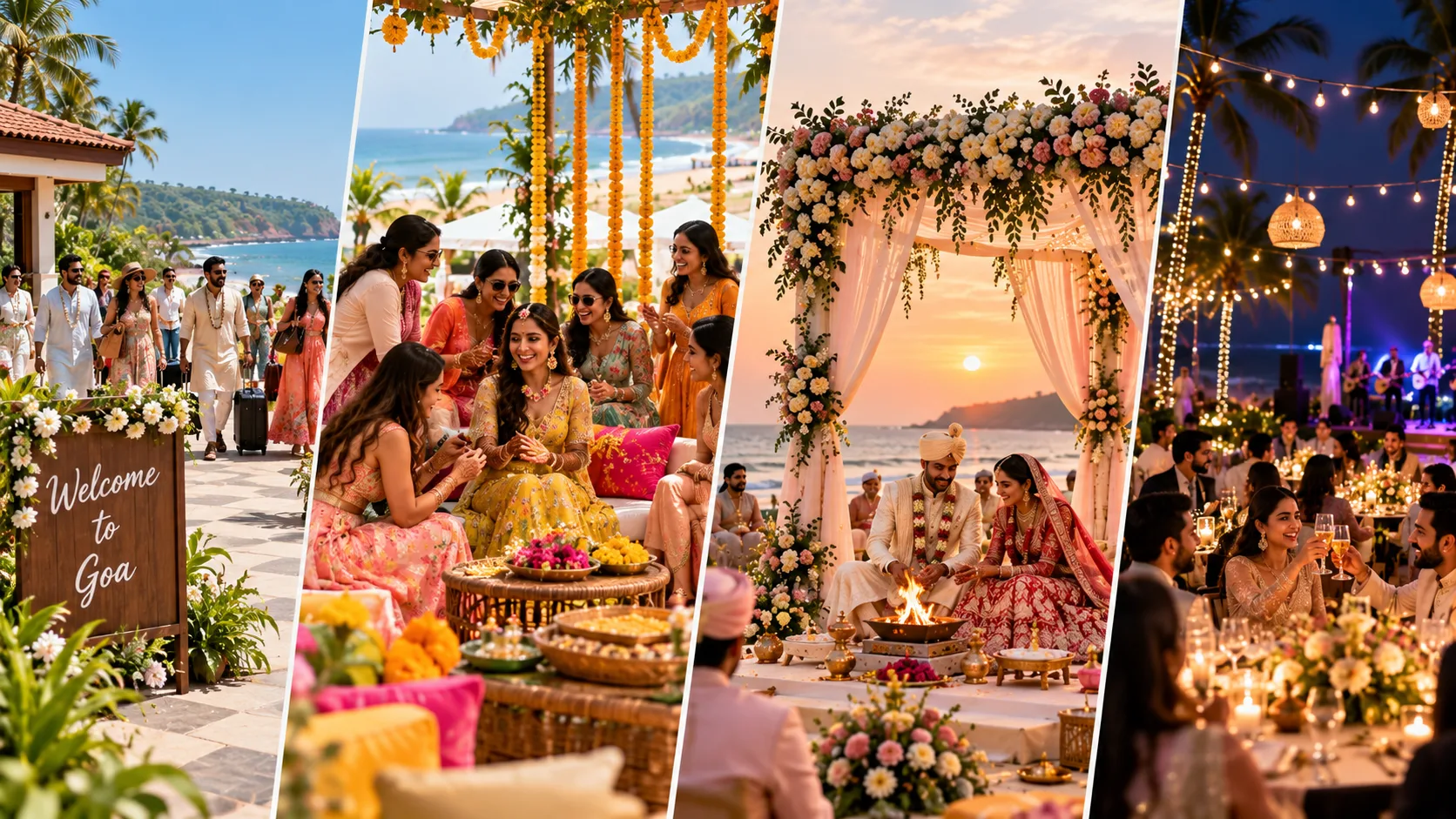
A destination wedding in Goa looks effortless when it works, with music drifting over the sand and guests moving easily from one function to the next. Behind that calm sits a long list of practical arrangements, from setup time to weather backups. This guide explains the logistics that matter most, so you can plan them early and keep the celebration relaxed.
Start With the Right Venue Questions
Every venue has its own rules, and they shape what you can do. Ask for separate capacities for a seated dinner, a standing reception and the ceremony, since the numbers often differ. Find out which spaces are covered, which are open and which can serve as a backup.
Also ask what the property includes and what you must arrange yourself. Some venues have preferred vendors, while others allow outside teams, sometimes with fees. Clear answers at the start prevent confusion once the planning is underway.
Give Setup Real Time
Outdoor decoration takes longer than most people expect. Mandaps, seating, lighting and flowers all need space and hours, and sand or uneven ground slows the work further. Ask the venue when your space becomes available and how long vendors have to prepare.
Fresh flowers and food are sensitive to heat, so schedule setup to avoid the strongest midday sun where possible. Share the full run of events with every vendor, so decorators, caterers and sound teams do not block each other.
Plan for Weather From the Start
Most weddings in Goa take place between November and February, when days are warm and dry and evenings are pleasant. March to May is hot and humid, and the monsoon from roughly June to September brings heavy rain and rough seas. Even in peak months, conditions can shift.
Identify a covered alternative for every open-air function before you finalise the programme. Ask who decides to move an event and how guests will be told. Treat weather patterns as a guide, not a guarantee.
Check Local Rules Early
Coastal regulations can affect weddings. Permissions may be needed for gatherings on public beaches, and limits often apply to sound levels, closing times, open flames and temporary structures. Rules and enforcement can change, so confirm current requirements instead of relying on old information.
Ask the venue what it handles and what falls to you. If your ceremony includes a sacred fire or a mandap, raise it at the start, along with any limits on lanterns, fireworks and loud music. Keep every answer in writing.
Organise Guest Transfers Carefully
Goa has two airports, one in the south and a newer one in the north, and one may suit a guest far better than the other. Flight options change with season and route, so confirm them before announcing dates. International guests usually reach a major Indian hub first and continue by air or road.
Road transfers between areas often take longer than the map suggests, especially in busy periods. Collect arrival details in one shared document, group pickups by flight time and keep a coordinator on call during arrival and departure days.
Handle Rooms and Movement on Site
A venue's event capacity says little about where guests will sleep. Ask how many rooms can be blocked for your dates, which categories exist and how unused rooms are handled. Some properties prefer exclusive booking for weddings, which can change the budget.
If guests stay at more than one property, plan shuttle timings between them and name one person to manage questions. Elderly guests and families with small children usually prefer rooms close to the main event areas, and firm walkways help anyone who finds sand tiring.
Confirm Food and Power Backups
Goa has a rich food culture, but guests have varied needs. Ask whether the venue requires in-house catering or allows outside caterers, and confirm vegetarian, Jain and children's menus. A tasting before you commit is the surest way to judge quality, and dietary needs should reach the caterer in writing.
For outdoor events, ask about power supply and backup for lighting and sound. A short outage can stop a sangeet, so a standby arrangement is worth confirming ahead of time.
Keep the Schedule Realistic
Many weddings run for two to three days, with arrivals and a relaxed welcome evening first, mehendi, haldi and sangeet on the second day and the ceremony and reception on the third. A farewell brunch can fill a fourth day. Leave real gaps between functions and add buffer time, since late starts and traffic are normal.
Communicate Clearly and Early
Send save the dates around six months ahead, then follow with a full itinerary covering dress codes, timings and transport. Put contact numbers and weather notes in one easy-to-find place. For peak months, begin planning ten to twelve months in advance, especially if guests are flying in from overseas. More planning ideas are available at Destination Weddings India.
Frequently Asked Questions
How much setup time should vendors get?
Ask the venue for access times, since outdoor decoration often takes longer than expected.
Do outdoor events need a weather backup?
Yes, every one of them, even in peak season.
Are permissions needed for beach events?
Often yes, so check current local rules and what the venue arranges.
How early should planning begin?
Ten to twelve months ahead suits peak dates.
Final Thoughts
Guests notice the music, the food and the setting, but the logistics make those moments possible. Ask clear venue questions, allow time for setup, prepare for weather and local rules, and keep communication open. With these details handled early, the celebration can feel easy for everyone.