Breathing difficulties can affect anyone, which makes the right medical devices essential. Effective respiratory care relies on suitable equipment, from nebulizers and oxygen concentrators to pulse oximeters. This guide covers the respiratory equipment list, uses, prices in India, and tips for choosing and maintaining devices for hospital or home use.
What Is Respiratory Care Equipment?
Respiratory care equipment includes medical devices that deliver medication, supply oxygen, support or assist breathing, and monitor lung function and oxygen levels. These devices help patients with breathing difficulties manage symptoms, recover from illness, and maintain stable oxygen levels. In healthcare settings, they are essential for both routine treatment and emergencies.
Respiratory Equipment List: Common Types and Their Uses
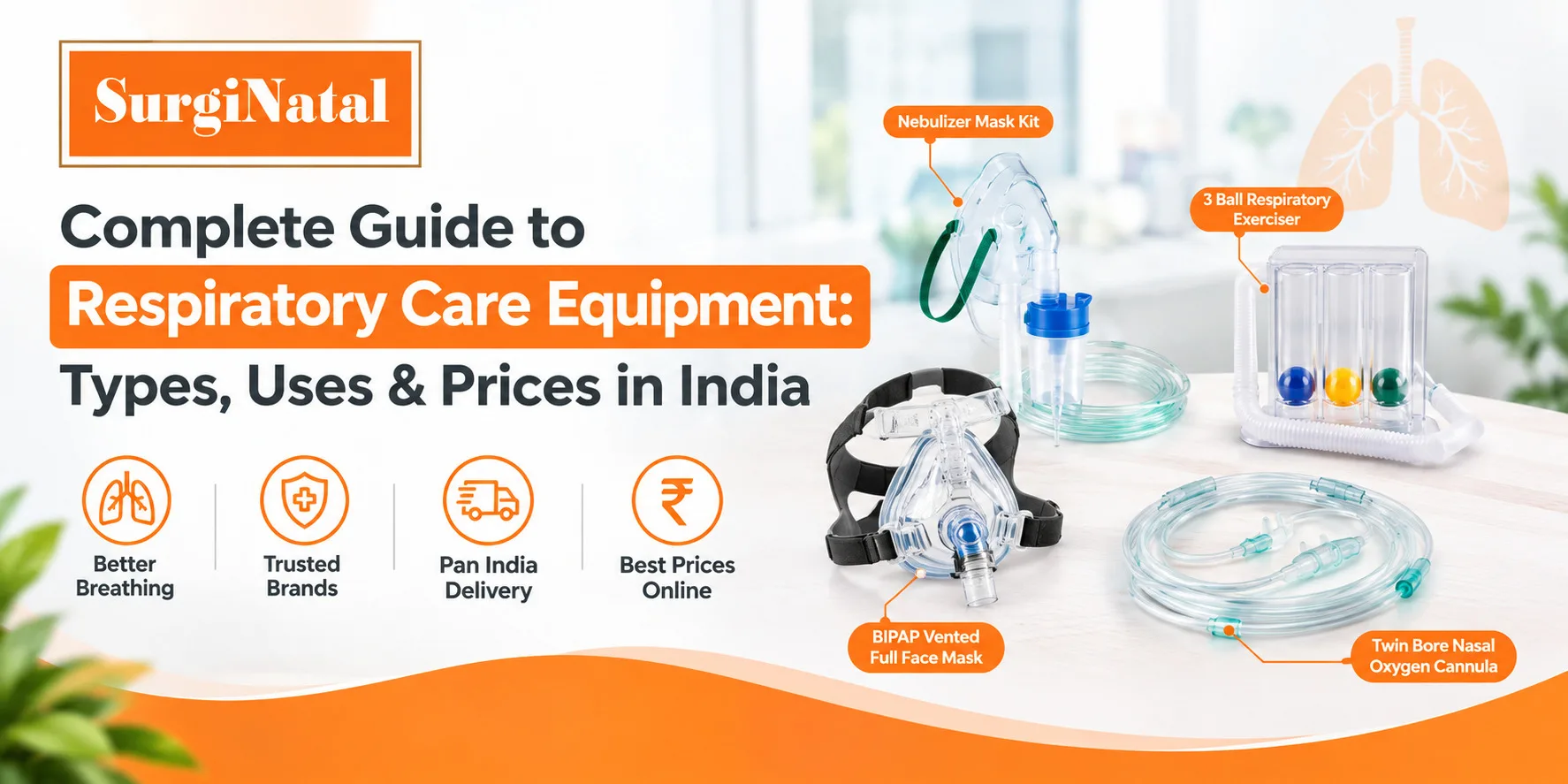
A typical respiratory equipment list includes nebulizer machines, which deliver prescribed medication as a fine mist, and oxygen concentrators, which provide supplemental oxygen when prescribed. It also includes pulse oximeters for measuring blood oxygen saturation, CPAP and BiPAP machines for positive airway pressure support, and mechanical ventilators that assist or take over breathing. Smaller items such as respiratory exercisers, nebulizer mask kits, and steam inhalers support breathing exercises, medication delivery, and temporary comfort.
Respiratory Devices and Uses in Daily Healthcare
Nebulizers for Respiratory Medication Delivery
A nebulizer machine converts liquid medication into a mist that can be inhaled through a mask or mouthpiece. This makes it useful for children, older adults, and anyone who finds inhalers difficult to use. Doctors commonly prescribe nebulization for asthma, COPD, and certain respiratory infections. Mask accessories and tubing are important parts of the setup and should be replaced or cleaned as recommended.
Respiratory Exercisers for Breathing Exercises
Ball respiratory exercisers, also called incentive spirometers, encourage slow, deep breaths. They are often used after surgery or during recovery from respiratory illness to support lung expansion. Patients should use them as directed by a doctor or physiotherapist.
Oxygen Concentrators and Oxygen Therapy Devices
Oxygen concentrators draw in room air and deliver oxygen-enriched air to patients who need supplemental oxygen. Because incorrect oxygen use can be harmful, therapy should always be guided by a healthcare professional who sets the appropriate flow rate and duration.
Steam Inhalers and Vaporizers
Steam inhalers provide warm steam that many people find soothing during colds or congestion. They are different from nebulizers: a steam inhaler offers temporary comfort, while a nebulizer delivers prescribed medication. Because hot steam can cause burns, keep the device on a stable surface, supervise children, and follow the manufacturer’s instructions.
Respiratory Equipment in Hospitals: Essential Devices
Emergency and Critical Care Respiratory Equipment
Hospitals rely on mechanical ventilators to support patients who cannot breathe adequately on their own. Oxygen delivery systems and bag-valve-mask resuscitators are equally vital in emergencies, allowing staff to provide immediate breathing support.
Respiratory Monitoring and Therapy Equipment
Pulse oximeters give quick, non-invasive readings of oxygen saturation, while nebulizer systems deliver medication to patients across wards. CPAP and BiPAP devices provide pressure support for conditions such as sleep apnea and respiratory failure.
Breathing Equipment for Home: Common Options
Many respiratory devices are suitable for home care when recommended by a doctor. Common choices include nebulizer machines for prescribed medication, respiratory exercisers for breathing exercises, steam inhalers for temporary comfort, and pulse oximeters for monitoring oxygen. Home oxygen concentrators are also used when prescribed.
How to Choose Breathing Equipment for Home Use
Start with the patient’s needs and your healthcare professional’s recommendation. Look for equipment that is easy to operate and clean, since complicated devices are harder to use correctly. Check product quality and safety, and confirm that replacement accessories such as masks and tubing are readily available. Finally, consider the warranty and after-sales support, which matter for devices used regularly.
Types of Disposable Respirators and Their Uses
N95 Respirators
N95 respirators filter airborne particles and, when properly fitted, form a close seal around the nose and mouth. They are widely used in healthcare settings and in environments with airborne particles.
FFP2 and FFP3 Respirators
FFP2 and FFP3 are European filtration classifications. FFP3 offers a higher level of filtration than FFP2. Both are used in suitable occupational and healthcare settings where respiratory protection is needed.
Disposable Surgical Masks vs Respirators
Surgical masks are loose-fitting and designed mainly to block droplets and protect others from the wearer’s exhaled particles. Respirators fit tightly and filter much smaller particles, so a surgical mask is not a substitute for a tight-fitting respirator.
Respiratory Therapy Equipment for Hospitals and Home Care
Respiratory therapy equipment covers nebulizer systems and accessories, positive airway pressure devices, oxygen therapy equipment, and breathing exercise devices. Whichever device is used, it should always be operated as directed by a doctor or respiratory therapist, since settings and usage schedules are tailored to each patient.
Respiratory Machine Price in India: What Affects the Cost?
Factors That Influence Respiratory Equipment Prices
Prices vary widely depending on the type of equipment and its technology. A basic breathing exerciser costs far less than a CPAP machine or oxygen concentrator. Brand, product specifications, included accessories, and warranty or maintenance requirements all affect the final cost.
Comparing Respiratory Equipment Before Buying
When comparing options, remember that a nebulizer machine and a nebulizer mask kit serve different purposes: the kit is an accessory, while the machine generates the mist. Similarly, basic breathing exercisers are simple manual tools, whereas powered respiratory devices offer more features at a higher price. Steam inhalers and medical nebulizers also differ in purpose, so choose based on need rather than price alone. Always check current prices on the retailer’s product page before ordering.
5 Respiratory Care Products to Explore on SurgiNatal
1. Nebulizer Mask Kit
A nebulizer mask kit typically includes a mask, tubing, and a medication chamber, and it connects to a compatible nebulizer machine to deliver nebulized medication. Check that the kit matches your machine’s connectors, and replace it as recommended.
2. 3 Ball Respiratory Exerciser
This simple device encourages deep, controlled breathing through visual feedback from moving balls. It is commonly used for lung exercise and recovery, and it should be used under professional guidance.
3. Medtech Steamer Machine Handyvap VAP-01
This steamer is designed for steam inhalation, offering warm steam for temporary comfort during congestion. Before buying, verify features such as capacity, safety design, and included accessories, and handle it carefully to avoid burns.
4. Steam Inhaler Vaporizer
Steam inhaler vaporizers are popular for home use during colds. When selecting one, consider ease of cleaning, stability, and safety features. Keep a safe distance from the steam, never leave children unattended, and clean the unit after use.
5. K-Life Nebulizer Machine – Neb 103
This nebulizer machine is used to deliver prescribed medication as a mist. Review its key specifications, included accessories such as masks and tubing, and usage guidelines before purchasing, and use it as your doctor advises.
Where to Buy Respiratory Care Equipment Online in India?
SurgiNatal is an online store for medical and surgical supplies, offering respiratory care products and accessories. It highlights genuine products, secure payments, and pan-India delivery. Before ordering, review each product’s specifications and current price.
Conclusion
Choosing suitable respiratory care equipment starts with understanding your medical needs. Hospital devices such as ventilators and critical care systems serve very different purposes from home-use products like nebulizers, exercisers, and oximeters. If you want to explore a wide range of respiratory care products and accessories online, SurgiNatal is a convenient place to start. Whatever you choose, always select equipment according to professional advice and product specifications, and keep it clean and well-maintained.
Frequently Asked Questions (FAQs)
Q1. What are the most commonly used respiratory care devices?
Ans. Nebulizers, pulse oximeters, oxygen concentrators, CPAP/BiPAP machines, and respiratory exercisers are among the most common.
Q2. Which respiratory equipment is used in hospitals?
Ans. Hospitals use ventilators, oxygen delivery systems, bag-valve-mask resuscitators, pulse oximeters, and nebulizer and CPAP/BiPAP systems.
Q3. What breathing equipment can be used at home?
Ans. Nebulizers, respiratory exercisers, steam inhalers, pulse oximeters, and prescribed oxygen concentrators are common choices.
Q4. What is the price of a respiratory machine in India?
Ans. It depends on the device type, brand, and features, so check current prices on product pages.
Q5. What is the difference between a nebulizer and a steam inhaler?
Ans. A nebulizer delivers prescribed medication as a mist, while a steam inhaler provides warm steam for temporary comfort.
Q6. What are the different types of disposable respirators?
Ans. The main types are N95, FFP2, and FFP3 respirators, which differ from loose-fitting surgical masks.
Q7. How do I choose the right respiratory therapy equipment?
Ans. Follow your doctor’s advice, and consider ease of use, quality, accessories, and warranty.