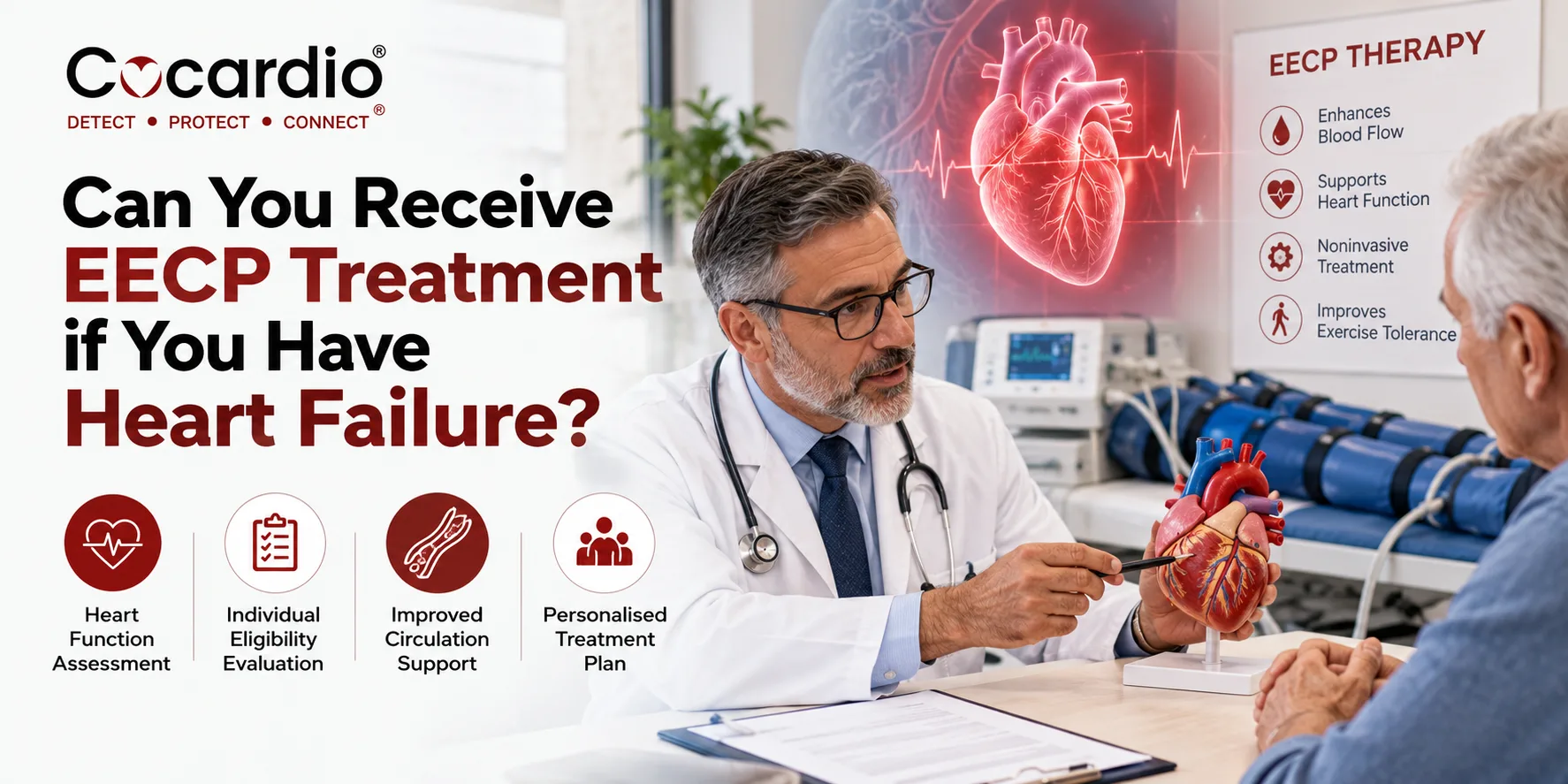
Living with heart failure can make everyday activities more challenging, particularly when symptoms include fatigue, shortness of breath, or chest discomfort. Patients who also experience persistent angina may wonder whether Enhanced External Counterpulsation (EECP) is a suitable treatment option. When searching for eecp treatment near me, it is important to understand that heart failure requires careful medical evaluation before treatment can be considered. Eligibility depends on heart function, clinical stability, current symptoms, and other cardiovascular conditions. At CoCardio®, patients can request an individualized evaluation to discuss whether EECP may be appropriate for their circumstances.
How Does Heart Failure Affect EECP Treatment Eligibility?
Heart failure occurs when the heart cannot pump or fill with blood effectively enough to meet the body's needs. EECP uses inflatable cuffs around the legs that inflate and deflate in coordination with the heartbeat to influence blood circulation. Although EECP may be considered for selected patients with persistent chronic stable angina, heart failure can introduce additional safety concerns. The treatment changes blood flow and venous return, which may be poorly tolerated by patients with certain forms of heart failure. A cardiologist must therefore evaluate the patient's cardiovascular condition before recommending treatment.
Why Is Heart Failure Not Automatically an EECP Indication?
EECP is primarily used in selected patients with chronic refractory angina who remain symptomatic despite appropriate medical management. Having heart failure alone does not establish that someone is an appropriate candidate. Patients with unstable or decompensated heart failure may face additional risks because of changes in circulation during treatment. The potential benefits and limitations must be considered in relation to the patient's overall condition. A specialist assessment is essential before proceeding.
Why Is the Type and Severity of Heart Failure Important?
Heart failure is not the same in every patient, and treatment decisions depend on its underlying characteristics. Some individuals have reduced left ventricular ejection fraction, while others have preserved ejection fraction with impaired cardiac relaxation or filling. The severity of symptoms, recent hospitalizations, fluid retention, and response to medication also influence treatment planning. Patients with stable symptoms may have different considerations from those experiencing worsening breathlessness or swelling. Understanding these differences helps clinicians determine whether EECP should be considered or avoided.
What Does Ejection Fraction Tell Your Cardiologist?
Ejection fraction describes the percentage of blood pumped out of the left ventricle with each contraction. It is commonly measured using an echocardiogram and provides information about heart pumping function. However, ejection fraction alone does not determine whether EECP is safe or appropriate. Clinicians must also consider symptoms, heart rhythm, valve function, blood pressure, and other medical findings. A comprehensive cardiovascular assessment provides a more reliable basis for treatment decisions.
Why Does Clinical Stability Matter?
Clinical stability is particularly important when evaluating someone with heart failure. Recent worsening symptoms, significant fluid overload, or hospitalization for acute heart failure may indicate that the condition is not adequately controlled. These situations generally require medical stabilization and reassessment before elective treatments are considered. Patients should not interpret temporary improvement in symptoms as proof that treatment is safe. Their cardiologist should confirm whether their condition is sufficiently stable for further evaluation.
What Risks Should Patients Discuss With Their Cardiologist?
EECP increases venous return during portions of the treatment cycle, which can place additional demands on the cardiovascular system. For patients with certain forms of heart failure, these changes may worsen congestion or breathing difficulties. Significant valve disease, uncontrolled arrhythmias, severe peripheral vascular disease, and other conditions may also affect suitability. Patients should discuss their medical history, medications, and recent symptoms before scheduling treatment. A careful review helps identify circumstances where another treatment approach may be safer.
Can EECP Worsen Fluid Retention?
Some patients with heart failure already experience fluid accumulation in the lungs, legs, or other tissues. Because EECP influences venous blood flow, clinicians must consider whether the heart can tolerate the associated circulatory changes. Patients with decompensated heart failure or pulmonary congestion may be at particular risk. Sudden weight gain, increasing swelling, or worsening breathlessness should be reported promptly to a healthcare professional. These symptoms require assessment rather than an assumption that EECP will improve circulation.
What About Irregular Heartbeats and Valve Problems?
EECP treatment is synchronized with the patient's heartbeat using electrocardiographic monitoring. Certain irregular heart rhythms can interfere with synchronization or complicate treatment delivery. Significant aortic regurgitation is an important contraindication because counterpulsation can increase backward blood flow through the affected valve. Other structural heart conditions may also require additional evaluation. Patients should provide relevant cardiology reports so their care team can assess these concerns.
Can Patients With Stable Heart Failure Be Considered for EECP?
Some carefully selected patients with stable heart failure and persistent chronic angina may be evaluated for EECP under specialist supervision. However, suitability is not determined simply by whether symptoms are currently controlled. The patient's heart function, volume status, underlying coronary disease, and treatment goals must all be reviewed. Evidence concerning EECP in heart failure is more limited and condition-specific than evidence supporting its use for selected patients with refractory angina. An individualized assessment is necessary, and treatment should not replace established heart failure therapies.
Can EECP Help Patients With Persistent Angina?
Patients with coronary artery disease may continue experiencing angina despite prescribed medications and previous procedures. In selected circumstances, eecp therapy for angina may be considered to help improve symptoms and exercise tolerance. The potential benefit depends on the patient's condition and response to treatment. EECP is not a cure for coronary artery disease or heart failure. Decisions should be made with the treating cardiologist as part of a comprehensive care plan.
Does EECP Prevent Coronary Artery Disease?
Some patients researching eecp for coronary artery disease prevention may assume the treatment can prevent future cardiac events. However, EECP has not been established as a method for preventing heart attacks or stopping coronary artery disease progression. Its recognized role is primarily symptom management in selected patients with refractory chronic stable angina. Preventive cardiovascular care continues to depend on appropriate medication, risk-factor management, lifestyle measures, and regular medical follow-up. Patients should discuss these strategies with their cardiologist regardless of whether EECP is considered.
What Medical Tests May Be Needed Before EECP?
A treatment suitability assessment may involve reviewing an echocardiogram, electrocardiogram, medication history, and previous cardiovascular investigations. Clinicians may also consider recent hospitalizations, blood pressure, circulation in the legs, and symptoms suggesting fluid overload. Additional testing depends on the patient's individual medical history and clinical findings. Patients can review the EECP Therapy Eligibility Checklist for Persistent Angina – CoCardio® Patient Guide to prepare questions for their appointment. The checklist is an educational resource and does not replace medical clearance.
What Should You Bring to Your Evaluation?
Bring a current medication list, including prescribed heart failure medications and any recent dosage changes. Previous echocardiogram reports, discharge summaries, cardiology notes, and records of coronary procedures may also be useful. Patients should describe when chest discomfort occurs and whether breathlessness or swelling has recently changed. This information helps clinicians understand the current condition and identify concerns requiring further assessment. Preparing these details in advance can make the consultation more productive.
When Should You Request an EECP Evaluation in Encinitas?
If you have stable heart failure and continue experiencing chronic angina despite medical treatment, ask your cardiologist whether further evaluation is appropriate. Searching for eecp treatment near me can help you identify a provider, but treatment suitability must be established through medical assessment. CoCardio® in Encinitas, California, offers an opportunity to discuss your symptoms, cardiovascular history, and questions about EECP. You should not delay recommended heart failure care while exploring additional treatment options. An evaluation can help determine whether further cardiology review or alternative management is needed.
What Should You Ask About Treatment Costs?
Patients should understand the financial arrangements before committing to a treatment course. Questions about EECP therapy cost should include the proposed number of sessions, consultations, monitoring, and potential follow-up charges. Insurance coverage and authorization requirements may vary according to the patient's diagnosis and health plan. Patients should request a clear explanation of expected costs and included services. A written estimate can help them make an informed decision.
Is ECP Therapy the Same as EECP?
Patients researching ecp therapy may encounter different terminology for external counterpulsation treatment. EECP refers to an enhanced form of external counterpulsation using timed inflatable cuffs to influence circulation. The exact treatment protocol and equipment should be discussed with the provider. Patients searching for EECP therapy near me should also confirm that the clinic performs appropriate medical screening before treatment. Provider experience, clinical oversight, and eligibility assessment matter more than terminology alone.
Why Choose CoCardio® for an Individualized Evaluation?
Patients researching eecp treatment near me often want to know whether their existing cardiovascular condition makes treatment possible. CoCardio® emphasizes the importance of evaluating symptoms and medical history before discussing potential treatment options. For someone with heart failure, coordination with the treating cardiologist is especially important. An evaluation can help clarify whether EECP warrants further consideration or whether another approach is more appropriate. Patients should never assume that a diagnosis of chronic angina automatically establishes eligibility.
How Can You Request an Appointment?
Start by describing your heart failure diagnosis, current symptoms, and previous cardiovascular treatments. Mention any recent changes in breathing, swelling, chest discomfort, or medication. You can request an individualized EECP suitability assessment through the CoCardio® online form. The clinic can discuss the information needed for an initial consultation and any relevant appointment arrangements. Medical clearance and treatment eligibility must be determined before proceeding.
Conclusion
Having heart failure does not automatically mean every patient is eligible or ineligible for EECP, but it makes careful cardiovascular evaluation essential. Heart function, clinical stability, valve disease, rhythm abnormalities, and fluid retention can all influence treatment suitability. If you are researching eecp treatment near me because persistent angina continues to affect daily activities, speak with your cardiologist about appropriate next steps. CoCardio® in Encinitas, California, can help you begin an individualized treatment suitability discussion. Call +1(858) 500-1399 or complete the CoCardio® consultation request form to ask about an evaluation.
Medical Disclaimer
This article is intended for general educational purposes and does not constitute medical advice, diagnosis, or treatment recommendations. EECP may be inappropriate or unsafe for some patients with heart failure, particularly those with unstable or decompensated disease, and eligibility must be determined by qualified healthcare professionals. Never stop prescribed heart failure medications or delay recommended medical care while exploring EECP. If you experience new, severe, or worsening chest pain, severe shortness of breath, fainting, or other symptoms suggesting a medical emergency, call 911 immediately.