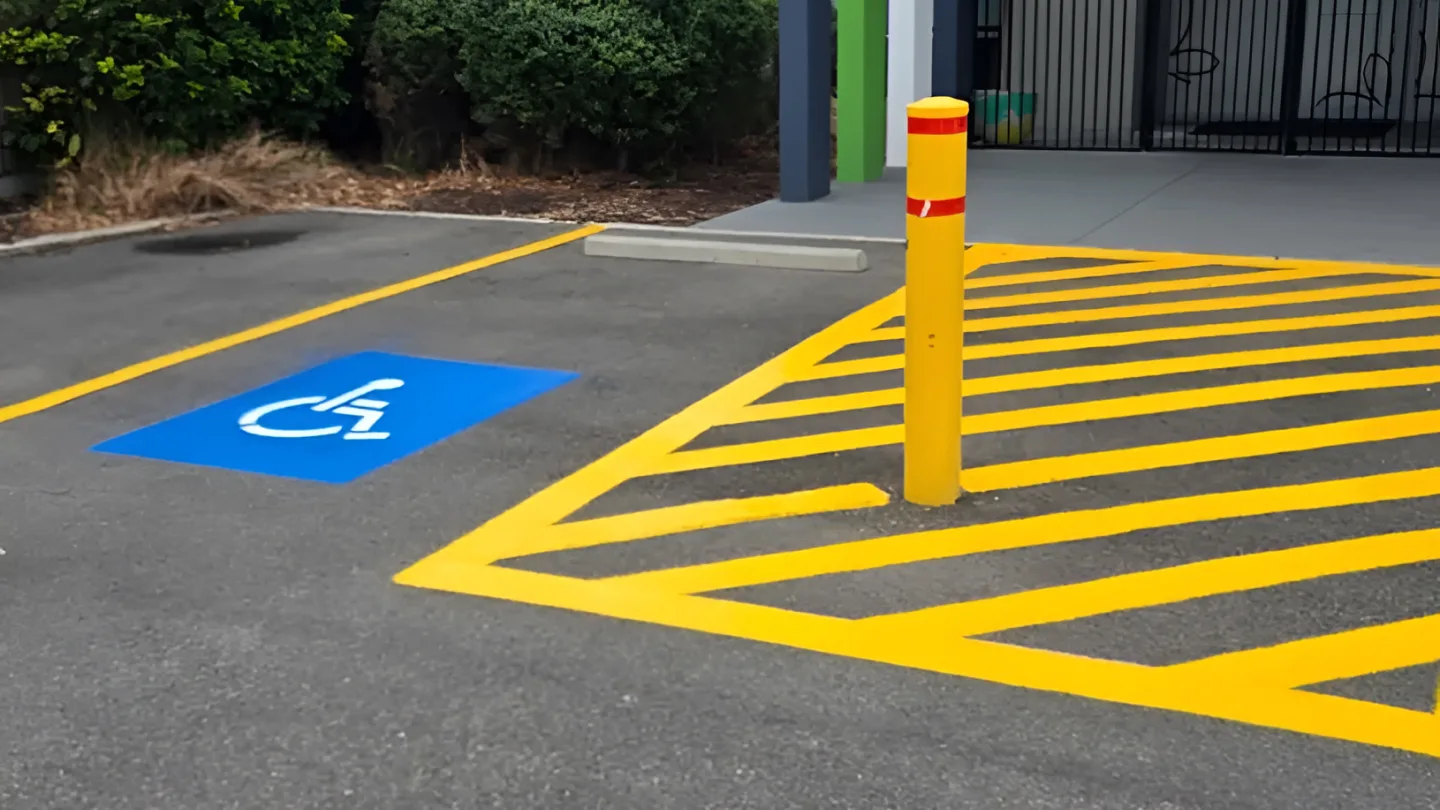
Workplace car parks require clear layouts that support safe movement for drivers, pedestrians and visitors. Proper bollard installation helps protect building entrances, pedestrian routes and vulnerable areas from accidental vehicle contact. Clear parking markings also guide drivers and identify designated spaces. Together, these features improve accessibility, visibility and everyday movement across workplace premises.
The Importance of Bollards in Workplace Car Parks
Bollards provide physical protection where vehicles operate close to pedestrians, buildings, and equipment. Their placement helps define boundaries and guide vehicle movement.
Common applications include:
- Pedestrian Protection: Separate walkways from vehicle routes.
- Building Protection: Help shield entrances and exposed building edges.
- Access Control: Define areas reserved for authorised vehicles.
- Traffic Guidance: Direct vehicles through designated routes.
- Hazard Identification: Highlight areas that require extra driver attention.
Choosing suitable bollards depends on traffic conditions, vehicle types, and the required level of protection. Impact-rated bollards may be appropriate where vehicle collision protection is essential.
Planning Effective Bollard Placement
Effective bollard installation starts with an assessment of vehicle movement, pedestrian activity, and access requirements. Proper positioning lets barriers protect while keeping movement convenient throughout the car park.
Important planning considerations include:
- Vehicle Movement: Allow enough space for turning and manoeuvring.
- Pedestrian Routes: Maintain clear pathways and crossings.
- Building Access: Consider entrances, exits and emergency routes.
- Driver Visibility: Position bollards where approaching drivers can identify them.
- Accessibility: Maintain suitable clearances for wheelchair users and mobility aids.
A site assessment helps determine appropriate bollard locations, spacing and materials. Installation should follow applicable safety and accessibility requirements.
Creating Clearly Marked Parking Areas
Car park line marking helps drivers identify parking bays, traffic routes and designated activity areas. Visible markings encourage orderly vehicle movement and improve the use of available parking space.
Common markings include standard parking bays, directional arrows, pedestrian crossings, loading zones and restricted parking areas. Appropriate colours, dimensions and durable marking materials improve visibility and help users understand the layout.
Supporting Accessible Workplace Parking
Accessible parking spaces should provide convenient access to buildings and pedestrian routes. Disabled car park line marking helps identify designated bays and supports their intended use.
Important marking features include:
- Accessibility Symbols: Identify parking spaces reserved for eligible users.
- Bay Boundaries: Clearly define designated parking areas.
- Access Zones: Provide space for wheelchair transfers and mobility equipment.
- Pedestrian Connections: Guide users towards accessible building entrances.
Bay dimensions, access zones, gradients and signage should follow applicable local accessibility standards. Regular maintenance helps keep identification clear and access convenient.
Maintaining Parking Safety Features
Routine inspections help maintain the visibility and effectiveness of bollards and parking markings. Businesses should check for faded lines, damaged barriers, worn symbols and obstructed access areas.
Timely repainting, repairs and replacement help preserve clear vehicle routes and accessible parking facilities. Maintenance schedules should reflect traffic levels, surface conditions and weather exposure.
Conclusion
Effective workplace parking management combines physical barriers, visible markings and accessible facilities. Carefully positioned bollards protect vulnerable areas, while clearly marked bays guide drivers and pedestrians. Regular inspections and appropriate maintenance help workplaces keep parking areas safe, accessible, and convenient for employees, contractors, and visitors.