May 2026: A Pivotal Moment in Fashion’s Evolution
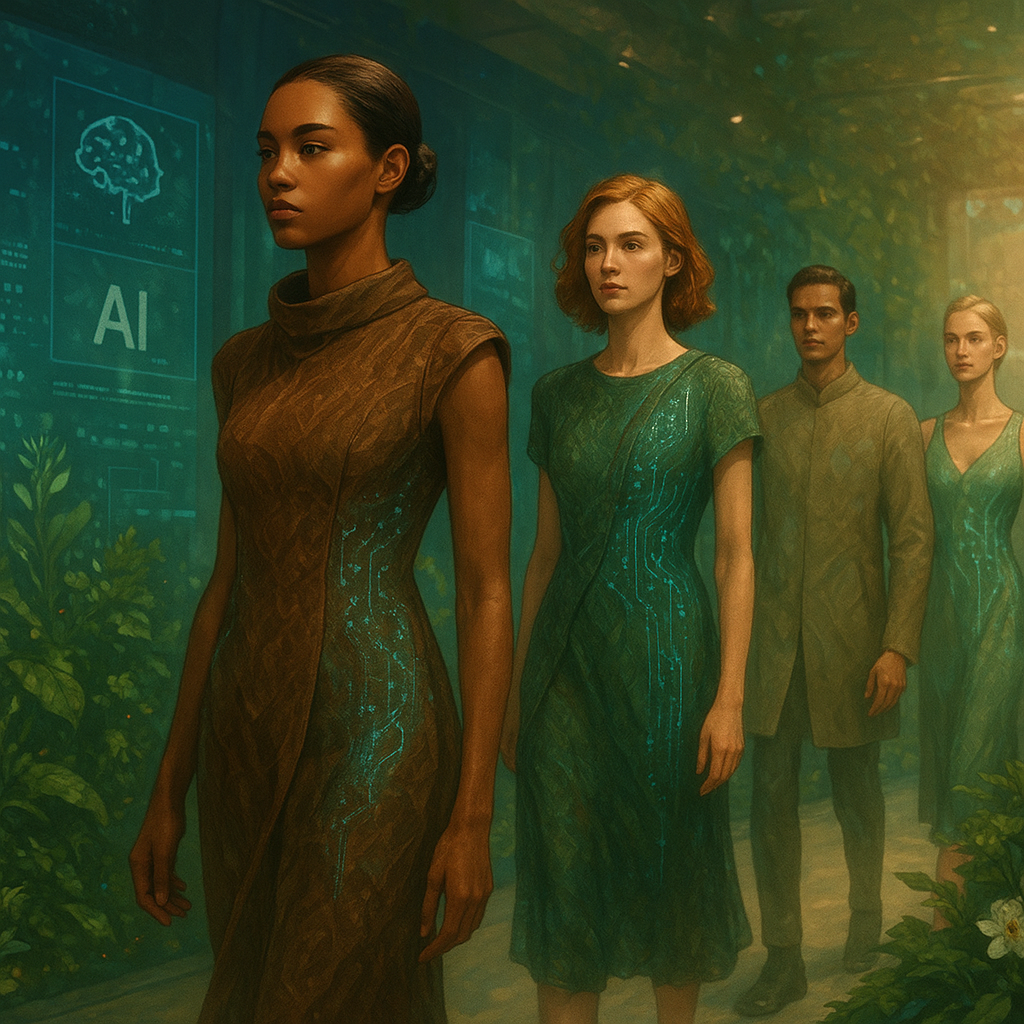
On a bustling runway in Milan this May, models showcased garments that not only dazzled with futuristic aesthetics but also embodied the latest breakthroughs in sustainable technology. Embedded sensors monitored environmental conditions, fabrics self-adjusted to temperature shifts, and dyes changed hues based on lighting—testaments to how far fashion has evolved this year. This scene encapsulates the dual forces currently redefining the industry: the integration of advanced artificial intelligence (AI) and an uncompromising commitment to sustainability. Indeed, May 2026 has emerged as a landmark period where these twin pillars converge to reshape what we wear, how it’s made, and what it means culturally.
The global fashion market, now valued at an estimated $3.4 trillion according to industry analysts, is undergoing seismic shifts. Consumer priorities have shifted decisively towards transparency, traceability, and environmental responsibility. Meanwhile, AI-driven design and production processes are accelerating innovation cycles and personalizing experiences at scale. This article explores these transformations in depth—tracing the background, analyzing current data, assessing expert perspectives, and forecasting what the future holds for fashion’s complex ecosystem.
Tracing the Path: From Fast Fashion to Conscious Innovation
The fashion industry’s trajectory over the past decade set the stage for this moment. The early 2020s witnessed increasing backlash against fast fashion’s environmental toll—textile waste, water pollution, and carbon emissions dominated headlines. Simultaneously, COVID-19 disruptions spotlighted vulnerabilities in global supply chains, forcing brands to rethink agility and resilience. These pressures catalyzed a collective movement toward ethical sourcing and circular economy models.
By 2024, a growing number of luxury and mass-market brands embraced sustainability as a core principle, investing heavily in regenerative agriculture for fibers, biodegradable materials, and closed-loop recycling. Concurrently, technological advancements began transforming design and manufacturing. AI-powered tools emerged to optimize pattern making, predict trend cycles with unprecedented accuracy, and simulate fabric performance digitally, drastically reducing physical prototyping.
According to reports from McKinsey & Company, sustainable fashion sales grew at over 15% annually between 2022 and 2025, outpacing traditional segments. The convergence of consumer demand for eco-consciousness with AI-enabled efficiency created fertile ground for innovation. Industry pioneers such as Stella McCartney and Adidas led the charge, combining AI design studios with sustainability commitments. This convergence laid the foundation for the breakthroughs witnessed in 2026.
The Data-Driven Pulse of Fashion Innovation in 2026
As of May 2026, the fashion industry’s integration of AI and sustainability is measurable and multifaceted. Industry data highlights key trends shaping the sector:
- AI-Enhanced Sustainable Materials: Over 60% of new textile launches this year incorporate AI-assisted development methods. These range from bioengineered fabrics designed for biodegradability to smart textiles that optimize wearer comfort and reduce energy consumption.
- Personalization at Scale: AI-driven customer profiling enables brands to offer hyper-personalized products, reducing overproduction and minimizing returns. Data from the Global Fashion Council shows a 28% reduction in inventory waste among brands deploying these solutions.
- Supply Chain Transparency: Blockchain combined with AI analytics now underpins traceability systems for 75% of mid-to-large fashion companies, ensuring ethical sourcing and compliance with environmental standards.
- Virtual and Augmented Reality (VR/AR): VR fashion shows and AR fitting rooms have become mainstream, with 40% of consumers engaging in virtual try-ons before purchases, cutting down the carbon impact of returns.
- Carbon-Neutral Commitments: More than 50% of leading fashion houses have achieved or are on track to achieve carbon neutrality by the end of 2026, driven by AI-optimized manufacturing and logistics.
These figures illustrate a decisive pivot from traditional practices to a hybrid model where technology and ethics are intertwined. The environmental benefits are tangible, but the cultural and economic implications are equally profound.
“AI is not just a tool for efficiency; it is a catalyst for reimagining fashion’s purpose and impact,” says Dr. Elena Marquez, a leading sustainability strategist in the apparel sector.
Current May 2026 Developments: AI’s Creative Renaissance and Sustainable Breakthroughs
This spring’s fashion weeks have been a showcase of ingenuity. The rise of generative AI in design studios has enabled creatives to experiment with forms, colors, and textures previously unimaginable. Notably, brands are using AI to generate design variants that incorporate feedback from sustainability metrics in real time, balancing artistic expression with environmental responsibility.
In parallel, material science breakthroughs have introduced novel fabrics such as algae-based leathers and recycled carbon fiber blends. These materials not only reduce reliance on animal products and virgin polymers but also boast improved durability and biodegradability. For instance, a collaboration between Italian brand EcoLoom and biotech firm GreenWeave introduced an algae-derived fabric that decomposes fully within 90 days post-disposal.
Technological integration extends beyond product innovation. AI-powered demand forecasting and automated manufacturing plants have slashed lead times by 35%, enabling brands to respond swiftly to market shifts and minimize unsold inventory. This agility was unthinkable just five years ago.
Additionally, consumer engagement is evolving. Platforms now combine AI and blockchain to offer shoppers transparent insights into product lifecycles and environmental footprints. This transparency has cultivated a new breed of informed consumers who prioritize brands that demonstrate authenticity and accountability.
“Transparency is the new luxury,” remarks fashion analyst Joshua Kim. “Consumers are no longer satisfied with aesthetics alone; they demand proof of ethical practices and environmental stewardship.”
Industry Voices: Expert Perspectives on Fashion’s Transformative Trajectory
Leading voices within the fashion and sustainability arenas emphasize the significance of this transitional phase. Dr. Marquez highlights that AI enables not only efficiency gains but also democratizes access to sustainable fashion by lowering production costs and enabling mass customization.
Meanwhile, veteran designer Amina Rahim credits AI with revitalizing creative processes that had plateaued. “AI frees designers from repetitive tasks, allowing us to focus on innovation while ensuring each piece respects ecological boundaries,” she explains.
Industry organizations such as the Global Fashion Council and the Sustainable Apparel Coalition have reinforced standards incorporating AI metrics to assess environmental impact. Their 2026 report underscores that brands integrating AI for sustainability outperform peers financially and reputationally.
The economic implications are substantial. A recent analysis by Bain & Company projects that AI-empowered sustainable fashion could generate an additional $500 billion in revenue globally by 2030, driven by efficiency, innovation, and consumer loyalty.
- Innovation: AI accelerates R&D cycles and material discovery.
- Consumer Engagement: Enhanced transparency fosters trust and brand loyalty.
- Environmental Impact: Waste reduction and lower emissions through optimized production.
- Economic Growth: New market opportunities in sustainable fashion tech.
These perspectives illustrate a consensus that May 2026 represents not a fleeting trend but a foundational shift.
Looking Ahead: What May 2026 Signals for Fashion’s Future
As the fashion industry navigates this transformative era, several key takeaways emerge for stakeholders:
- Integration is Imperative: The fusion of AI with sustainability is essential to meet rising consumer and regulatory expectations.
- Consumer Education: Brands must continue to educate shoppers on the value and impact of sustainable innovations to sustain demand.
- Collaborative Ecosystems: Cross-sector partnerships between tech firms, material scientists, and fashion houses will accelerate progress.
- Regulatory Alignment: Governments are expected to introduce stricter environmental and digital transparency regulations, requiring proactive compliance strategies.
- Ethical AI Use: Ensuring AI applications respect privacy, cultural diversity, and creative integrity will be critical.
Industry watchers should monitor emerging developments such as AI-driven circular economy platforms, advances in biodegradable smart textiles, and shifts in consumer behavior post-2026. The lessons learned this May will shape strategic decisions for years to come.
For readers interested in broader lifestyle context, TheOmniBuzz’s recent coverage on personal finance resilience in May 2026 and global travel turning points provide complementary insights into how consumer priorities are evolving across sectors.
Case Study: Stella McCartney’s AI-Driven Circular Capsule Collection
One of the most talked-about fashion innovations in May 2026 is Stella McCartney’s Circular Capsule Collection, developed in partnership with AI startup ThreadSense. The collection utilizes AI algorithms to design garments optimized for end-of-life recycling. Each piece incorporates embedded RFID chips that track wear, washing, and repair cycles, feeding data back to the brand to improve future designs.
The materials are sourced from regenerative hemp and recycled ocean plastics. Production takes place in AI-enabled factories powered by renewable energy, achieving a carbon footprint 70% lower than comparable lines. Early sales reports indicate a 40% higher sell-through rate, attributed to the collection’s customization options and transparent environmental credentials.
This initiative exemplifies how AI and sustainability can coexist synergistically, aligning commercial success with planetary stewardship.
“Our goal was to prove that luxury and sustainability are not mutually exclusive but mutually reinforcing,” says McCartney’s creative director.
Such case studies offer a blueprint for other brands seeking to innovate responsibly in this new era.