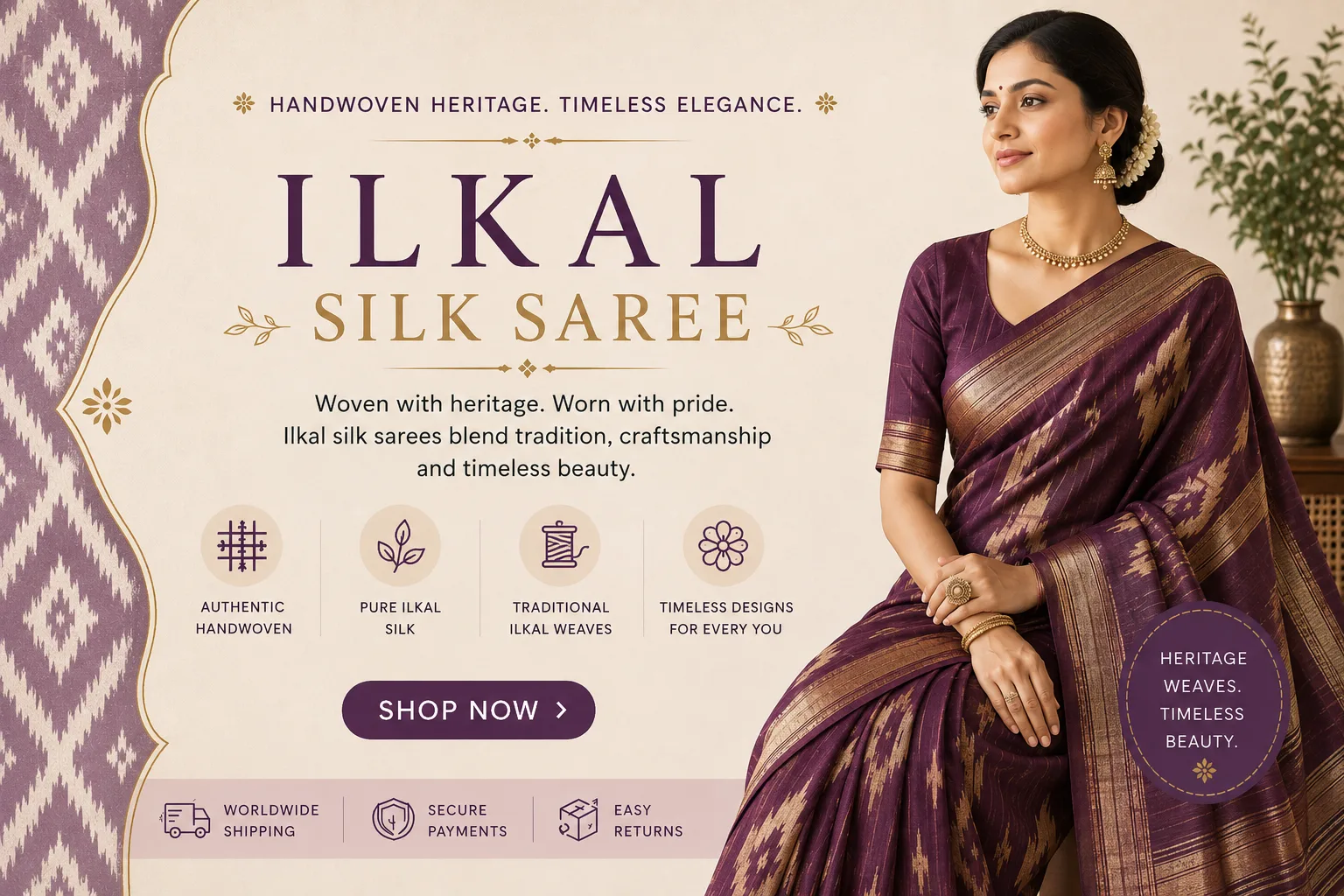
Ilkal Sarees drape like living history—elegant folds of deep red borders framing intricate motifs that whisper stories from Karnataka’s Chalukya-era temples and fields. Worn proudly in bridal trousseaus and cultural celebrations, these handloom treasures embody centuries of artistry. Yet, what elevates Ilkal Sarees with Kasuti Embroidery to true rarity is the perfect storm of labor-intensive craftsmanship, unique weaving secrets, and dwindling numbers of skilled hands preserving them.
Ilkal Sarees are more than traditional attire; they are wearable heritage from the town of Ilkal in Bagalkot district, Karnataka. Famous for their distinctive Tope Teni pallu and often adorned with Kasuti Embroidery Ilkal Saree, these pieces stand out for their reversible motifs, symbolic designs, and meticulous construction. This guide explores their origins, the extraordinary Kasuti technique, the factors behind their rarity, and why supporting them matters in the age of fast fashion.
The Origins and Rich History of Ilkal Sarees
Tracing Back to the 8th Century and Chalukya EraIlkal Sarees trace their roots to the 8th century in Ilkal town, thriving under the patronage of local chieftains and the Chalukya dynasty. The region’s access to local cotton, silk, and natural dyes fueled this handloom tradition. Early records, including the 1884 Gazetteer of the Bombay Presidency, note hundreds of active looms, highlighting a vibrant weaving community.
Evolution in Karnataka’s Handloom TraditionOver centuries, Ilkal weaving evolved into a hallmark of Karnataka’s textile heritage. Artisans blended cotton with silk or used pure silk, creating durable yet graceful drapes. The sarees’ 9-yard length suited traditional styles, while motifs drew from local architecture, nature, and daily life.
GI Tag and Cultural ImportanceIlkal Sarees received the Geographical Indication (GI) tag around 2007 (GI number 43), protecting their authenticity alongside Karnataka’s Kasuti Embroidery (GI-tagged earlier). They hold deep cultural significance as bridal wear—especially in the auspicious Giri Kumukum red shade symbolizing sindoor—and royal patronage. Families pass them down as heirlooms, linking generations to Karnataka’s proud legacy.
Understanding Kasuti Embroidery on Ilkal Saree
What is Kasuti Embroidery?Kasuti (from Kai meaning hand and Suti meaning cotton) is a counted-thread folk embroidery from Karnataka, practiced for over 500 years. It requires no outlines or knots, producing perfectly reversible designs on both sides of the fabric. Artisans count threads meticulously, creating intricate patterns that feel as beautiful to the touch as they look.
Ilkal Saree Kasuti Embroidery pairs ideally with the saree’s texture, enhancing its temple-inspired borders and pallu.
The Four Traditional StitchesKasuti uses just four stitches, each serving specific design needs:
- Gavanthi: A double running stitch for straight, vertical, horizontal, or diagonal lines.
- Murgi: Zig-zag stitch adding dynamic movement.
- Negi: Simple running stitch for outlines and fills.
- Menthi: Cross stitch resembling fenugreek (methi) seeds, ideal for geometric patterns.
These stitches combine to form complex motifs without visible starts or ends.
Symbolic Motifs and StorytellingDesigns in Kasuti Embroidery Ilkal Saree draw from temples, nature, and folklore: gopuras (temple towers), chariots, palanquins, elephants, lotuses, conch shells, lamps, and rangoli-inspired geometrics. Each motif tells a story—fertility, prosperity, or devotion—making every saree a narrative textile.
What Makes Ilkal Saree Kasuti Embroidery So Rare?
This core question reveals why these pieces command respect and premium value.
Labor-Intensive CraftsmanshipA single piece can require up to 5,000 hand stitches. Artisans work thread-by-thread, often for weeks or months, ensuring reversibility and flawlessness. This human effort cannot be replicated by machines.
Unique Weaving Techniques (Tope Teni / Kondi Joining)The hallmark Tope Teni technique involves weaving the body and pallu separately on pit looms, then joining them with intricate looping (kondi). This creates a seamless yet distinct transition, often featuring jowar (sorghum) crop-inspired patterns in the pallu. Broad red borders (4-6 inches) and temple motifs complete the signature look.
Material Scarcity and Traditional ProcessesAuthentic Ilkal Sarees use specific cotton-silk blends, natural or traditional dyes, and limited color palettes (pomegranate red, peacock green, etc.). Sourcing quality raw materials and maintaining handloom processes adds to exclusivity. Many are 9 yards long with heavy pallus.
Declining Artisans and Generational GapFewer young people learn the craft amid urban migration, better-paying jobs, and low returns for weavers. Middlemen exploitation and competition from power-loomed imitations exacerbate the decline, threatening the survival of these skills.
Limited Production and ExclusivityProduction remains small-scale. Combined with GI protections and demand for authentic pieces, this creates natural scarcity.
Comparison Table: Ilkal Sarees vs. Other Regional Sarees
FeatureIlkal SareesOther Sarees (e.g., general handlooms)Pallu JoiningTope Teni loopingUsually continuous weaveEmbroideryKasuti (reversible, 4 stitches)Varies; often less intricateLength/Use9 yards, bridal/heirloomStandard 5.5-6.5 yardsRarity FactorsHigh labor + declining artisansMore common productionThe Artistry and Distinctive Features of Ilkal Sarees
Design ElementsBroad red borders, Tope Teni pallu with temple towers, and Kasuti accents create visual drama. Colors like Giri Kumukum evoke tradition.
Sensory and Visual AppealThe drape feels luxurious yet breathable; motifs add depth and symbolism. They age gracefully, gaining character over time.
Variations and Contemporary AdaptationsWhile rooted in tradition, some feature silk-cotton blends or subtle modern tweaks in color, preserving core techniques for new generations of wearers.
Preserving and Supporting Ilkal Saree Kasuti Embroidery
Role of Government and KHDC InitiativesThe Karnataka Handicrafts Development Corporation (KHDC) promotes GI-tagged products, provides training, and markets authentic pieces through stores and initiatives like Kalaloka. Handloom and Silk marks certify genuineness.
How to Identify Authentic Pieces- Look for the Handloom Mark and GI certification.
- Check for Tope Teni joins (not printed or machine-joined).
- Feel the texture—irregularities indicate handwork.
- Verify reversible Kasuti and quality borders.
- Buy from reputed sources or weaver collectives.
Supporting Ilkal Sarees promotes slow fashion, fair wages, and cultural preservation. They embody zero-waste traditions and natural materials.
FAQ
What is special about Ilkal Sarees?
Their Tope Teni pallu, broad borders, and optional Kasuti Embroidery make them unique Karnataka heirlooms with deep cultural roots.
Why is Kasuti Embroidery considered rare?
It demands thousands of counted stitches without knots or outlines, using only four traditional stitches for reversible, symbolic art—skills held by fewer artisans today.
How is Kasuti Embroidery done on Ilkal Saree?
Artisans count threads on the woven fabric, applying Gavanthi, Murgi, Negi, and Menthi stitches to create motifs directly on the saree.
Are Ilkal Sarees GI tagged?
Yes, they hold a GI tag (circa 2007), as does Kasuti Embroidery, ensuring authenticity.
Where to buy authentic Ilkal Saree Kasuti Embroidery?
Reputable platforms, KHDC outlets, or certified handloom stores. Always check for marks and Tope Teni details.
Conclusion
The rarity of Ilkal Saree Kasuti Embroidery stems from irreplaceable human skill, ingenious techniques like Tope Teni, painstaking labor, and the challenges of sustaining this tradition. These Ilkal Sarees are not just garments—they are cultural ambassadors carrying Karnataka’s legacy. By choosing authentic pieces, educating ourselves, and supporting artisans, we help keep this treasure alive for future generations. Next time you drape an Ilkal Saree, remember the stories stitched into every thread. Explore, wear, and preserve this Karnataka gem.