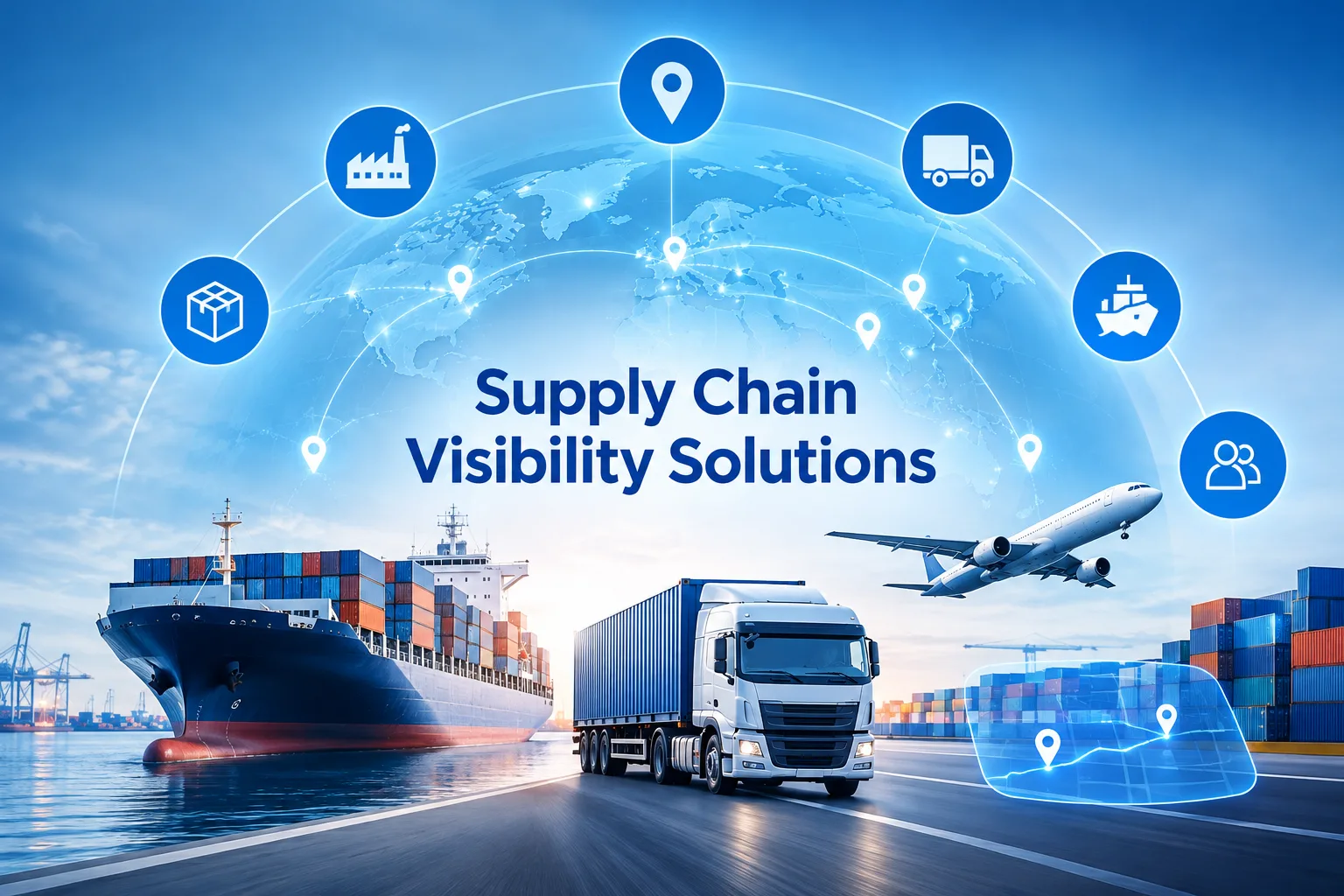
Businesses today move goods across more suppliers, carriers, and warehouses than ever before, and supply chain visibility solutions are the technology that keeps all of those moving parts in sight. Put simply, they collect shipment, inventory, and cost data from every partner into one trusted view, so your team can spot problems early and act before customers feel the impact. Companies that rely on scattered emails and spreadsheets tend to learn about trouble too late, while companies with real-time clarity respond while there is still time to fix things.
What Does Poor Visibility Actually Cost a Business?
Imagine a food distributor sending perishable goods through several regional carriers. A truck is held at a border checkpoint, but the planner only finds out when a retailer calls to ask where the delivery is. By then the products have lost shelf life, the retailer is frustrated, and the distributor must issue a credit note. Nothing about the carrier or the product was unusual. The only missing ingredient was timely information.
Hidden costs show up in quieter ways too. Planners spend hours collecting status updates. Finance teams approve invoices they cannot easily verify. Customer service answers questions with guesses. Each small gap adds friction, and over a year that friction becomes a serious drain on margin and reputation.
How Do Visibility Tools Change Daily Decision Making?
The biggest shift is moving from reaction to anticipation. When shipment milestones, port congestion, weather disruptions, and supplier readiness appear in one place, planners can reroute freight, shift inventory between warehouses, or warn a customer before a missed date becomes a complaint.
Consider a retailer preparing for a seasonal rush. With live inventory and transit data, the buying team notices that a key product is stuck upstream while another warehouse holds surplus stock. They redirect supply within hours instead of discovering the shortage on the shop floor. Decisions like this are rarely dramatic, yet they protect sales and goodwill every single week.
Where Does the Freight Audit Process Fit In?
Many teams think visibility means tracking location only. Cost visibility matters just as much, and this is where the freight audit process becomes valuable. It checks every carrier invoice against agreed rates, shipment details, and service terms before money leaves the business. Errors such as duplicate billing, incorrect weight charges, and unapproved surcharges are far easier to catch when invoice data sits next to shipment data.
Why Choose Freight Audit Services or Software?
Freight audit services give you experienced specialists who understand carrier billing tricks and contract language. Freight audit software gives you automation, so thousands of invoice lines can be matched without manual effort. Many businesses combine both, using software for speed and expert review for complex disputes.
How Does a Freight Payment System Complete the Picture?
Once an invoice is verified, a freight payment system schedules and releases payment based on approved rules. This keeps carriers paid on time, protects relationships, and gives finance a clear record of what was paid and why. It also prevents the common problem of paying first and arguing later.
A Real World Scenario Worth Learning From
A packaging manufacturer noticed that its logistics spending kept climbing while shipment activity stayed steady. Leadership assumed fuel costs were responsible. After connecting tracking data with invoice review, the team found that one carrier repeatedly billed for special handling on ordinary pallets, and another applied an outdated rate table after a contract renewal. Neither issue was visible when transport and finance worked from separate reports.
Once the manufacturer introduced automated matching and clear approval rules, the pattern ended. Overcharges were recovered, carrier conversations became fact based, and the finance team stopped spending its month end chasing explanations. The key insight was that cost leaks rarely announce themselves. They hide in the space between operations and accounting, and visibility is what closes that space.
What Should You Look For Before Investing?
Choose a solution that connects easily with your current transport, warehouse, and finance systems. It should accept data from many carriers and formats, allow custom audit rules, and present information in a way that non technical managers can understand. Strong onboarding and ongoing support matter as much as features, because a powerful platform that nobody uses delivers no value.
Start Building a Clearer Supply Chain with nVision Global
Delays, billing surprises, and disconnected reports will not fix themselves, and every week of waiting is another week of avoidable cost. nVision Global helps businesses bring clarity to logistics through smart technology that unites shipment tracking, invoice control, and payment accuracy. Contact nVision Global today to explore how supply chain visibility solutions, freight audit software, and a dependable freight payment system can transform your operations and give your team the confidence to grow.
Frequently Asked Questions
What are supply chain visibility solutions?They are platforms that gather real-time data from suppliers, carriers, warehouses, and billing systems into one view, helping businesses track goods, predict delays, and control logistics costs.How does the freight audit process save money?
It compares each carrier invoice with contract terms and shipment records, catching duplicate charges, wrong rates, and unauthorized fees before payment is made.Should a business choose freight audit services or freight audit software?
It depends on volume and complexity. Software suits high invoice volumes and routine matching, while services add expert judgment for disputes. Many businesses use both together for the best results.