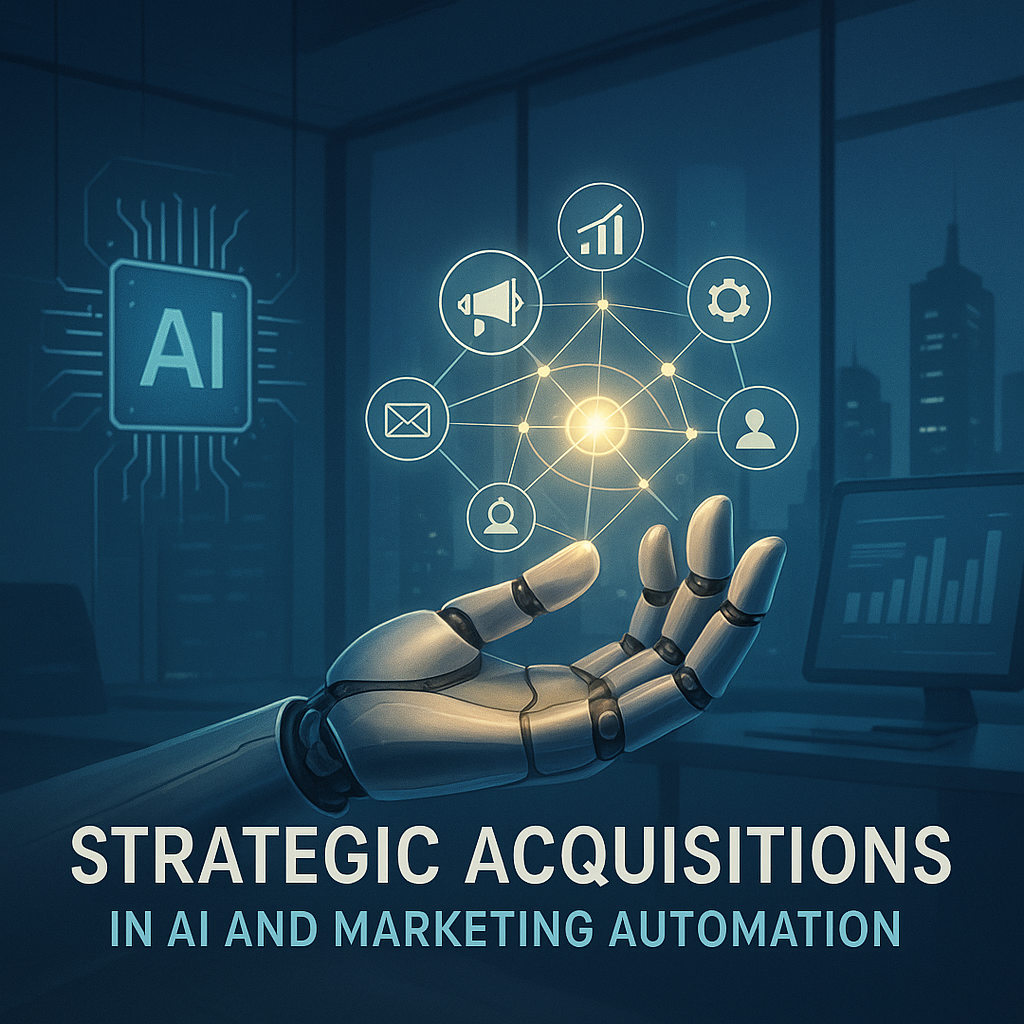
Charting a New Course in Digital Marketing Innovation
In early 2026, Canva, the graphic design titan known for democratizing creative tools, made headlines with two high-profile acquisitions: Simtheory and Ortto. This bold strategic move signaled more than just corporate expansion—it marked a decisive step toward integrating advanced AI and marketing automation capabilities into Canva’s platform. The convergence of these technologies is poised to reshape how marketers craft, personalize, and deploy campaigns in an era dominated by data-driven creativity.
Canva’s acquisition spree is a direct response to the rapid evolution of marketing demands. With AI-powered personalization becoming the new norm, and automation tools increasingly essential for scaling campaigns, Canva’s move ensures it remains competitive against legacy marketing platforms and emerging AI-first challengers. This article explores how these acquisitions are transforming Canva’s offerings, what this means for digital marketers worldwide, and how the broader marketing landscape will be influenced.
“By bringing Simtheory and Ortto into the Canva family, we are not just enhancing features—we are redefining the creative marketing workflow,” said Canva CEO Melanie Perkins in a March 2026 interview.
From Design Tool to AI-Driven Marketing Powerhouse: The Backstory
Founded in 2012, Canva rapidly grew from a simple online design tool into a global creative platform with over 100 million monthly active users by 2025. However, the marketing automation sector remained a frontier largely outside Canva’s domain until recent years. The company’s initial foray into AI began with generative design features, but expanding into end-to-end marketing automation required new capabilities.
Simtheory, an AI startup specializing in predictive customer behavior modeling, and Ortto, a robust marketing automation platform with deep CRM integration, emerged as two of the most promising companies in this space. Prior to acquisition, Simtheory’s technology was praised for its ability to forecast multi-channel campaign performance with unprecedented accuracy, while Ortto’s platform was known for seamless customer journey orchestration.
Industry analysts have noted that Canva’s acquisitions are a natural evolution, leveraging its existing user base and design ecosystem to create a unified platform where marketers can create, personalize, and automate campaigns without leaving Canva’s environment. This contrasts with traditional approaches where marketers juggle multiple disconnected tools.
“The synergy between design and marketing automation is the holy grail for digital marketers. Canva’s acquisitions directly address this gap,” commented digital marketing analyst Priya Singh.
Deep-Dive: What Simtheory and Ortto Bring to Canva’s AI Arsenal
Understanding the technical and functional contributions of Simtheory and Ortto is key to appreciating Canva’s enhanced capabilities. Together, these acquisitions introduce advanced AI-driven analytics, customer journey automation, and personalized content delivery to Canva’s suite.
Simtheory: AI-Powered Predictive Analytics and Audience Insights
Simtheory’s core technology employs machine learning models trained on vast datasets spanning consumer behavior, engagement metrics, and historical campaign data. Its flagship product predicts which segments will respond best to specific creative assets, enabling marketers to optimize campaigns before launch.
Key features integrated into Canva include:
- Predictive Campaign Scoring: Assess potential ROI of campaign variants using AI simulations.
- Audience Micro-Segmentation: Dynamically identify and target niche audience clusters.
- Real-Time Performance Forecasting: Adjust campaigns on the fly based on predicted engagement trends.
Ortto: Seamless Marketing Automation and CRM Integration
Ortto’s platform specializes in automating customer journeys through multi-channel orchestration. Its low-code workflow builder allows marketers to design complex sequences triggered by user behavior or external events. Ortto’s CRM connectors enable data synchronization across platforms, ensuring up-to-date customer profiles drive personalized outreach.
Post-acquisition, Ortto’s capabilities have been embedded into Canva’s marketing toolkit to provide:
- Automated Campaign Workflows: Schedule and trigger personalized communications across email, social, and SMS.
- Unified Customer Profiles: Consolidate data from various sources for a 360-degree customer view.
- Data-Driven Segmentation: Use insights from Simtheory to refine automation triggers.
These integrations mean marketers can now create AI-optimized content in Canva, then deploy and automate distribution within the same platform, closing the loop between design and delivery.
2026 Update: How These Acquisitions Are Reshaping Canva’s Product and Market Position
Since the acquisitions finalized in Q1 2026, Canva has rolled out a series of updates incorporating Simtheory and Ortto’s technology. The platform now offers a dedicated AI Marketing Hub, a centralized space where marketers can build, test, and automate campaigns with predictive insights.
Early feedback from Canva’s enterprise clients highlights significant efficiency gains. A global consumer goods company reported a 35% uplift in campaign engagement rates after utilizing the predictive scoring and automated segmentation tools. Another SaaS provider credited Canva’s integrated workflow for reducing campaign deployment time by 40%.
From a competitive standpoint, Canva’s move places it in direct rivalry with established marketing automation leaders like HubSpot and Salesforce Marketing Cloud, as well as AI-focused entrants such as Jasper and Synthesia. According to industry estimates, the global marketing automation market is projected to exceed $25 billion by 2028, driven largely by AI adoption, making Canva’s timing strategic.
Moreover, Canva has begun licensing some of Simtheory’s AI models as standalone APIs, allowing third-party developers to embed predictive analytics into other tools. This openness is expanding Canva’s ecosystem influence beyond its core platform.
How Canva’s Acquisitions of Simtheory and Ortto Are Revolutionizing AI and Marketing Automation reports detail these developments extensively.
Industry Perspectives: What Experts Say about Canva’s Expansion
Digital marketing experts broadly view Canva’s acquisitions as a significant pivot toward a more integrated marketing technology stack. Dr. Lena Torres, a marketing technology consultant, explains:
“Canva is leveraging its strong brand and user base to become a one-stop platform for marketers. Integrating AI predictive models and automation radically reduces friction, empowering marketers to be more agile and data-savvy.”
However, some caution that the success of this integration depends on how well Canva balances ease of use with the complexity of AI-driven marketing. The challenge lies in making sophisticated tools accessible without overwhelming users.
Marketers themselves express optimism. A survey of 500 marketing professionals conducted by TheOmniBuzz in mid-2026 showed:
- 72% believe integrated AI and automation tools increase campaign effectiveness.
- 65% plan to adopt Canva’s new marketing features within the next year.
- 58% cite seamless workflow as a key factor in platform preference.
These insights underscore a growing demand for tools that unify creativity and automation, a niche Canva is now aggressively targeting.
Looking Ahead: What Marketers Should Watch in 2027 and Beyond
As Canva continues to evolve its AI and automation capabilities, several trends and potential developments merit close attention:
- Deeper AI Personalization: Expect more granular content customization powered by real-time data and behavioral analytics.
- Cross-Platform Campaign Management: Integration with emerging channels like metaverse platforms and augmented reality advertising.
- Ethical AI Implementation: Growing emphasis on transparency and bias mitigation in AI-driven marketing decisions.
- Expansion of AI APIs: Canva may further open its AI tools for external developers, fostering innovation beyond its user base.
- Smarter Creative Automation: AI-generated dynamic creatives tailored automatically to audience preferences.
Marketers should prepare to leverage these advancements by investing in data literacy and strategic AI adoption. The integration of Simtheory and Ortto into Canva signals a future where creative design and marketing execution are inseparable.
For a comprehensive look at how these acquisitions are shaping the broader AI marketing landscape, readers can explore How Canva’s Acquisitions of Simtheory and Ortto Are Shaping AI Marketing Automation.