From guesswork to measurable routines
Over the past decade, self-care has quietly shifted from vague intentions to measurable practice. We track sleep stages on a watch, count steps, log calories, and follow structured strength programs. The moment something becomes measurable, it becomes improvable: you can see where you started, what changed, and what actually worked.
Curiously, one area has stayed stubbornly subjective: how we look. Most people form their sense of their own appearance from mirrors in bad lighting, candid photos, and offhand comments. That is an unreliable sample. A structured assessment replaces that noise with a consistent method.
What a structured facial assessment actually involves
A proper assessment is more than a quick selfie judgment. It starts with a controlled photograph: neutral expression, even lighting, camera at eye level. From there, a scoring framework evaluates the face across defined dimensions such as symmetry, jawline definition, midface harmony, and eye area, and summarizes the result on a simple scale.
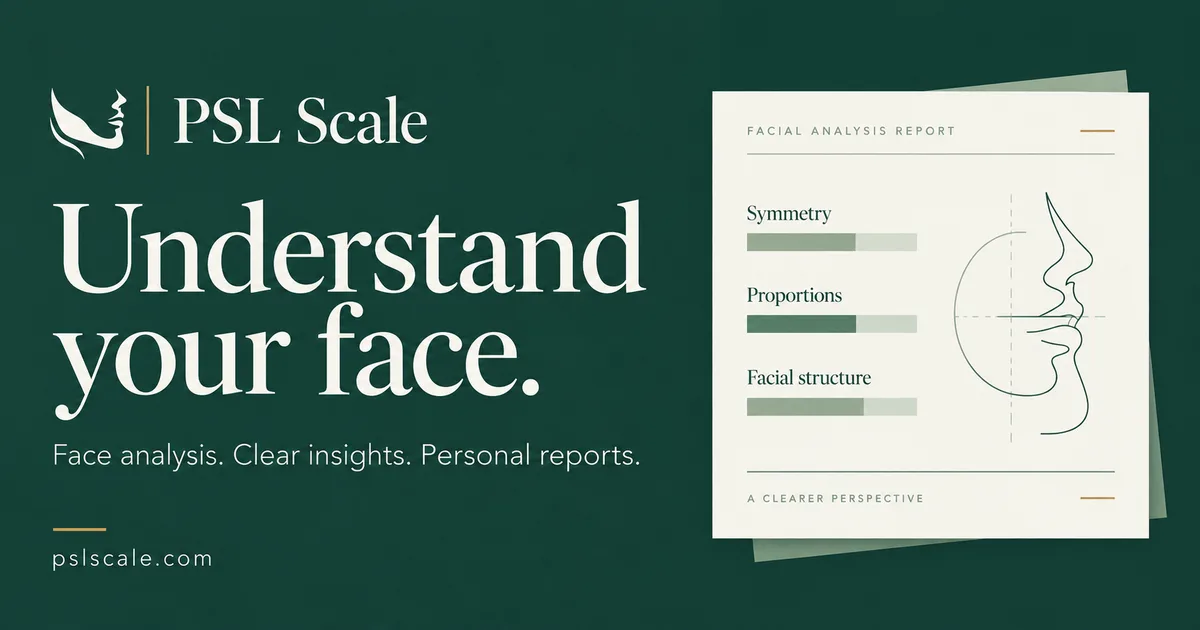
One accessible starting point is PSL Scale 博客, a free browser-based assessment that rates a photograph on the 0–8 PSL scale and walks through eight dimensions with practical presentation advice attached to each score. The value is not the number itself but the breakdown: knowing whether the weakest element is posture-related, grooming-related, or simple camera technique tells you where to focus.
Reading results without over-fixating
Any score is a snapshot, not a verdict. Lighting alone can swing a photo by a noticeable margin, and expression changes facial geometry more than most people expect. Use the assessment as a direction check: if two or three photos taken on different days land in a similar range, that range is probably a fair baseline.
Then act on the cheap wins first. Haircut suited to face shape, skincare basics done consistently, posture, and even learning how to stand for photos will move presentation faster than anything expensive. Re-assess after a few months rather than every week.
A balanced way to fold it into your routine
Structured self-assessment works best as a quarterly checkpoint, not a daily habit. Schedule it like you would a fitness test: consistent conditions, honest inputs, notes on what you plan to adjust. Combine it with the routines you already track — sleep, training, grooming — and it becomes another useful dashboard rather than a source of anxiety.
Measurability is what turned fitness from folklore into practice. Appearance is simply the last frontier where the same approach is starting to pay off, and free tools have removed the barrier to trying it.