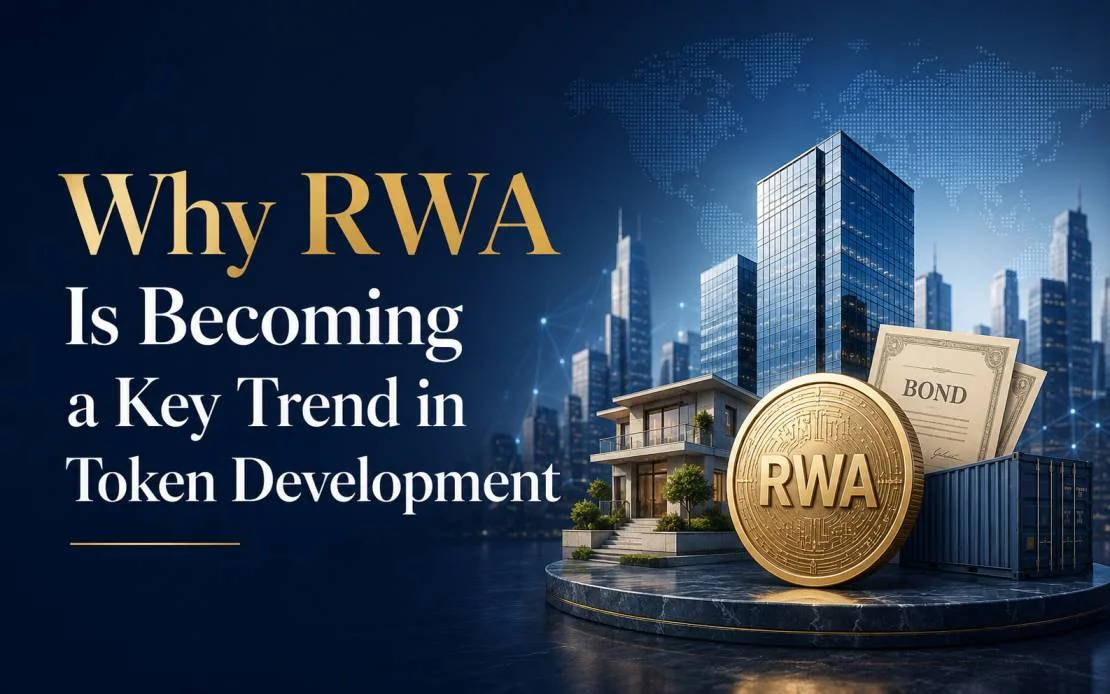
Blockchain technology has moved beyond cryptocurrency payments and digital collectibles. Businesses are now exploring blockchain for representing ownership of real assets. Real-World Asset (RWA) tokenization has become one of the fastest-growing areas in blockchain development.
RWA tokenization connects physical and traditional financial assets with blockchain networks. It converts assets such as real estate, bonds, gold, commodities, and intellectual property into digital tokens. These tokens represent ownership rights or claims linked to the original asset.
The growing interest in RWA is changing how developers create blockchain tokens. Earlier token projects focused mainly on utility, governance, and community participation. RWA projects introduce a new model where tokens connect directly with assets that have existing market value.
This shift is attracting businesses, financial institutions, and investors. They see tokenization as a way to create new ownership models, improve asset access, and bring traditional markets closer to blockchain technology.
Understanding RWA Tokenization in Token Development
RWA tokenization is the process of creating blockchain-based tokens that represent ownership of real-world assets. Each token carries information about the underlying asset and follows rules defined through smart contracts.
For example, a real estate company can divide ownership of a commercial building into thousands of tokens. Each token represents a small share of the property. Investors can purchase these tokens instead of buying the entire building.
The same model applies to financial assets. A company can issue tokens that represent bonds, investment funds, or other financial products. Blockchain records ownership details and tracks transfers between users.
RWA token development requires more than creating a basic cryptocurrency token. Developers need to build systems that connect blockchain records with real-world ownership information.
A typical RWA token development process includes:
- Selecting the asset type and ownership model
- Creating smart contracts for token issuance
- Defining token transfer rules
- Connecting blockchain systems with external data sources
- Building platforms for trading and asset management
- Adding compliance features based on regulations
This process creates a connection between physical assets and blockchain networks.
Why Businesses Are Exploring RWA Token Development
Traditional assets often have limited accessibility. Real estate, private equity, and financial products usually require large investments and complex processes.
RWA tokenization changes this model by dividing assets into smaller digital units. Investors can own fractions of assets through blockchain tokens. This opens opportunities for more participants.
Real estate provides a clear example. A property worth $10 million can be divided into thousands of tokens. Investors can purchase smaller portions instead of investing the full amount.
Tokenization also improves ownership tracking. Blockchain records provide a transparent history of transactions. This reduces dependence on manual records and multiple intermediaries.
Businesses are exploring RWA tokens for several reasons:
- Access to global investors
- Fractional asset ownership
- Faster ownership transfers
- Automated payment systems
- Better transaction records
These factors are creating demand for new token development models.
The Growth of Asset-Backed Tokens
The token industry has changed over time. Early blockchain projects focused on digital currencies and platform-based tokens. Later, NFTs introduced digital ownership for art, gaming items, and collectibles.
RWA tokens represent the next stage of this development. They connect blockchain assets with physical and financial assets.
Asset-backed tokens have a different value structure. Their value comes from the underlying asset instead of only market demand.
For example, a gold-backed token represents ownership of stored gold reserves. A real estate token represents ownership linked to a property. A bond token represents a financial instrument issued through blockchain technology.
This connection gives token projects a clearer economic foundation. It also creates new requirements for developers. They must consider asset verification, legal ownership, custody systems, and compliance rules during token creation.
How RWA Is Changing Token Development Requirements
RWA projects require advanced token structures. Developers need to build systems that support real-world asset management.
Smart Contract Development
Smart contracts form the core of RWA token systems. They control token creation, ownership transfers, payments, and other activities.
Standard token contracts often support basic functions such as transfers and balances. RWA tokens require additional features.
These features include:
- Investor verification rules
- Transfer restrictions
- Automated revenue distribution
- Asset ownership records
- Redemption mechanisms
For example, a token linked to a property investment may need smart contracts that distribute rental income to token holders.
Compliance-Focused Token Design
Regulations play a major role in RWA development. Many tokenized assets fall under financial regulations.
Developers need to consider rules related to:
- Identity verification
- Investor eligibility
- Securities compliance
- Asset documentation
- Reporting requirements
Compliance requirements influence token design. A token representing company shares requires different rules compared to a gaming token.
This has increased demand for token platforms that support regulated asset issuance.
Blockchain and External System Connections
RWA tokens require connections between blockchain networks and external information.
A blockchain does not automatically know the value or status of a physical asset. Developers use external data systems and oracle networks to provide updated information.
Examples include:
- Property valuation data
- Commodity prices
- Asset ownership records
- Financial market information
These connections help maintain accurate relationships between tokens and real assets.
Real-World Examples of RWA Adoption
Several industries are adopting RWA tokenization models.
Real Estate Tokenization
Real estate is one of the most popular RWA use cases. Property ownership involves large investments and complex transactions.
Tokenization allows property owners to divide assets into smaller units. Investors can buy fractional ownership through blockchain platforms.
Companies working in real estate tokenization are developing platforms for property investment, rental income distribution, and ownership management.
This model creates new opportunities for investors who previously had limited access to property markets.
Tokenized Bonds
Financial institutions are testing blockchain-based bonds and fixed-income products.
Tokenized bonds represent traditional debt instruments through blockchain tokens. These systems can reduce settlement time and create direct ownership records.
Large financial organizations have started exploring tokenized financial products. Their involvement shows growing interest in blockchain-based asset management.
Commodity-Backed Tokens
Gold and other commodities are common examples of RWA tokens.
A commodity-backed token represents ownership of a physical asset stored through a custody provider. Users can hold digital tokens instead of managing the physical asset directly.
These models combine blockchain ownership records with traditional asset value.
The Role of Institutions in RWA Growth
Institutional interest is pushing RWA development forward. Banks, asset managers, and financial companies are testing blockchain-based asset systems.
Financial institutions are exploring tokenization for:
- Investment funds
- Bonds
- Treasury products
- Private market assets
This interest is increasing demand for secure blockchain infrastructure. Businesses need token systems that support asset management, investor verification, and regulatory requirements.
Institutional adoption is also creating new standards for token development. Developers now focus more on security, compliance, and asset verification.
Challenges in RWA Token Development
RWA tokenization has strong potential, but several challenges remain.
Legal ownership is one major issue. A blockchain token does not automatically provide legal ownership rights. Companies need proper legal structures that connect tokens with real assets.
Liquidity is another challenge. Tokenized assets require active marketplaces where users can trade tokens. Without enough buyers and sellers, asset trading becomes difficult.
Security remains a key concern. Smart contract errors, inaccurate data, and weak custody systems can affect user trust.
Developers need strong testing processes and clear asset management rules before launching RWA token platforms.
Future of RWA in Token Development
RWA tokenization will continue influencing token development. Businesses are looking for blockchain applications that connect with real economic activity.
Future token projects will focus on:
- Tokenized investment products
- Fractional ownership platforms
- Institutional asset systems
- Cross-chain asset transfers
- Automated asset management
The growth of RWA shows a move toward practical blockchain use cases. Tokens are becoming tools for representing ownership, managing assets, and creating new financial systems.
As regulations become clearer and blockchain infrastructure improves, more industries will explore asset tokenization.
Conclusion
RWA is becoming a key trend in token development because it connects blockchain technology with real-world value. It allows businesses to represent physical and financial assets through digital tokens.
This trend is changing how developers create token systems. Modern token development now involves smart contracts, compliance rules, asset verification, and external system connections. Real estate, bonds, commodities, and other assets are already moving toward token-based ownership models.
Blockchain App Factory helps businesses explore RWA token development by building blockchain-based solutions for asset-backed tokens, smart contracts, and digital ownership platforms. With experience in blockchain development, the company supports businesses in creating secure token ecosystems designed for real-world asset applications.
As more industries adopt asset tokenization, RWA will continue shaping the future of blockchain development. It expands the role of tokens beyond digital assets and creates new opportunities for businesses to build practical blockchain applications.