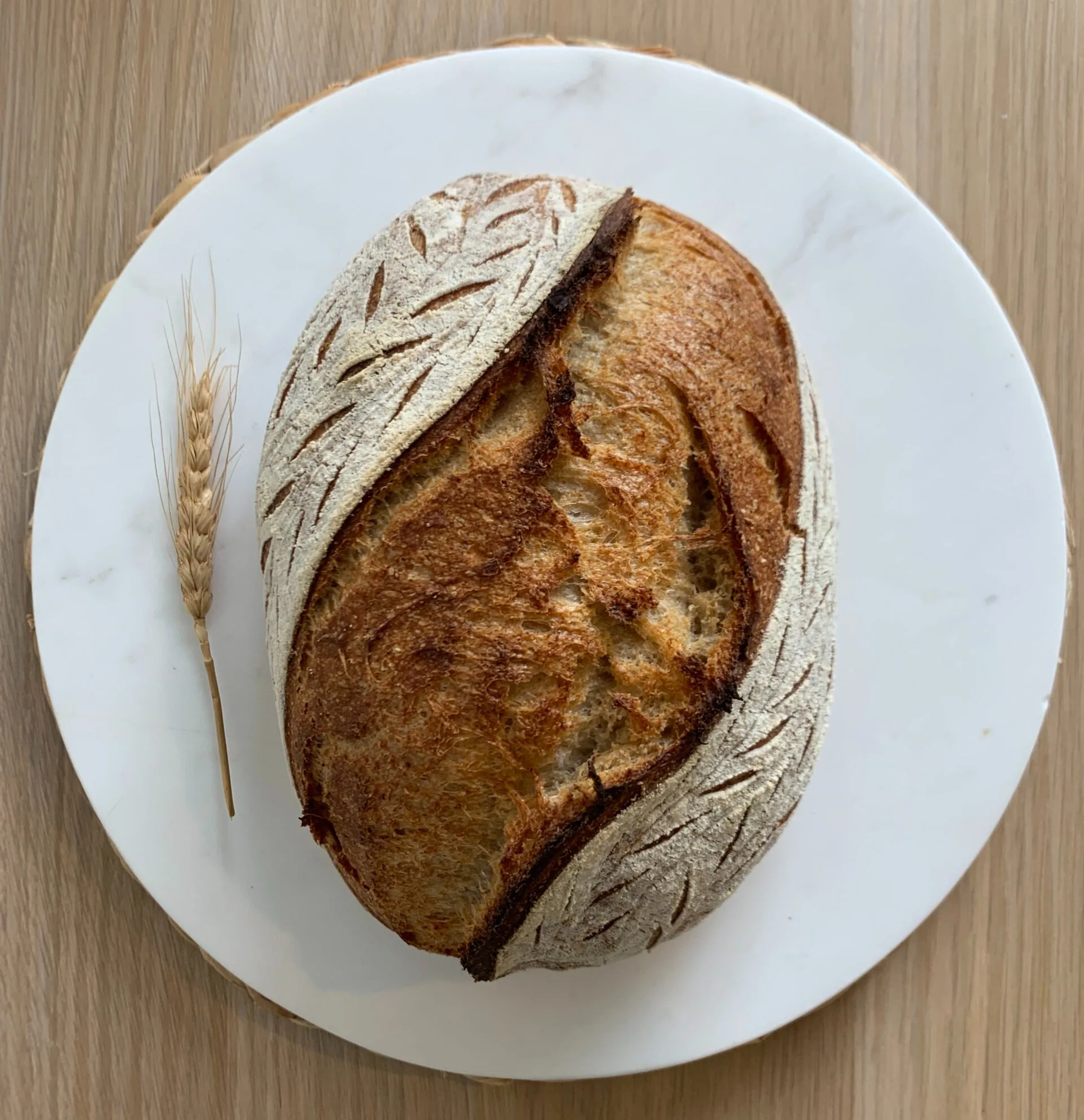
Sourdough is bread leavened with a living culture of wild yeast and bacteria instead of the packaged yeast most bakeries and supermarkets rely on. That culture is called a sourdough starter, and it's the reason sourdough dough rises slowly, tastes tangy, and ends up easier on the stomach for a lot of people. I'm Roberto Giammellucca, founder of The Sourdough Science Academy, and I've been teaching this process to home bakers across the Gold Coast and Brisbane since 2021. Here's what sourdough actually is, why it behaves so differently from regular bread, and what I've picked up from years of standing next to students at the bench.
What Is Sourdough Bread, Exactly?
Sourdough bread is made from flour, water, and salt, and nothing else does the leavening, no sachets, no instant yeast, just the starter. Wild yeast in the starter produces the gas that makes the dough rise, while the bacteria alongside it produce the acids responsible for that familiar sour edge.
None of this happens quickly. A proper sourdough loaf spends hours, not minutes, developing, and rushing it tends to show up in the final bake as a dense, tight crumb rather than the open, airy texture people are usually chasing.
In my classes, I teach a structured version of this called the 2 Hour Sourdough Method™, which breaks the process into stages a home baker can actually manage without clearing an entire day. You can see how it comes together at one of our upcoming classes in Coomera, or further out toward Brisbane.
What Is a Sourdough Starter?
A starter is a mixture of flour and water that has picked up wild yeast and bacteria from the flour and the air around it, then been fed and maintained until it's active enough to leaven bread on its own. Feed it, rest it, repeat, over weeks, it turns into something with real strength.
I still bake with a starter that's now seven years old. It's outlasted three ovens and two house moves. A starter isn't really an ingredient you buy off a shelf; it behaves more like something you look after.
Building one from nothing is simple in theory: mix equal parts flour and water, leave it out at room temperature, and feed it fresh flour and water every day for about a week. What trips people up isn't the recipe; it's patience. A brand-new starter can look sluggish or flat for days before it suddenly comes to life, and most people give up right before that happens. That's usually the first thing I tell students in class; it's less about doing it perfectly and more about not quitting on day four.
If you want the exact method I use to keep mine alive, I wrote it up in detail here: how to feed a sourdough starter using a digital kitchen scale. And if you'd rather skip building one from scratch, we stock ready-to-go sourdough starter kits along with the organic bread flour I bake with at home.
Why I Started Teaching Sourdough
I come from an Italian family where bread wasn't really a side item; it was the meal holding everything else together. What pushed me toward sourdough specifically was noticing how many people around me avoided bread entirely because it left them uncomfortable, without really knowing why.
The short version of the science: regular bread is mixed and baked within a couple of hours, which doesn't give much time for anything to happen to the gluten before it hits your plate. Sourdough sits and ferments for far longer, and during that window, enzymes and bacteria get to work breaking down a meaningful portion of the gluten and starches on their own. That's the actual reason so many people who struggle with regular bread find sourdough sits better with them.
I didn't set out to build a business around it, I just wanted to help the people closest to me eat bread again without dreading it. That idea is the whole reason the academy exists. We started with a handful of weekend classes in Coomera in September 2021, teaching people to bake organic sourdough bread, pizza, and pasta with ancient grains. Since then, thousands of home bakers have come through, and the reviews have piled up, over 380 of them five stars, if you check our class.
It's Not Just Bread: Pizza and Pasta Too
Bread gets most of the attention, but the same fermentation principles run through everything we teach at The Sourdough Science Academy, including pizza dough and fresh pasta. A sourdough pizza base ferments the same slow way a loaf does, which is part of why it holds its shape and char so differently to a same-day dough.
We lean on ancient grains for a lot of this work , things like spelt and einkorn, varieties that haven't been bred and processed the way modern wheat has. They behave differently on the bench, they taste different, and for a good number of my students, they sit differently in the stomach too.
None of this works without decent ingredients to start with, which is why everything we use is organic. It's a simple rule I've stuck to since day one: if I wouldn't be comfortable feeding it to my own family, it doesn't go in a class. That same standard carries through to our catering, where sourdough pizza sits alongside homemade arancini and Sicilian cannoli at private and corporate events across the Gold Coast and Brisbane.
How Does Sourdough Fermentation Actually Work?
Gluten forms when two proteins in wheat flour, glutenin and gliadin, meet water and are worked through mixing and folding. That protein network is what stretches, traps gas, and gives bread its structure; without it, dough wouldn't hold a rise at all.
A sourdough starter changes this picture over time. The wild yeast produces carbon dioxide, which is what makes the dough expand. The lactic acid bacteria sitting alongside it produce organic acids, and those acids, working slowly over many hours, start to break down some of that gluten and starch before the loaf ever sees an oven. Regular bread, proofed for an hour or two, doesn't get anywhere near that same window.
I actually filmed a breakdown of this exact process on YouTube, walking through why sourdough sometimes comes out dense and what the gluten network has to do with it. If your own loaves have turned out flat before, it's almost never a sign you've done something wrong; usually, the dough just needed more time or a stronger starter behind it. I go through the common fixes for why your sourdough bread is dense and how to fix it.
Sourdough vs Regular Bread: What's Actually Different?
FeatureSourdough BreadRegular Commercial BreadRising agentWild yeast and bacteria (sourdough starter)Commercial baker's yeastFermentation time12–24 hours, sometimes longerUsually under 2 hoursTypical ingredientsFlour, water, salt, starterFlour, water, yeast, often sugar, and preservativesFlavourTangy and complex, changes with fermentation timeConsistent, fairly mildGluten structurePartly broken down during long fermentationMostly intactShelf lifeNaturally preserved by acidityOften relies on added preservativesSame basic ingredients, completely different outcome, and it all comes down to time. You can usually tell the two apart before you even taste them: sourdough tends to have a thicker, crackly crust and an uneven, open crumb, while a regular loaf is soft all the way through with a much thinner crust.
Is Sourdough Bread Actually Better for You?
This comes up in almost every class I run, and the honest answer is that it depends on the person. Sourdough still contains gluten, so it's not a fix for coeliac disease and shouldn't be treated as one. What it can offer is an easier experience for people with general sensitivity, since fermentation reduces gluten and certain fermentable compounds before the bread is baked, rather than leaving them untouched.
Beyond that, sourdough tends to have a lower glycemic response than white bread in some studies, though this varies with the flour and method used. It's worth a conversation with your doctor if you're managing a condition like diabetes, rather than relying on general claims from a blog.
Frequently Asked Questions
- Is sourdough better for you than regular bread?
For a lot of people, yes, mainly because of that long fermentation window, which regular bread simply doesn't get. - What is so special about sourdough bread?
It's leavened entirely by a living culture instead of manufactured yeast, and it's proofed for hours rather than minutes, which is where the flavour and texture come from. - Is sourdough bread OK for diabetics?
It may have a gentler effect on blood sugar than white bread, but this depends on the flour and method, so it's best discussed with a doctor or dietitian rather than assumed. - What's the difference between sourdough and normal bread?
Mainly the leavening agent and the time involved, a wild culture and many hours for sourdough, versus commercial yeast and a quick proof for regular bread. - What's the healthiest bread you can eat?
Generally, breads made with whole or ancient grains, minimal additives, and proper fermentation, sourdough included, tend to come out ahead of heavily processed white bread. - What's the unhealthiest type of bread?
Highly processed white bread made with refined flour, added sugar, and a long ingredients list of preservatives, with little to no real fermentation behind it.
Where to Learn Sourdough With The Sourdough Science Academy
If you're in Queensland, the most direct way in is one of our in-person classes.
ClassBest ForWhat You'll LearnStarter ClassComplete beginnersBuilding and keeping your own sourdough starter aliveBread Workshop Level 1New sourdough bakersThe full 2 Hour Sourdough Method™, shaping, and baking two doughsBread Class Level 2Confident home bakersAdvanced dough handling, focaccia, and sandwich breadSourdough Bread & Pizza WorkshopIndividuals, families, and groupsBread and pizza dough side by sideWondering what the day actually looks like before you book? I've written up what to expect at a beginner sourdough class on the Gold Coast, plus the common mistakes first-time bakers make and how the workshop fixes them.
Not local to the Gold Coast or Brisbane? Our online courses cover the same method, from a free beginner training through to full Bread Mastery programs you can work through at home. For workplaces, I also run corporate sourdough events and pizza catering across South East Queensland, usually a more memorable team day than the usual trivia night.
Key Takeaways
- Sourdough bread is leavened by a living starter culture of wild yeast and bacteria, not commercial yeast.
- Long fermentation, typically 12 to 24 hours, is what shapes sourdough's flavour, texture, and easier digestion.
- A starter needs regular feeding, but a well-kept one can last for years; mine is seven and counting.
- Sourdough still contains gluten. It isn't gluten-free, though fermentation does reduce it compared to regular bread.
- The Sourdough Science Academy teaches all of this through in-person classes, online courses, and a stocked online shop of starters, flour, and tools.
For more of this in video form, I post regularly on YouTube, and you can catch the day-to-day baking on Instagram and Facebook. Got a specific question about your own baking or a health concern before booking? Reach out through our contact, happy to help.
About the author: Roberto Giammellucca is the founder and CEO of The Sourdough Science Academy, based in Coomera, Queensland. Since 2021, he's taught thousands of home bakers across the Gold Coast and Brisbane, and now runs corporate sourdough workshops for organisations including Foundations Care and Buddy Up. Connect with him on LinkedIn.