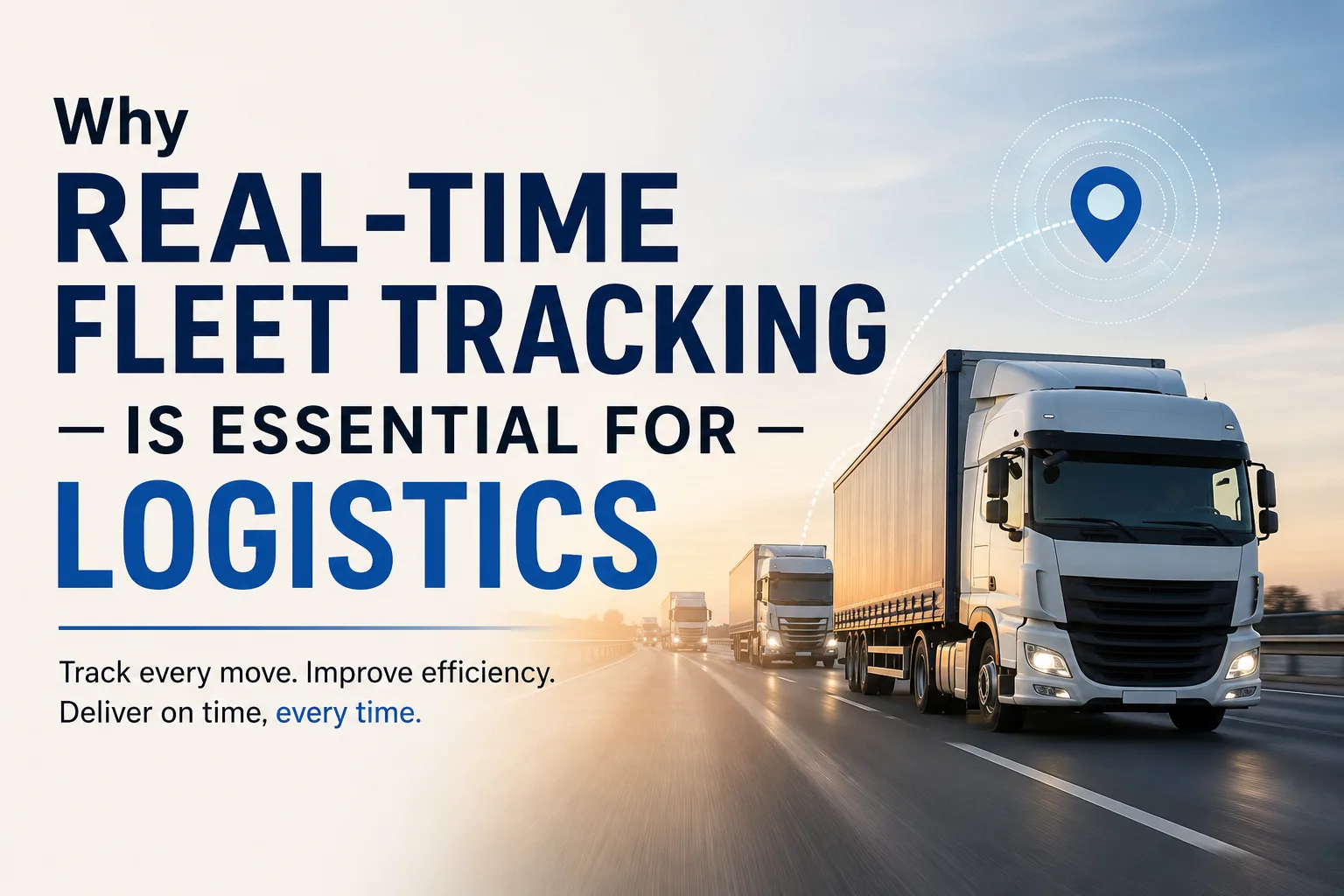
The logistics industry is moving faster than ever. Customers expect on-time deliveries, businesses demand better visibility, and supply chains are becoming more complex every day. In this environment, real-time fleet tracking has become an essential tool for logistics companies. By using a modern fleet tracking system, businesses can monitor vehicles, improve delivery performance, reduce operational costs, and provide better customer service.
If you're still relying on manual updates or phone calls to track deliveries, you're already behind. Modern tracking technology gives logistics companies complete visibility over their fleet and helps them make smarter decisions every day.
What Is Real-Time Fleet Tracking?
Real-time fleet tracking is a technology that allows businesses to monitor the location, movement, and status of their vehicles as they travel. Using GPS, IoT devices, and cloud-based software, fleet managers can view accurate vehicle information from a centralized dashboard.
Instead of waiting for drivers to provide updates, businesses receive live information that helps them respond quickly to unexpected situations such as traffic congestion, route changes, or delivery delays.
Why Logistics Companies Need Better Fleet Visibility
Managing multiple vehicles without accurate tracking can create several challenges, including:
- Delivery delays
- Poor route planning
- Fuel wastage
- Limited communication
- Vehicle misuse
- Customer complaints
Without complete visibility, even small issues can grow into expensive operational problems.
Modern logistics requires faster decisions, and that starts with knowing exactly where every vehicle is at any given time.
Improved Delivery Accuracy
One of the biggest advantages of real-time vehicle tracking is improved delivery performance.
Fleet managers can monitor vehicle movement continuously, identify delays immediately, and communicate accurate delivery updates to customers. This creates greater trust while reducing missed deliveries and scheduling conflicts.
Customers appreciate transparency, especially when shipments are time-sensitive.
Better Route Planning
Traffic conditions, road closures, and unexpected delays can affect delivery schedules.
A reliable GPS fleet tracking solution helps businesses identify the most efficient routes while avoiding unnecessary travel time. Shorter routes reduce fuel consumption and improve overall productivity.
Drivers also spend less time navigating unfamiliar roads.
Smarter Fleet Operations
Managing vehicles involves much more than tracking their location.
Modern fleet management solutions help businesses monitor driver performance, vehicle utilization, maintenance schedules, and operational efficiency from a single platform.
Having all this information in one place makes planning easier and improves daily decision-making.
Improved Vehicle Security
Vehicle theft and unauthorized usage continue to be major concerns for logistics businesses.
A connected vehicle tracking system allows managers to locate vehicles instantly if they move outside approved routes or operating hours.
Quick alerts enable businesses to respond faster and minimize potential losses.
Better Driver Accountability
Tracking technology encourages responsible driving habits.
With continuous fleet monitoring, businesses can identify harsh braking, excessive idling, speeding, and unnecessary route deviations. Managers can use these insights to improve driver training and encourage safer driving practices.
This not only improves road safety but also helps reduce fuel expenses and vehicle wear.
The Role of IoT in Fleet Management
Technology has transformed logistics operations over the past few years.
Using IoT fleet management, connected sensors collect valuable information about vehicle health, engine performance, fuel usage, and environmental conditions.
This data helps businesses detect issues early, reduce downtime, and schedule preventive maintenance before expensive breakdowns occur.
Supporting Modern Logistics
Today's transportation networks require complete visibility from dispatch to delivery.
Effective logistics fleet management helps businesses coordinate drivers, shipments, warehouses, and delivery schedules more efficiently. Managers can respond quickly to changing customer demands while maintaining operational control.
This leads to smoother workflows and better resource utilization.
Digital Transformation in Fleet Operations
Many logistics companies are replacing manual processes with digital fleet management platforms.
Cloud-based dashboards provide instant access to reports, alerts, vehicle history, and performance data. This reduces paperwork while making information available from anywhere.
Digital systems also improve collaboration between dispatch teams, drivers, and management.
Moving Towards Smarter Transportation
The future of logistics depends on technology-driven decision-making.
With smart fleet management, businesses can automate routine tasks, optimize routes, monitor vehicle performance, and improve customer communication without increasing operational complexity.
Smarter systems allow organizations to grow while maintaining better control over their fleet.
Integrating Fleet Tracking with Logistics Solutions
Fleet tracking becomes even more valuable when integrated with Secure Transportation technologies.
Businesses can monitor both vehicle movement and shipment security throughout the delivery journey, reducing the risk of theft, tampering, and unauthorized access.
Similarly, combining tracking with Digital Cargo Management enables better shipment visibility, improved inventory movement, and more efficient logistics operations.
Together, these technologies create a connected logistics ecosystem that supports safer and more reliable deliveries.
Industries Benefiting from Fleet Tracking
Real-time tracking is valuable across many industries, including:
- Logistics and transportation
- E-commerce
- Manufacturing
- Retail distribution
- Construction
- Oil and gas
- Cold chain logistics
- Public transportation
Every industry benefits from improved visibility, better planning, and more efficient operations.
Choosing the Right Fleet Tracking Solution
When selecting a fleet tracking solution, businesses should look for:
- Live vehicle visibility
- Cloud-based access
- Route optimization
- Driver performance monitoring
- Maintenance alerts
- Mobile accessibility
- Reporting and analytics
- Easy integration with existing systems
Choosing the right platform helps businesses improve efficiency while preparing for future growth.
Final Thoughts
Logistics is no longer just about moving goods from one place to another. Customers expect speed, transparency, and reliability at every stage of the journey.
Real-time fleet tracking gives logistics companies the visibility they need to improve delivery performance, reduce operational costs, strengthen vehicle security, and make faster business decisions. As supply chains continue to evolve, businesses that invest in intelligent fleet tracking technology will be better prepared to meet customer expectations and stay competitive in a fast-changing industry.
Frequently Asked Questions
1. What is real-time fleet tracking?
Real-time fleet tracking uses GPS, IoT, and cloud technology to monitor vehicle locations, routes, and movement instantly.
2. Why is real-time fleet tracking important for logistics?
It improves delivery accuracy, reduces delays, increases fleet visibility, enhances vehicle security, and helps businesses make faster operational decisions.
3. How does fleet tracking reduce transportation costs?
Fleet tracking optimizes routes, reduces fuel consumption, minimizes idle time, improves driver behavior, and prevents unnecessary vehicle usage.
4. Can fleet tracking improve customer satisfaction?
Yes. Customers receive more accurate delivery updates, estimated arrival times, and better communication throughout the shipment process.
5. Is GPS fleet tracking suitable for small logistics businesses?
Yes. Businesses of all sizes can use GPS fleet tracking to improve operational efficiency and better manage their vehicles.
6. How does IoT improve fleet management?
IoT devices monitor vehicle health, fuel usage, maintenance needs, and operating conditions, helping businesses reduce downtime and improve efficiency.
7. Can fleet tracking help prevent vehicle theft?
Yes. Real-time location monitoring and instant alerts make it easier to locate stolen vehicles and respond quickly to unauthorized movement.
8. What features should businesses look for in a fleet tracking solution?
Businesses should choose solutions that offer live tracking, route optimization, driver monitoring, maintenance alerts, cloud access, reporting, and system integration for better logistics management.