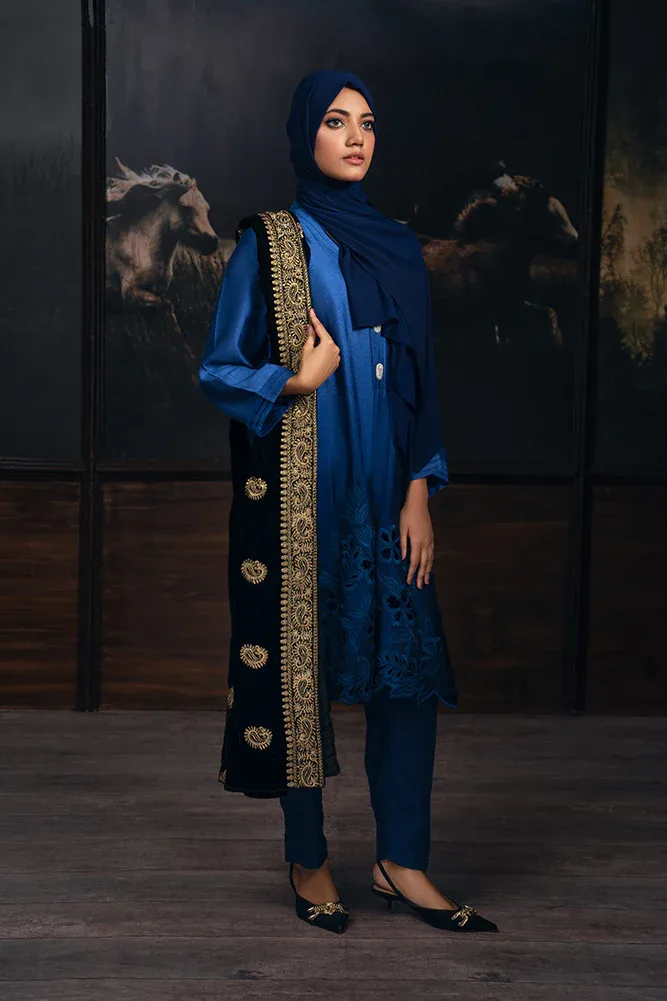
In March 2026, Pakistani journalist Nawal Ahmad wrote about an interesting shift in local fashion. Her article in The Express Tribune explored how Pakistani brands were mixing traditional craftsmanship with modern streetwear. She also described women pairing simple Western outfits with embroidered shawls and colorful khussas.
It's a familiar idea when you think about the clothes many Pakistani women already own.
You might have a beautiful pashmina shawl that you bought for a winter wedding or received as a gift. You love its color and the detailed patterns along its border. Yet it spends most of the year folded away because you only think of wearing it with shalwar kameez.
Now imagine pairing that same shawl with your favorite jeans and a plain sweater.
It can look just as lovely without feeling too formal.
In 2026, this approach fits into a wider movement in Pakistani fashion. Designers are finding ways to bring traditional details into modern clothing. While there are no national figures showing how many Pakistani women wear pashmina shawls with Western outfits, recent fashion reporting and academic research support the broader interest in Eastern-Western fusion fashion.
And there are good reasons why this combination works for everyday wear.
Why Pakistani Women Are Mixing Traditional Pashmina Shawls With Western Clothes
Most Pakistani women have different outfits for different parts of their lives. You might wear jeans when meeting friends and choose a blazer with trousers for work. For a family dinner or wedding, you may prefer traditional clothes.
But there's no reason a shawl should only belong with one type of outfit.
Pakistani designers have been exploring this idea through modern clothing collections.
In May 2025, the Journal of Design and Textiles published research titled Sartorial Synthesis: An Exploration of Fusion Art in Pakistani Fashion.
The researchers studied three Pakistani brands: Rastah, Nukta and Farmaish. They examined how traditional Eastern patterns were being used on Western ready-to-wear clothing.
Their findings showed that cultural identity and traditional craftsmanship were important parts of these designs.
Although the study did not focus specifically on pashmina shawls, it helps explain why traditional accessories can work with Western clothing.
A shawl is especially easy to experiment with because you don't need to change the rest of your outfit. You can simply add it and see how the colors work together.
A Pashmina Shawl Keeps Traditional Style Close to Home
Some pieces of clothing are special because of the memories attached to them.
Maybe your mother has a favorite shawl that she brings out every winter. Perhaps you received one as a wedding gift or bought a beautiful design for an important family occasion.
Wearing that shawl with jeans doesn't make it any less traditional. You're simply finding another way to enjoy something you already love.
Pakistani-origin designer Amna Irshad explored a similar idea through her Dress to Impress exhibition in Australia.
In July 2026, SBS Urdu featured her collection and explained how she combined Eastern artistic traditions with Western clothing designs. Her work also aimed to bring attention to the skills of women artisans in Pakistan.
Her exhibition wasn't specifically about pashmina shawls. However, it showed how traditional craftsmanship can remain meaningful when used in modern fashion.
The same thinking can apply to everyday clothing.
You can enjoy the comfort of Western outfits while keeping a familiar traditional piece as part of your personal style.
Why Pashmina Shawls Look Beautiful With Jeans and Sweaters
Jeans and sweaters are among the easiest outfits to pair with a traditional shawl.
Most everyday sweaters have plain colors and simple shapes. A shawl with detailed patterns can add something interesting without making the outfit look too formal.
Imagine wearing straight-leg blue jeans with a cream sweater.
It's a comfortable combination for shopping or meeting friends. Now add a deep maroon shawl with a traditional border.
The plain sweater gives the shawl's pattern room to stand out while the jeans keep everything casual.
You don't need a complicated draping style either.
Place the shawl loosely over your shoulders and bring one end across the front. If you prefer something simpler, fold it lengthwise and wear it like a wide scarf.
For university or everyday outings, choose a shawl that isn't too large. You should be able to carry your handbag and move around without constantly adjusting the fabric.
Also think about the neckline of your sweater. If you're wearing a thick turtleneck, wrapping a heavy shawl tightly around it can feel uncomfortable.
A loose drape will usually be easier to wear.
Pashmina Shawls Work Well With Long Winter Coats
Long coats and traditional shawls make a lovely winter combination because they have different shapes.
A coat gives the outfit structure while a shawl adds soft folds and texture.
For example, try a camel coat with black trousers and a cream shawl. If you prefer darker colors, a charcoal coat can look beautiful with a burgundy or brown wrap.
The easiest way to wear this combination is to fold the shawl into a long rectangle and let both ends fall over the front of your coat.
If your shawl has a decorative border, leave one end slightly longer so the pattern remains visible.
This can be useful during the cooler months in Lahore and Islamabad when an extra layer is often welcome.
However, the thickness of the shawl matters.
A lined winter coat may already provide enough warmth. Adding a thick shawl around your neck can make the outfit feel bulky.
A lighter wrap may sit more comfortably over a heavy coat. Thicker shawls may work better with simpler sweaters during colder weather.
The idea is to stay warm without making your outfit difficult to wear.
Traditional Pashmina Shawls Can Make Office Outfits More Interesting
If you wear trousers and blazers to work, you've probably noticed how quickly office outfits can start looking similar.
A shawl offers an easy way to change things without buying another outfit.
Suppose you're wearing black trousers with a white shirt and grey blazer. A plain beige shawl can add warmth while keeping the overall look neat.
Fold it into a narrower shape and place it loosely around your neck.
This keeps the blazer's shoulders and lapels visible.
If you enjoy patterned shawls, choose one with colors that complement your office clothes.
A detailed shawl usually looks better with a plain shirt than with another strong print.
Comfort matters too.
If you carry a laptop bag, keep the loose ends away from the shoulder strap. Otherwise the shawl may keep slipping out of place.
You want something that looks nice when you leave home and still feels comfortable several hours later.
A Pashmina Shawl Can Make a Simple Western Dress Look Special
A plain Western dress doesn't always need expensive accessories to look suitable for a family dinner or evening gathering.
Sometimes a beautiful shawl is enough.
Imagine wearing a black midi dress with ankle boots. Add a patterned Kashmiri shawl in burgundy or deep brown.
The shawl brings traditional detail to the outfit while the dress keeps everything simple.
For a formal dinner, you can drape the shawl across both shoulders. For a more relaxed gathering, try wearing it over one shoulder.
A cream or beige dress can also work beautifully with a brown shawl featuring floral patterns.
Try not to add too many decorative accessories.
If the shawl already has detailed embroidery, you probably don't need a large necklace or heavily embellished handbag.
Let the pattern stand out against the plain dress.
This combination is also useful when you want to wear a favorite dress again without repeating exactly the same look.
Pakistani Fashion Trends Are Giving Traditional Accessories More Attention in 2026
The combination of Eastern and Western clothing isn't completely new in Pakistan.
What's interesting is how local designers continue to find different ways to use traditional craftsmanship.
In its March 3, 2026 report, The Express Tribune discussed how Pakistani brands such as Rastah and Manto were bringing heritage designs into contemporary streetwear.
The report also described women wearing simple Western outfits with traditional accessories such as embroidered shawls and khussas.
This is a useful example of how familiar clothing pieces can fit into modern outfits.
The 2025 Journal of Design and Textiles study also found that traditional patterns and techniques were important to the fusion designs created by the brands it examined.
These sources don't prove that every Pakistani woman is following the same trend. They do show that combining traditional and contemporary clothing has become part of Pakistan's fashion conversation.
For everyday dressing, this means you can experiment with a shawl you already own instead of buying an entirely new outfit.
How to Choose the Right Pashmina Shawl for Western Outfits
Before choosing a shawl, take a good look at the clothes you wear most often.
If your wardrobe includes black trousers and blue jeans with neutral sweaters, a shawl in cream or maroon may work with several outfits.
If you prefer printed dresses and colorful tops, a plain shawl might be easier to match.
The pattern matters as well.
Traditional Kaani designs can look beautiful with simple sweaters and coats. Kalamkari-style patterns may work well with plain Western dresses.
But don't choose a shawl based on appearance alone.
Traditional pashmina is associated with fine cashmere fibers. However, not every product sold under the pashmina name contains pure cashmere. Some shawls are made from other types of wool or blended fabrics.
The US Federal Trade Commission also advises consumers to check the actual fiber content of products marketed as pashmina rather than relying on the name alone.
When exploring different traditional pashmina shawl designs, pay attention to the fabric composition and dimensions.
A smaller lightweight shawl may be easier to wear with a blazer. A larger decorative piece may be better suited to winter gatherings.
Think about how often you'll wear it and whether it works with several outfits you already own.
Small Styling Details That Make Pashmina Shawls Look Better With Western Clothes
Sometimes a shawl and a Western outfit look beautiful separately but don't quite work together.
Usually a few small changes can help.
If you're wearing a loose sweater with wide-leg jeans, avoid adding too much fabric around your shoulders. Fold the shawl into a narrower shape to keep the outfit balanced.
If your dress already has bold patterns, try a plain shawl instead of adding another detailed print.
Pay attention to the length too.
Very long ends can become inconvenient when walking or sitting. Adjust the folds until the fabric feels comfortable.
If your shawl is delicate, avoid rough brooches or sharp pins that might catch the threads.
There's also no need to match every color perfectly. A shawl in a complementary shade can look just as lovely as one that matches your sweater or coat.
The simplest styling choices are often the easiest to wear throughout the day.
Why Traditional Pashmina Shawls Make Sense With Western Outfits in 2026
The appeal of wearing traditional pashmina shawls with Western clothes comes down to how easily the pieces can work together.
You can enjoy jeans and sweaters while still wearing something traditional. A shawl can make a plain dress look more interesting or provide an extra layer over a winter coat.
Pakistani fashion research from 2025 and reporting from 2026 show that traditional craftsmanship continues to influence modern clothing. Although there are no reliable national figures measuring this specific shawl-styling trend, the combination fits naturally into the wider interest in Eastern-Western fashion.
And you don't need to change your wardrobe to try it.
The next time you're getting ready for a winter outing, take out the shawl you've been saving for special occasions.
Try it with your favorite jeans or the long coat you wear every winter. You may discover that the shawl you've owned for years looks just as lovely with your everyday clothes as it does with a traditional outfit.