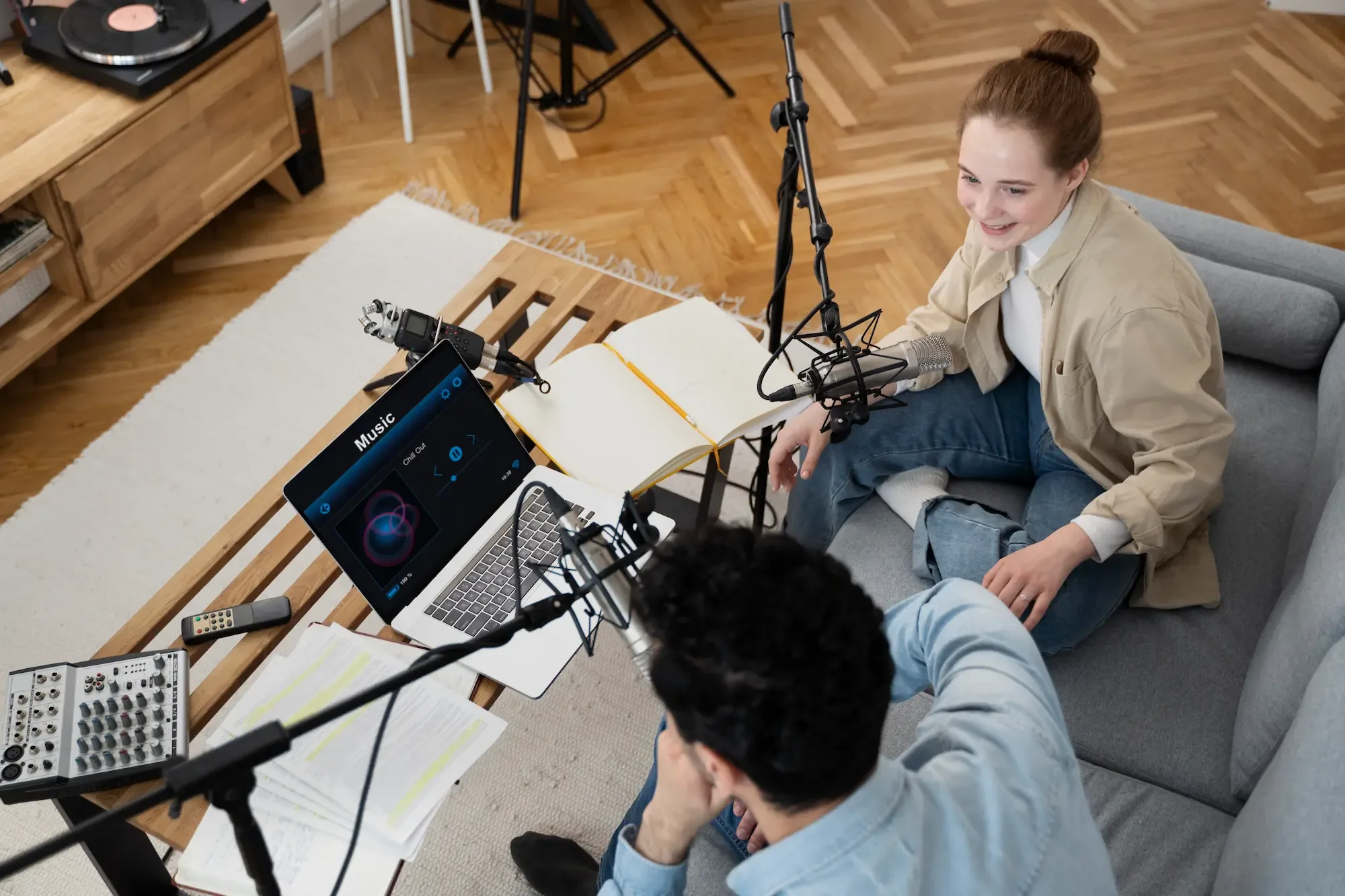
A couple of years ago, if you told someone you were going to record a podcast, they pictured a microphone, maybe a pair of headphones, and someone talking into their laptop. Audio only. Simple setup.
That picture has changed a lot.
Walk into any serious podcast studio today and you will notice something different. Multiple cameras positioned at different angles. A dedicated lighting setup. Monitors showing the live feed. What used to look like a radio booth now looks closer to a small television production.
Multi-camera podcast studios are not a niche thing anymore. They are quickly becoming the standard for creators who are serious about growing their shows. And the reason is simpler than most people expect.
YouTube changed everything
The single biggest reason multi-camera setups are trending is that podcasting and YouTube have become inseparable for creators who want real reach.
A well-produced podcast episode uploaded to YouTube as a video gets discovered in ways that audio-only episodes on Spotify or Apple Podcasts simply cannot match. YouTube's search and recommendation algorithm drives a completely different kind of audience growth. Clips from video podcast episodes perform on Instagram Reels and YouTube Shorts in ways that audio clips never could.
For a creator thinking about building an audience in 2025, ignoring video means ignoring one of the most powerful distribution tools available. And once you commit to video, a single static camera angle starts feeling like a missed opportunity pretty quickly.
Why multiple cameras specifically
A single camera recording a two-person conversation creates a visual problem. You are either showing both people in one wide shot, which feels flat and distant, or cutting awkwardly between close-ups that were filmed at the same time on the same camera.
Multiple cameras solve this immediately. You have a wide shot that establishes the scene. You have close-ups of each speaker. You have angles that cut naturally when the conversation shifts, when someone makes a point, when there is a reaction worth capturing. The final edit feels like watching something that was made for television, not something that was set up in twenty minutes.
This is what audiences have started to expect. Shows like Joe Rogan's podcast or Lex Fridman's conversations have set a visual standard that viewers now associate with quality. Multi-camera production is a big part of why those shows look the way they do.
It creates content that works everywhere
One of the most practical reasons creators are moving to multi-camera studios is what it does for content repurposing.
A single well-recorded multi-camera session gives you a full-length episode, short clips for social media, reaction moments, highlight reels, and thumbnail-worthy stills. The same two hours of recording can feed weeks of content across YouTube, Instagram, LinkedIn, and anywhere else a creator is building a presence.
With a single static camera, your options are limited. With multiple angles, the content practically edits itself into formats that work across every platform.
What this means for studio setup
Multi-camera podcast production requires more planning than a basic audio setup. Camera placement matters because angles that look good in isolation can conflict with each other if not coordinated. Lighting has to work for all the angles simultaneously, not just the primary one. The recording environment needs to look good on camera from multiple directions, not just one carefully chosen spot.
This is why creators who want this kind of setup increasingly book time in studios built specifically for it rather than trying to replicate it at home. A home setup can handle one camera reasonably well. Managing three camera angles, consistent lighting from every direction, and clean audio simultaneously is a different level of production that professional spaces handle far better.
For creators who want to understand the audio side of this, getting the sound right is just as important as the visuals, and knowing what goes into high quality podcast audio is a solid starting point before booking any session.
Where this is heading
Multi-camera podcast studios are not just for big names or large production budgets anymore. As the equipment has become more accessible and more studios have invested in proper video setups, this kind of production is increasingly available to independent creators at a price point that makes sense.
The creators who are building real audiences right now are the ones who understood early that a podcast is no longer just an audio product. It is a video show with an audio version. The production standards that come with that shift are not going away.
Multi-camera studios are trending because the creators who use them are growing faster than the ones who don't. That is usually how trends become permanent.