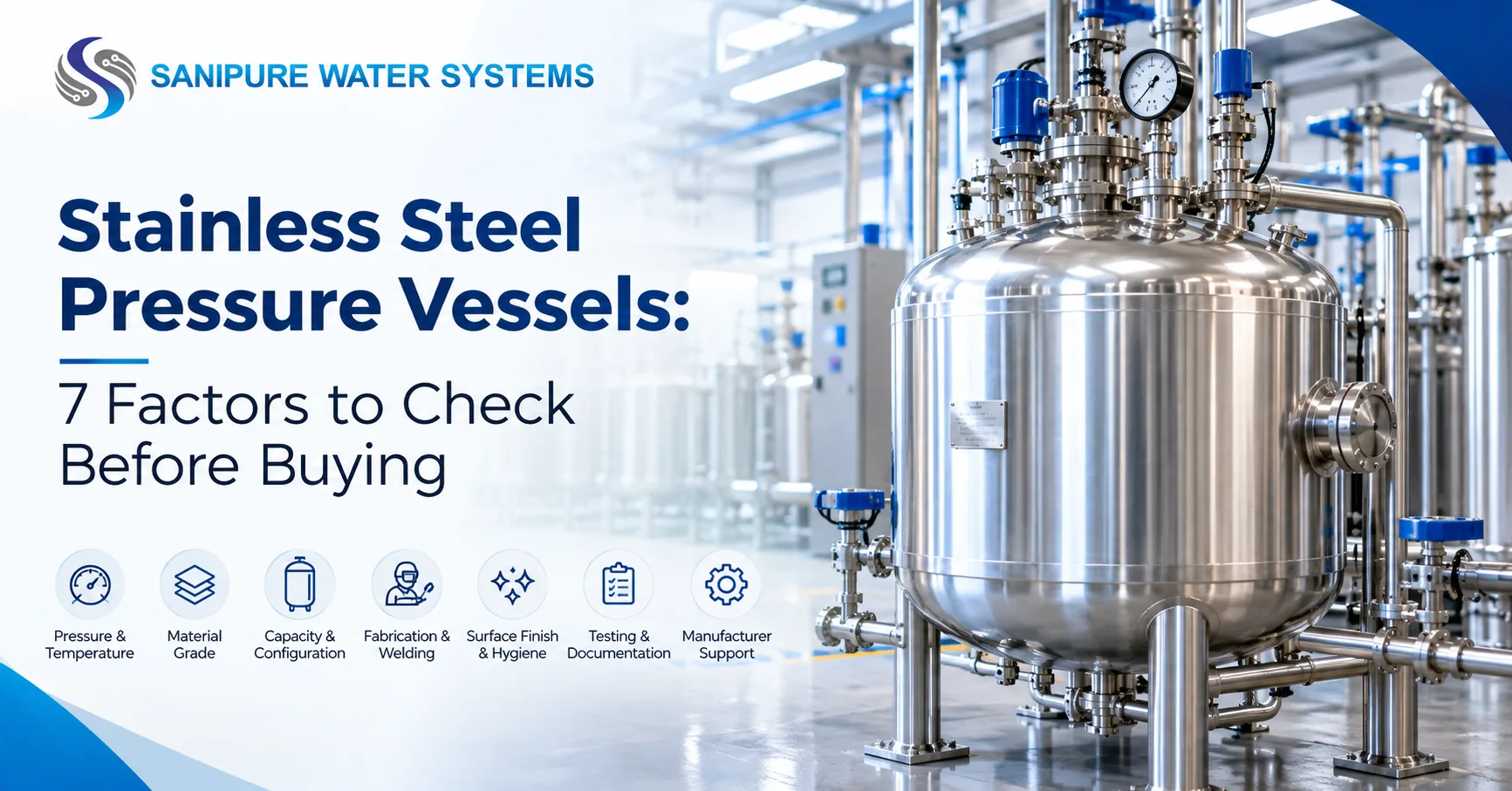
Selecting a stainless steel pressure vessel is an important decision for any industrial facility. The equipment must suit the process, withstand the required operating conditions and meet the relevant safety standards. Choosing a vessel without checking its specifications can lead to operating difficulties, unnecessary expenses and maintenance issues in the future.
At Sanipure Systems, we understand that every industry has different process requirements. Whether a vessel is needed for liquid handling, chemical processing or another industrial application, the right selection begins with understanding how the equipment will be used. Here are seven important factors to consider before making a purchase.
1. Understand Your Pressure and Temperature Requirements
The first step is to identify the operating pressure and temperature of your process. A pressure vessel must be designed to handle the specified conditions safely, including relevant variations during startup, shutdown and normal operation.
Before requesting a quotation, determine the expected operating pressure, maximum design pressure and temperature range. These details help establish the vessel's design requirements and the appropriate construction specifications.
At Sanipure Systems, we recommend sharing accurate process information at the beginning of the enquiry. The final design should comply with the applicable pressure-vessel codes and regulations, with the required engineering calculations and safety provisions confirmed by qualified professionals.
2. Choose the Appropriate Stainless Steel Grade
The material grade has a direct impact on corrosion resistance, durability and suitability for the intended process. SS 304 is widely used in general industrial applications, while SS 316 and SS 316L may be preferred in certain environments requiring better resistance to specific corrosive conditions.
However, the most suitable grade depends on the process fluid, chemical concentration, temperature and cleaning agents involved. Selecting a grade simply because it is more expensive does not automatically make it the best option for every application.
We recommend evaluating the operating environment before finalising the material. Customers looking for other stainless steel equipment can also explore our stainless steel tanks to learn more about our equipment range.
3. Capacity and Vessel Configuration
The vessel's capacity should match your production volume and process requirements. A vessel that is too small can limit production, while an unnecessarily large unit may increase the initial investment and occupy additional floor space.
Consider the volume of material processed per cycle, production targets and available installation space. You should also determine whether a vertical or horizontal configuration is appropriate and identify the necessary nozzles, connections, access openings and other process-related features.
Providing these details early helps establish a practical design for your facility. The final configuration should be based on the intended application, operating conditions and relevant engineering requirements.
4. Fabrication and Welding Quality
A pressure vessel's reliability depends on more than the quality of the raw material. Fabrication accuracy, welding procedures, joint integrity and inspection are all important to the finished equipment.
Poor welding practices or inadequate inspection can affect structural integrity and create operational risks. Before selecting a supplier, ask about fabrication standards, welding quality controls, inspection procedures and the documentation provided with the vessel.
Depending on the design and applicable code, the process may include dimensional checks, weld examinations and specified pressure tests. At Sanipure Systems, we recommend confirming these requirements before approving the final manufacturing specifications.
5. Surface Finish and Cleaning Requirements
Surface finish is particularly important in food processing, pharmaceutical manufacturing and other applications where cleanliness and contamination control are essential. The required finish depends on the product, cleaning method and relevant industry standards.
A smooth internal surface may be necessary for some hygienic applications, while other industrial processes may require different finishing specifications. Drainability, accessibility for cleaning, nozzle placement and compatibility with cleaning chemicals should also be considered.
Customers planning hygienic processing operations can review our stainless steel process equipment solutions to explore the wider range of equipment available from Sanipure Systems. The appropriate finish and cleaning requirements should be defined before production begins.
6. Testing, Inspection and Documentation
Testing and documentation help verify whether a pressure vessel meets its specified design and applicable safety requirements. Before purchasing, confirm which inspections, tests and records are required for your application.
Depending on the design code and project specifications, documentation may include material certificates, welding records, inspection reports and pressure-test records. Certain installations may also require third-party inspection or statutory approval.
Requirements vary according to the vessel design, operating conditions and applicable regulations. Confirming these details before placing an order can help avoid delays and make future maintenance and compliance checks easier.
7. Manufacturer Experience and Technical Support
Choosing a manufacturer involves more than comparing prices. The supplier should understand your application, clarify the technical requirements and explain the scope of supply before the order is confirmed.
When comparing manufacturers, consider their ability to understand your process, communicate specifications clearly, provide required documentation and coordinate project requirements. Delivery schedules, installation responsibilities and technical support should also be discussed where applicable.
At Sanipure Systems, we encourage customers to share their process requirements so the equipment can be evaluated against the intended application. Visit our dedicated stainless steel pressure vessels page to learn more about our product offering and submit your enquiry.
Conclusion
Selecting a stainless steel pressure vessel requires careful evaluation of operating conditions, material grade, capacity, fabrication quality, surface finish and testing requirements. Reviewing these factors before purchasing helps you make an informed decision and choose equipment suited to your industrial process.
At Sanipure Systems, we understand the importance of matching equipment specifications with actual operating needs. Contact our team to discuss your requirements and explore suitable stainless steel equipment solutions for your facility.