Imagine you need a loan.
You do what most people would do. You check your bank, fill out an application, send your documents, and wait.
Then comes another request for information. Then another check. And suddenly, a simple loan application does not feel so simple anymore.
This is one reason digital lending is getting more attention in Europe. People are already used to doing so much online. They shop online, pay bills from their phones, transfer money in seconds, and manage their bank accounts without visiting a branch.
In 2025, 74 percent of EU internet users used online banking. That number was 56 percent in 2015.
So it makes sense that people are starting to expect the same kind of convenience when they need to borrow money.
Why Is Borrowing Still Difficult?
The problem is not that banks do not offer digital services. Many do.
The problem is that getting approved for a loan can still involve a lot of checks and paperwork.
Traditional lenders usually look at things such as credit history, income, existing debts, and repayment records. These checks are important because lenders need to understand the risk of giving someone money.
But people's financial lives are not always that simple.
A freelancer might earn well but have income that changes from month to month. A young worker may have a steady job but very little credit history. Someone else may have had financial problems years ago but be in a much better position today.
A traditional credit score may not tell the whole story.
So What Is Different About Digital Lending?
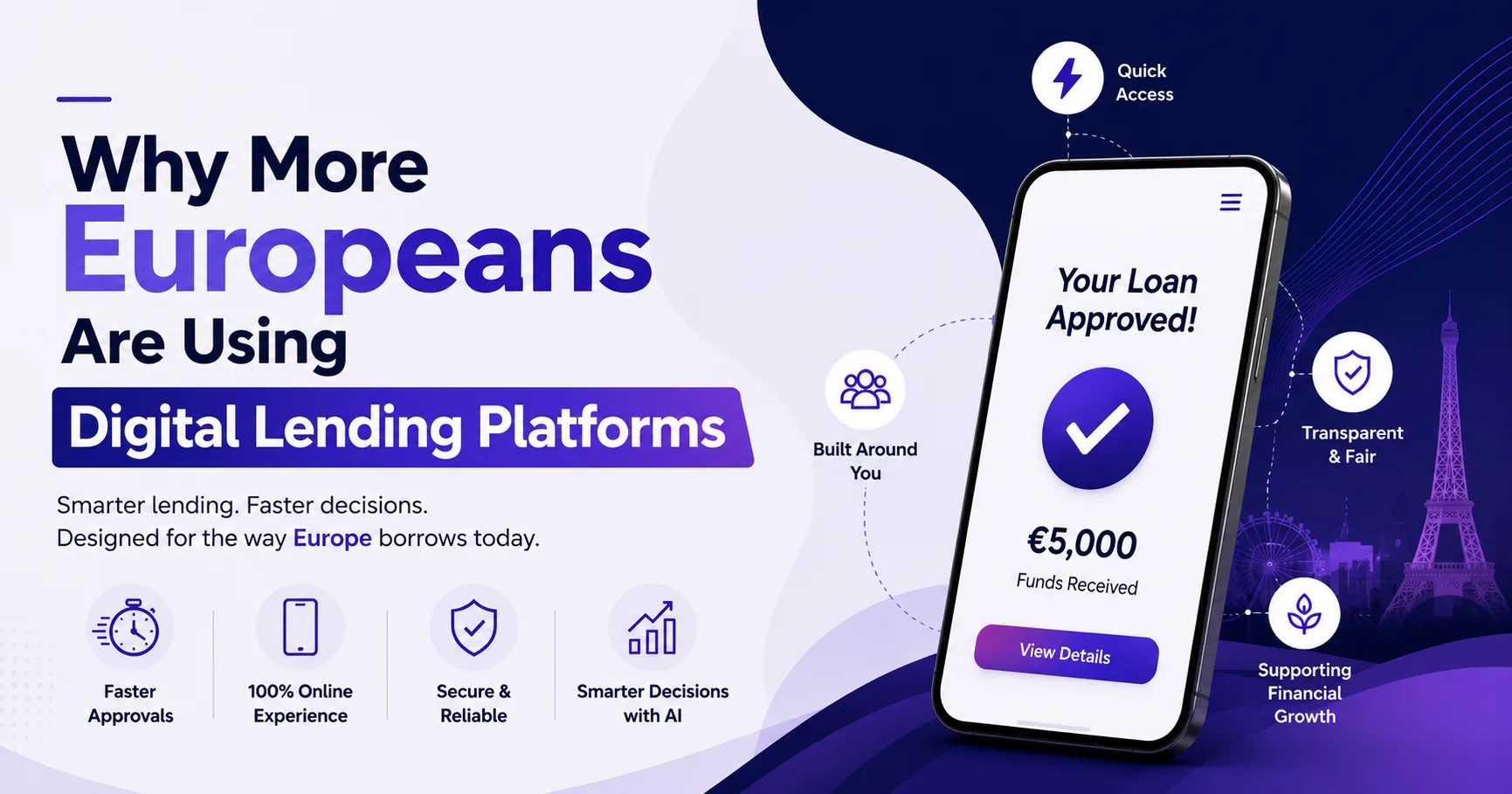
Digital lending platforms try to make more of the borrowing process happen online.
Instead of starting with a branch visit, a borrower may be able to apply from a phone or computer, provide documents digitally, and follow the application online.
That does not mean every application is approved or that digital lending is always faster.
It simply gives borrowers another way to access credit.
For many people, that convenience matters.
If you are working during the day, running a small business, or managing several sources of income, being able to handle a loan application online can save time.
Is Digital Lending Better Than a Bank?
Not necessarily.
Banks still have an important role. They are established institutions, and many people prefer the security and range of services they provide.
Digital lending is simply creating another option.
Some platforms use alternative credit scoring to look at more information about a borrower instead of depending only on a traditional credit score. Others use automation and AI to help process information and support lending decisions.
The European Banking Authority says AI is increasingly being used in financial services, including areas such as credit scoring and fraud detection.
But technology should not be treated as a magic answer.
Borrowers still need to check the interest rate, fees, repayment period, and total cost before accepting a loan.
What Could Lending Look Like Next?
The biggest change may not be about banks versus digital platforms.
It may simply be about giving people more choice.
AI-powered lending, alternative credit scoring, and digital applications could make it easier for lenders to understand different types of borrowers.
CLIX Money is working in this area, exploring AI powered lending platform and alternative approaches to credit assessment.
The important thing is that borrowers should not have to fit into one fixed financial profile.
People work differently. They earn differently. They manage money differently.
Lending needs to understand that too.
Conclusion
Digital lending is not about replacing traditional banks overnight.
It is about making borrowing fit better into the way people live today.
For someone who wants a simple online experience, has a less traditional income pattern, or feels limited by an old credit history, digital lending may offer another option worth exploring.
The key is still the same: compare your choices, understand the terms, and only borrow what you can afford to repay.