
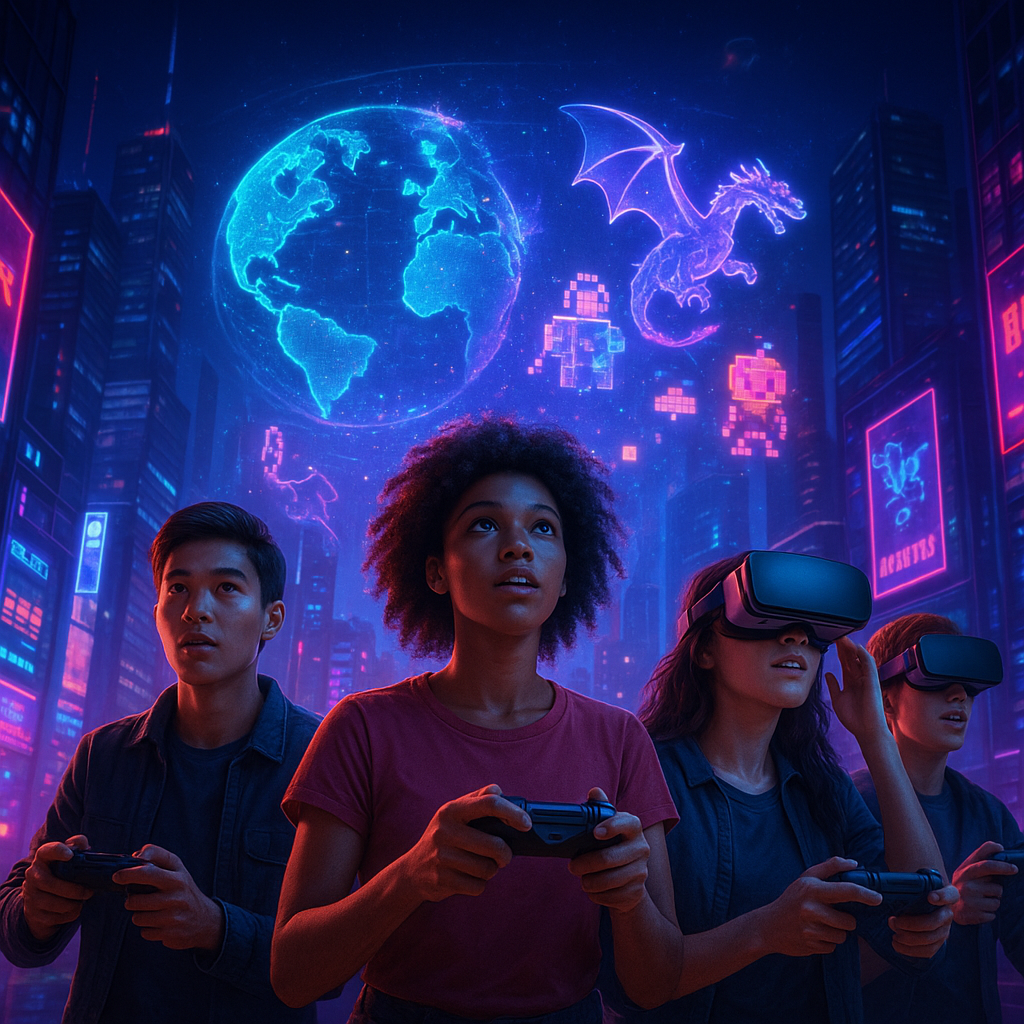
Leveling Up: The Rise of Video Games as Cultural Titans
On a brisk evening in Tokyo’s Akihabara district, thousands gather not only to play but to worship the latest releases in video gaming. This bustling epicenter of gaming culture embodies a global phenomenon: video games have transcended their role as mere entertainment to become dominant cultural forces. With over 3.4 billion players worldwide reported by industry estimates in 2026, video games now rival music, film, and literature in influence and reach. The confluence of immersive technology, storytelling, and social connectivity has elevated games from casual pastimes to cultural touchstones, impacting art, education, and social movements.
For instance, the 2026 release of "Eclipse Beyond"—a visually stunning, narrative-driven title from leading studio Nebula Interactive—has sparked conversations about identity and ethics, illustrating how video games have evolved into platforms for profound human experiences. This shift is not accidental but the result of decades of technological, creative, and social evolution. As we explore the multifaceted world of video gaming, it becomes evident why this medium holds such unprecedented cultural power today.
From Pixels to Powerhouses: The Evolution of Video Games
The journey of video games from primitive pixelated displays to the hyper-realistic, AI-driven experiences of today is a story of relentless innovation and cultural adaptation. In the 1970s and 1980s, arcade classics like "Pong" and "Pac-Man" introduced gaming to the public, but their reach was limited by technology and distribution channels. The 1990s and early 2000s saw the rise of consoles such as Sony’s PlayStation and Microsoft’s Xbox, bringing gaming into homes worldwide. Notably, the 2010s catalyzed a shift with mobile gaming and the emergence of esports, expanding the demographic and social dimensions of gaming.
Technological breakthroughs have been critical. The advent of photorealistic graphics, expansive open worlds, and sophisticated physics engines have made games more immersive than ever. The integration of virtual reality (VR) and augmented reality (AR) in the 2020s transformed gaming into a multi-sensory experience, attracting new audiences and redefining player engagement. The rise of cloud gaming services, powered by ultra-fast 6G networks, has eliminated hardware barriers, enabling instant access to high-fidelity games on any device.
This evolution is also marked by a change in cultural perception. Once dismissed as a niche hobby or even a harmful distraction, gaming has gained recognition for its artistic merit and educational potential. Universities now offer degrees in game design and interactive storytelling, while museums and galleries curate exhibitions on gaming history and its impact on society. This maturation reflects the medium’s growing complexity and cultural resonance.
Data-Driven Insights: The Business and Social Impact of Video Games in 2026
The economic footprint of video games in 2026 is staggering. The global gaming industry is valued at over $450 billion, outpacing the film and music industries combined. Major players like Tencent, Sony, Microsoft, and emerging studios in Southeast Asia and Latin America are aggressively expanding their portfolios. The rise of subscription models and in-game economies has transformed revenue streams, with microtransactions and virtual goods sales now accounting for nearly 60% of total gaming revenue, according to industry analysts.
Socially, video games have become vital platforms for interaction and community building. Online multiplayer games host millions of concurrent users, fostering friendships, collaboration, and even political activism. This is evident in the way games have been utilized as spaces for social experiments, educational initiatives, and mental health support.
Key figures underline this impact:
- 3.4 billion active video game players worldwide (Newzoo, 2026)
- $450 billion estimated global gaming market value
- 60% of gaming revenue from in-game purchases and subscriptions
- Over 200 million daily active users in top massively multiplayer online games
- Esports audience surpassing 700 million viewers globally
These numbers illustrate not only the scale but the integration of gaming into daily life. Beyond entertainment, games influence fashion, music, and social norms, creating cross-industry synergies.
“Video games are no longer just games; they are social ecosystems where culture is created, shared, and evolved.” — Dr. Amelia Chen, Cultural Anthropologist
2026 Innovations: How AI and Immersive Tech Are Transforming Gaming
Recent advances in artificial intelligence and immersive technology represent the most significant leap in video game development in this decade. AI-powered non-player characters (NPCs) now exhibit complex behaviors, emotional responses, and adaptive learning, making game worlds more dynamic and personalized. Procedural content generation, enhanced by machine learning, allows for near-infinite game environments and narratives unique to each player.
Immersive technologies have matured beyond early VR headsets. Full-body haptic suits, neural interface headsets, and mixed-reality environments create seamless experiences where the boundaries between the player and the virtual world dissolve. These innovations have led to new genres of games that combine physical activity, storytelling, and social interaction.
One landmark development is the integration of AI-driven narrative engines, which dynamically tailor storylines based on player decisions and emotional states, detected through biometric sensors. This creates deeply personal and emotionally resonant experiences unprecedented in any other medium.
These breakthroughs align with insights from our feature on How AI and Immersive Tech Are Transforming Video Games This May, highlighting the convergence of technology and artistry in 2026’s gaming landscape.
“The line between player and protagonist blurs as AI crafts stories that respond to our very emotions, making each playthrough a unique journey.” — Satoshi Yamamoto, Lead AI Developer, Nebula Interactive
Voices from the Industry: Experts on Gaming’s Cultural and Economic Influence
Industry leaders and cultural experts agree that video games are reshaping not only entertainment but broader cultural and economic ecosystems. Susan Martinez, CEO of Phoenix Studios, a top developer known for narrative-driven games, notes, “Gaming has become a primary medium for storytelling and community. We see players engaging not just with content but with each other, creating cultures within cultures.”
Academic perspectives emphasize gaming’s role as a social mirror and creative space. Professor Ravi Patel, a media studies expert, explains that video games reflect contemporary societal issues and challenge traditional narratives around identity, race, and gender, helping foster empathy and critical thinking.
From an economic standpoint, gaming is a powerful driver of job creation and technological innovation. The rise of indie developers, enabled by accessible tools and digital distribution, has democratized content creation, injecting fresh perspectives into the market.
Experts identify key industry trends shaping the future:
- Continued growth of cross-platform play and cloud gaming, breaking down hardware barriers
- Increased incorporation of blockchain and decentralized ownership models in virtual economies
- Expansion of educational and therapeutic applications leveraging game mechanics
- Greater emphasis on inclusivity and representation in game content and communities
- Synergies between gaming, esports, and traditional media industries
These trends underscore the multifaceted impact of video games, confirming their role as cultural and economic powerhouses.
Future Frontiers: What to Watch in Video Games Beyond 2026
Looking ahead, several developments promise to further elevate video games’ cultural significance. One critical area is the growing integration of artificial intelligence with neural interface technology, which could enable direct brain-to-game communication, offering unprecedented immersion and accessibility for players with disabilities.
Moreover, the expansion of the metaverse concept—persistent, interconnected virtual worlds—is expected to redefine social interaction, commerce, and creativity. Gaming companies are at the forefront of building these digital ecosystems, blending entertainment with social networking and economic activity.
Environmental sustainability is becoming a priority, with studios adopting green development practices and optimizing energy use for cloud gaming infrastructure. This aligns with broader societal concerns and the gaming community’s increasing environmental consciousness.
As games continue to influence culture, education, and technology, their role as cultural artifacts will deepen. Tracking these trajectories is essential for understanding how video games will shape human experience in the coming decades.
For readers seeking practical insights into engaging with the evolving world of games, How to Get Started with Video Games: A Beginner’s Roadmap to Play and Enjoyment offers an excellent entry point. Additionally, How Video Games Are Rewriting Entertainment and Culture in 2026 provides a complementary perspective on the medium’s broader cultural impact.
- Advances in AI-driven narratives will personalize player experiences
- Metaverse expansion will blur digital and physical social spaces
- Neural interfaces may revolutionize accessibility and immersion
- Environmental sustainability will become integral to game development
- Gaming’s cultural influence will extend into education and social activism
These trajectories suggest video games will continue their ascent as essential cultural touchstones, shaping how society entertains, connects, and learns.