The Spark of Scientific Curiosity: A Moment That Changed Everything
On a chilly autumn evening in 2026, a team of researchers at the International Quantum Biology Institute in Zurich announced a breakthrough that could redefine how we understand life itself. They revealed the first conclusive evidence that quantum entanglement plays a functional role in photosynthesis at ambient temperatures. This discovery challenges long-held assumptions about the classical nature of biological processes and opens a door to a new realm of interdisciplinary science. It’s a vivid reminder that science is not static; it evolves through relentless curiosity and insightful questioning.
This moment exemplifies a broader truth: science is the engine propelling civilization forward. Across centuries, from the earliest astronomers mapping the stars to modern-day geneticists editing DNA, science has shaped every facet of human existence. Yet, in 2026, science faces new tests—from ethical dilemmas to geopolitical tensions—that complicate its role but also underscore its indispensable nature.
“Scientific curiosity is not just about answers, but about the courage to ask better questions.” – Dr. Elena Voronova, Quantum Biologist
Understanding the role of science today requires tracing its journey, analyzing its current state, and looking ahead to the challenges and promises it holds. This article explores these dimensions comprehensively, weaving in the latest trends shaping science and its impact on society.
Tracing the Arc: How Science Evolved to Its Current State
The roots of modern science stretch back to the Renaissance, when systematic observation and experimentation began to replace speculation and dogma. The Scientific Revolution of the 16th and 17th centuries, marked by figures like Galileo, Newton, and Descartes, laid the foundations of empirical inquiry and mathematical description.
Through the Enlightenment and Industrial Revolution, science became deeply intertwined with technology and industry, accelerating human capability. The 20th century witnessed an explosion of specialized disciplines, driven by breakthroughs in physics, chemistry, and biology. The discovery of the DNA double helix in 1953 and the moon landing in 1969 were emblematic moments illustrating how science and technology could shape global destiny.
Yet, science’s journey has not been linear or without controversy. Ethical questions surrounding nuclear weapons, cloning, and environmental degradation have sparked intense debate. The rise of big data and AI in the early 21st century introduced new paradigms and concerns about privacy, bias, and control.
By 2026, science is characterized by unprecedented interdisciplinarity and global collaboration—but also by challenges related to funding, misinformation, and geopolitical rivalries. The COVID-19 pandemic accelerated the integration of digital technologies into research, catalyzing open science models and rapid vaccine development. These shifts illustrate science’s adaptability, but also highlight vulnerabilities.
Breaking Down the Data: The Landscape of Science Today
Science in 2026 is a complex ecosystem defined by dynamic interplay among academia, industry, government, and the public. According to data from the Global Science Foundation and UNESCO, global R&D expenditure has surpassed $3.5 trillion annually, with China, the United States, and the European Union collectively accounting for over 70% of investment.
Key areas of focus include:
- Quantum Technologies: Beyond computing, quantum sensing and communication are rapidly advancing, promising revolutionary applications in medicine and security.
- Biotechnology: Gene editing tools like CRISPR have matured, enabling precision therapies but also raising ethical debates.
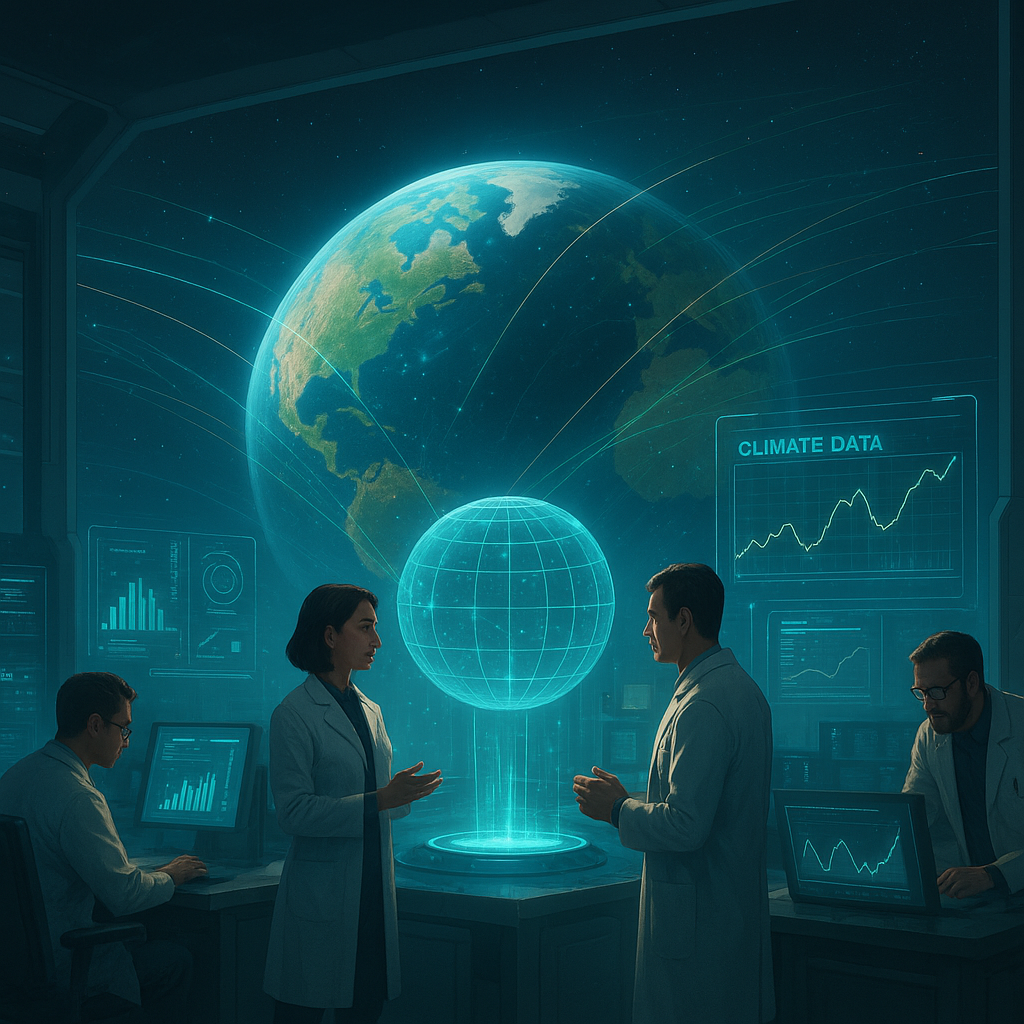
- Climate Science: Enhanced climate modeling and geoengineering research aim to mitigate the escalating effects of global warming.
- Artificial Intelligence: AI-driven research accelerates discovery but also challenges traditional peer review and reproducibility norms.
Comparatively, public trust in science remains uneven globally. Surveys by the Pew Research Center reveal that while 65% of respondents in developed nations express confidence in scientific institutions, skepticism persists in regions affected by misinformation and political polarization.
“The data show that investment alone doesn’t guarantee scientific progress; societal engagement and ethical governance are equally critical.” – Prof. Samuel Li, Science Policy Analyst
This complexity demands nuanced strategies for science communication, funding allocation, and international cooperation.
2026’s Scientific Frontiers: Where Innovation Meets Challenge
The year 2026 is marked by several pivotal developments shaping the scientific arena. Notably, the integration of AI with experimental research has transformed traditional methodologies. Autonomous laboratories—equipped with AI-driven robots—are conducting experiments at speeds and scales previously unimaginable.
In medicine, personalized therapies based on comprehensive genomic, proteomic, and metabolomic data have become mainstream, improving outcomes for diseases like cancer and rare genetic disorders. For instance, the startup GenomicaX, headquartered in Boston, reported a 40% increase in remission rates using AI-tailored immunotherapies.
Climate science has experienced both progress and urgency. The deployment of large-scale carbon capture plants in industrial regions has begun to offset emissions, but extreme weather events continue to intensify. The scientific community is actively debating the ethics and risks of solar radiation management, with major conferences and policy forums addressing regulatory frameworks.
Space exploration has entered a new phase with multinational lunar bases operational, focusing on scientific research and resource extraction. The collaboration between NASA, ESA, CNSA, and private entities like Orbital Dynamics Inc. illustrates a hybrid model of exploration.
However, these advances are tempered by challenges:
- Data Privacy and Security: The vast data generated raises concerns about misuse and surveillance.
- Equity in Access: Disparities in research funding and infrastructure persist between developed and developing countries.
- Ethical Oversight: Rapid innovation outpaces regulatory frameworks, creating gray zones.
These developments highlight the dual nature of scientific progress—immense promise coupled with complex responsibility.
Voices from the Field: Expert Insights on Science’s Impact and Trajectory
To understand science’s current momentum and future, insights from leading experts are invaluable. Dr. Amina Patel, Director of the Global Institute for Science Policy, emphasizes the importance of interdisciplinary collaboration. “The greatest breakthroughs today emerge where physics, biology, computer science, and social sciences intersect. We must encourage flexible funding models that reward such cross-pollination.”
Meanwhile, ethicist and philosopher Dr. Marco Santoro warns of complacency: “Without robust ethical frameworks, we risk undermining public trust. The controversies surrounding AI decision-making in healthcare highlight how technology can outpace governance.”
Industry leaders also weigh in. Maria Gonzales, CEO of BioNexis Therapeutics, notes, “Science drives innovation, but market forces shape its application. Bridging the gap between discovery and delivery requires partnerships across sectors and transparent dialogue with society.”
“Science’s impact extends beyond labs; it shapes policy, culture, and human identity.” – Dr. Amina Patel, Science Policy Director
These perspectives underscore that science is not an isolated endeavor but a deeply social process influencing and influenced by diverse stakeholders.
Looking Ahead: What to Watch in Science’s Next Chapter
As science moves forward, several trends warrant close attention. First is the accelerating convergence of digital and life sciences, promising breakthroughs in neurotechnology, synthetic biology, and regenerative medicine. These fields hold the potential to redefine human health and capabilities.
Second, the democratization of science through citizen science initiatives and open data platforms is reshaping the research landscape. Projects engaging millions worldwide—from environmental monitoring to astronomy—demonstrate new models of participation and knowledge creation.
Third, science’s role in addressing global challenges—climate change, pandemics, food security—will be pivotal. Success depends on integrated approaches combining technology, policy, and social innovation.
Finally, the evolving relationship between science and society will shape trust and funding. Transparent communication, education reform, and inclusive policymaking are keys to sustaining science’s vitality.
- Expansion of AI-augmented research methodologies
- Growth in global scientific collaboration frameworks
- Heightened focus on ethical and regulatory governance
- Increasing emphasis on sustainability and resilience science
These trajectories suggest science will remain humanity’s most vital asset in confronting the unknown and creating a sustainable future.
For readers interested in further exploration, How Science Shapes Our Future: Breakthroughs, Challenges, and Insights offers a broad perspective on scientific innovation and societal impact. Additionally, Science in 2026: Breakthroughs, Challenges, and the Path Forward provides an up-to-date analysis of the current scientific landscape.
In conclusion, the story of science is one of ceaseless inquiry, bold exploration, and profound impact. As 2026 unfolds, its challenges and triumphs remind us that scientific curiosity is more than a method—it is humanity’s enduring compass.