In heavy industrial maintenance, structural steel fabrication, and marine shipyard operations, removing thick rust, mill scale, and failing protective coatings demands a fast-cutting, high-density abrasive. Conventional silica sand poses severe respiratory hazards due to free crystalline silica, while softer mineral grits often break down too quickly on hardened steel. Produced from refined, high-density copper smelter slag, iron silicate abrasive grit provides an aggressive, angular cutting profile paired with low dust generation and zero free silica—making it a premier expendable blasting media for demanding open-blast and containment environments.
How Iron Silicate Media Works
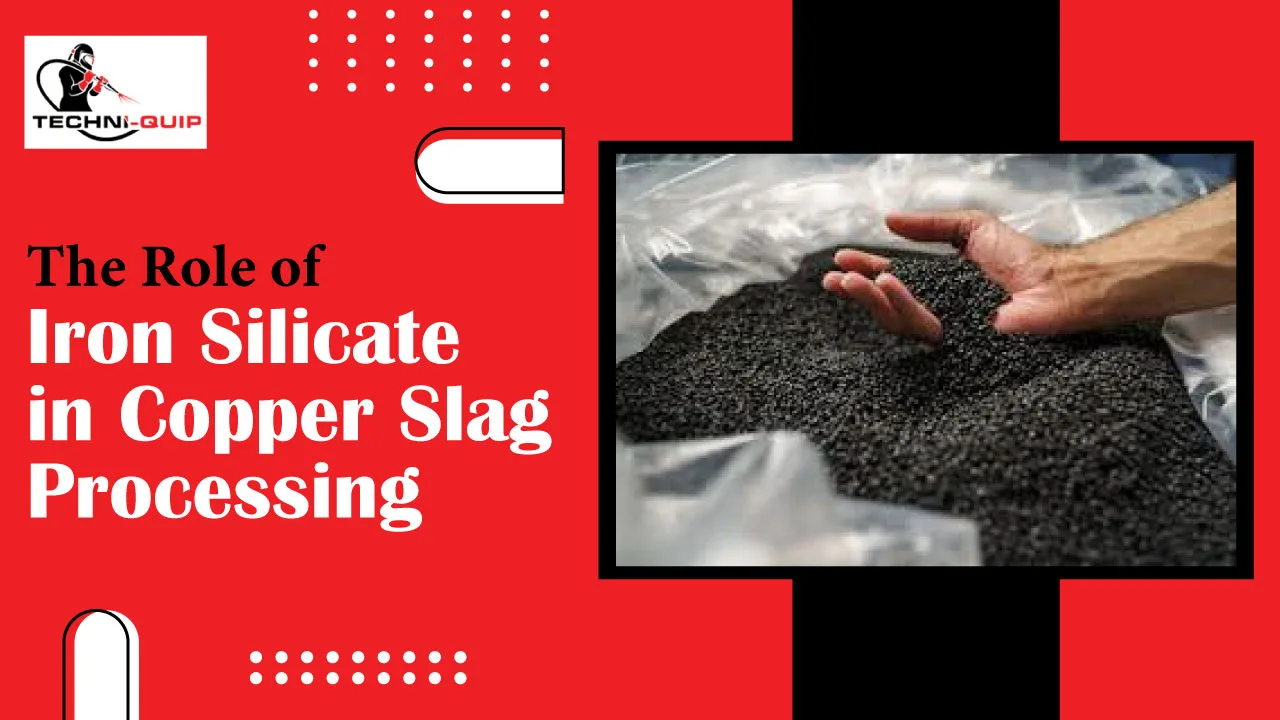
Iron silicate is manufactured by rapidly water-quenching molten copper slag into glassy, vitrified granules, which are then dried, crushed, and screened into tightly graded industrial mesh sizes. With a Mohs hardness of approximately 7.0 to 7.5 and a high specific gravity (around 3.3 to 3.8 g/cm³), each particle packs substantial kinetic energy when propelled through a blast nozzle.
Because the crushed particles feature sharp, blocky, multi-faceted edges, they slice through stubborn surface contaminants immediately upon impact. Rather than merely scouring the top layer, iron silicate excavates pitted corrosion and establishes a clean, uniform, angular anchor profile—typically ranging from 1.5 to 4.5 mils depending on mesh selection—that maximizes mechanical adhesion for high-build epoxies, zinc-rich primers, and polyurethanes.
Key Operational Advantages of Iron Silicate Grit
Contractors and facility operators rely on iron silicate over traditional mineral sands and softer slags for several performance, safety, and economic reasons:
- Zero Free Crystalline Silica: Containing less than 0.1% free silica, iron silicate eliminates the silicosis risks associated with natural quartz sand, helping job sites comply with strict OSHA and environmental health standards.
- High Cutting Speed and Square-Footage Productivity: Heavy particle mass combined with sharp angular geometry delivers faster stripping rates per hour, lowering compressed air usage, fuel costs, and labor hours on large-scale projects.
- Low Dust and Enhanced Operator Visibility: Dense, vitrified granules resist shattering prematurely upon impact, generating significantly less airborne dust than coal slag or crushed glass. Clearer visibility enables operators to inspect surfaces accurately and prevent missed spots.
- Chemically Inert and Moisture-Resistant: Properly washed and dried iron silicate contains negligible soluble salts and chlorides, preventing flash rusting and coating delamination on prepared steel substrates.
Primary Industrial Applications
Wherever tough surface contaminants, strict coating specifications, and large surface areas intersect, iron silicate serves as an indispensable blasting media:
- Shipbuilding and Marine Maintenance: Ship hulls, ballast tanks, offshore oil platforms, and dry-dock structures accumulate thick marine growth, salt corrosion, and multi-coat anti-fouling systems. Iron silicate strips hulls rapidly to SSPC-SP10 / NACE No. 2 (near-white metal) standards.
- Bridges, Storage Tanks, and Structural Steel: Infrastructure contractors use iron silicate to remove heavy mill scale and weathered paint from structural beams, petrochemical tanks, pipelines, and water towers prior to protective recoating.
- Railcar, Barge, and Heavy Equipment Refurbishment: Freight railcars, mining machinery, and agricultural equipment require aggressive profiling to withstand harsh mechanical wear and outdoor exposure.
- Concrete Profiling and Industrial Floor Prep: Medium-to-fine iron silicate grades effectively etch laitance and old sealers from concrete decks and industrial floors to prepare them for heavy-duty epoxy overlays.
Best Practices for Optimal Blasting Results
To achieve consistent anchor profiles and maximize productivity with iron silicate, match the grit mesh size directly to your coating specification—using coarser grades (such as 12/40 or 16/30 mesh) for thick rust and deep 3–4 mil profiles, and finer grades (such as 20/50 or 30/60 mesh) for thinner coatings and lighter mill scale. Maintain nozzle pressures around 90 to 100 PSI with a high-efficiency venturi nozzle, and ensure compressed air lines are equipped with moisture traps to keep the abrasive flowing smoothly without surging or clogging.