
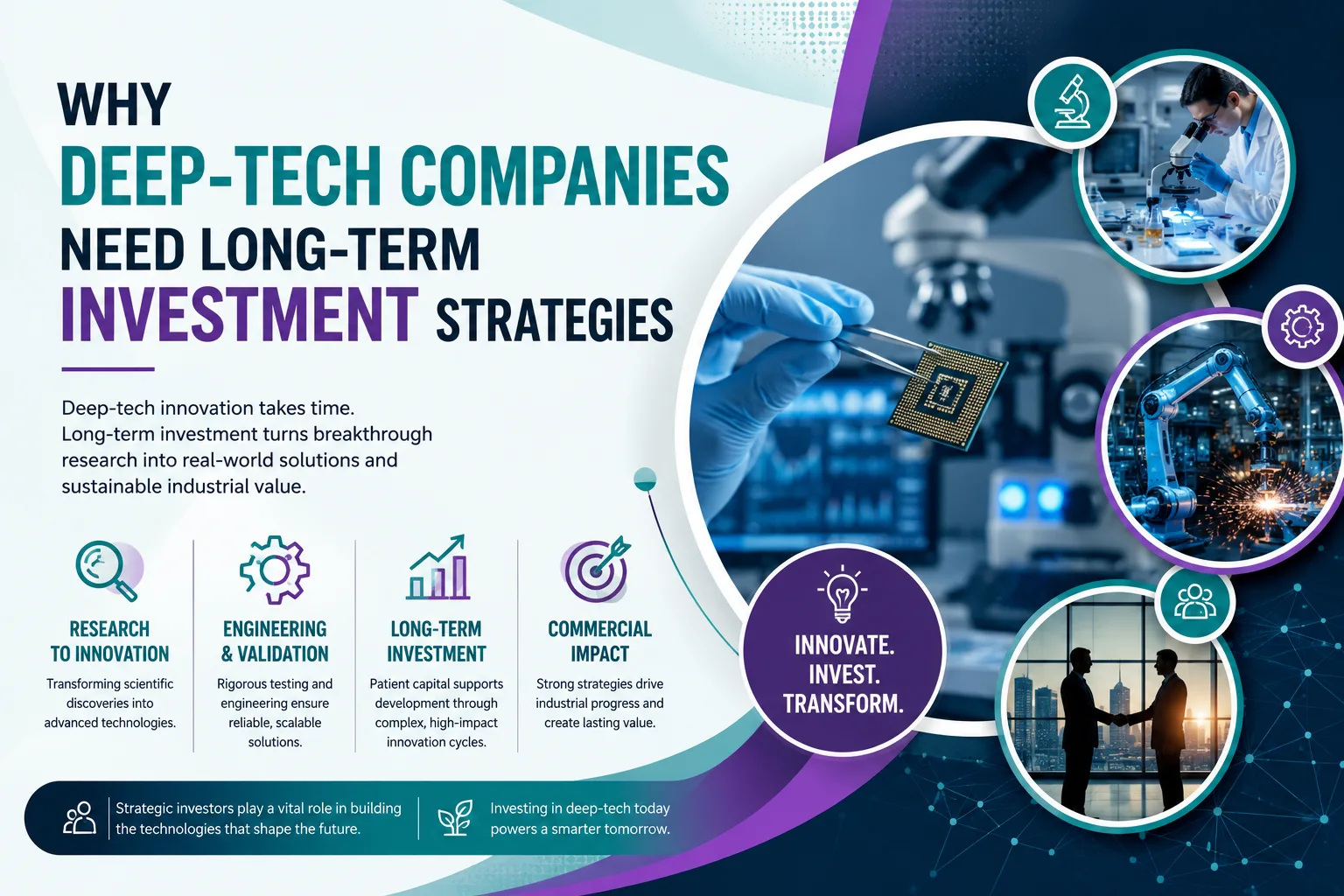
Scientific breakthroughs have the potential to transform industries, improve productivity, and solve some of the world's most complex engineering challenges. However, innovative ideas rarely become successful commercial products overnight. Deep-tech companies often spend years conducting research, refining prototypes, validating technologies, and preparing solutions for real-world deployment before entering the market. This extended journey makes long-term investment an essential component of sustainable innovation. The growing discussion surrounding Rajat Khare Deep Tech Investor reflects the importance of supporting research-driven companies that require patience, strategic guidance, and consistent financial backing to convert scientific progress into industrial value.
Unlike businesses that can launch products quickly, deep-tech enterprises operate within highly technical sectors where engineering precision, scientific validation, and regulatory compliance are critical. Their success depends not only on technical expertise but also on access to investors who understand that meaningful innovation often requires sustained commitment rather than immediate commercial returns.
Across the United States, industries such as advanced manufacturing, semiconductor engineering, aerospace, biotechnology, industrial infrastructure, and cybersecurity continue demonstrating how research-led innovation contributes to long-term economic growth. Organizations investing in these sectors recognize that technological leadership is built through continuous development rather than short-term expansion.
Why Deep-Tech Innovation Requires Time
Deep-tech innovation is fundamentally different from traditional technology development because it is rooted in scientific discovery and advanced engineering. Before a new technology reaches commercial markets, it typically progresses through multiple stages, including laboratory research, proof-of-concept development, prototype testing, engineering validation, and product refinement.
Each stage presents technical challenges that require time, specialized expertise, and continuous investment. Researchers must confirm that scientific concepts function reliably under practical conditions, while engineers focus on improving performance, safety, scalability, and long-term reliability. This careful development process helps ensure that technologies meet the expectations of industries relying on precision and operational consistency.
Rather than accelerating products to market before they are fully prepared, successful deep-tech organizations prioritize technical excellence and long-term performance. This disciplined approach reduces risk while improving the likelihood of sustainable commercial success.
From Scientific Research to Engineering Validation
Research creates new possibilities, but engineering transforms scientific knowledge into practical industrial solutions. Once an innovative concept has demonstrated technical potential, engineering teams begin refining the technology through extensive testing, performance evaluation, and design optimization.
This phase is often one of the most demanding parts of commercialization. Engineers must ensure that products perform consistently under real operating conditions while maintaining quality, efficiency, and reliability. Every improvement contributes to building technologies capable of serving industrial customers over extended periods.
Research-driven organizations frequently collaborate with universities, laboratories, engineering firms, and manufacturing partners throughout this process. These collaborations strengthen technical expertise while accelerating product development through shared knowledge and specialized resources.
Because engineering validation requires substantial investment over several years, businesses benefit from investors who understand the unique development cycles associated with advanced technologies.
Bridging the Gap Between Research and Commercialization
One of the greatest challenges facing deep-tech companies is successfully transitioning from research environments to commercial markets. While scientific innovation creates technological opportunities, commercialization requires businesses to demonstrate that those innovations can solve practical industry problems at scale.
This transition involves far more than product development. Organizations must establish manufacturing processes, strengthen quality assurance systems, protect intellectual property, build customer confidence, and prepare technologies for widespread adoption. Each step requires careful planning and continuous refinement.
The broader conversation surrounding Rajat Khare Deep Tech Investments reflects the growing importance of supporting technologies throughout this commercialization journey. Long-term investment allows companies to improve products systematically rather than sacrificing quality for rapid expansion.
Businesses that successfully bridge research and commercialization often create stronger competitive advantages because their technologies are supported by extensive validation, engineering excellence, and practical industrial experience.
The Role of Long-Term Strategic Investors
Commercializing advanced technologies requires more than financial resources alone. Deep-tech companies often seek investors who understand scientific innovation, engineering development, and the realities of long product development cycles.
The broader discussion surrounding Rajat Khare Technology Investor highlights the value of investors who contribute strategic insight alongside financial support. Experienced technology investors frequently help companies evaluate market opportunities, build industrial partnerships, strengthen commercialization strategies, and prepare for sustainable business growth.
Their involvement extends beyond funding by encouraging disciplined decision-making throughout multiple stages of development. This guidance enables research-driven companies to maintain their focus on technical excellence while gradually expanding commercial capabilities.
As industries continue evolving through scientific and engineering innovation, strategic investors will remain valuable partners in helping deep-tech businesses transform research into technologies capable of creating long-term industrial impact.
Protecting Intellectual Property for Long-Term Growth
One of the defining characteristics of deep-tech companies is the significant investment they make in original research and engineering. Unlike businesses that compete primarily through marketing or rapid product releases, research-driven organizations create value by developing proprietary technologies capable of solving complex industrial challenges. Protecting this intellectual property becomes an essential part of long-term commercialization.
Patents, proprietary engineering processes, technical expertise, and specialized manufacturing knowledge provide businesses with a strong competitive foundation. These assets not only safeguard years of research but also increase confidence among industrial partners, manufacturers, and commercial customers evaluating new technologies.
A carefully managed intellectual property strategy allows organizations to continue improving their innovations while maintaining a competitive position within rapidly evolving industries. This approach supports sustainable growth by ensuring that technological advancements remain valuable throughout multiple stages of commercialization.
Long-Term Investment Strengthens Commercial Success
Commercial success is rarely achieved immediately after a technology is developed. Even the most promising engineering solutions often require additional testing, manufacturing refinement, customer validation, and operational improvements before they achieve widespread adoption.
Long-term investment provides companies with the flexibility to improve products continuously while responding to customer feedback and changing market requirements. Instead of rushing technologies into commercial markets, organizations can refine performance, strengthen reliability, and expand production capabilities through disciplined planning.
This patient approach benefits both businesses and customers. Companies build stronger products supported by extensive engineering validation, while industrial clients gain confidence in adopting technologies that have been thoroughly tested under practical operating conditions.
Organizations that prioritize long-term development often establish stronger market positions because their technologies are designed for sustainable performance rather than short-term commercial opportunities.
Commercialization Drives Industrial Progress
Successful commercialization extends beyond launching innovative products. It creates opportunities for industries to modernize operations, improve efficiency, and adopt technologies capable of delivering measurable long-term value.
When research-driven companies successfully commercialize advanced technologies, they contribute to broader industrial development by encouraging productivity improvements, strengthening supply chains, and supporting engineering innovation across multiple sectors. Manufacturers gain access to more advanced production capabilities, infrastructure operators improve operational reliability, and businesses benefit from technologies designed to solve increasingly complex challenges.
Commercialization also encourages greater collaboration between research institutions, engineering firms, manufacturers, and industrial organizations. These partnerships accelerate knowledge transfer while helping emerging technologies reach industries that can benefit from practical innovation.
As commercialization activities continue expanding, research-driven companies will play an increasingly important role in shaping the future of advanced industrial development.
The Future of Research-Driven Innovation
The future of deep technology will continue to be shaped by organizations willing to invest in scientific research, engineering excellence, and long-term product development. Emerging technologies will require even greater collaboration between researchers, technical specialists, manufacturers, and business leaders as industries seek solutions capable of addressing increasingly sophisticated challenges.
Future innovation will likely focus on creating technologies that improve operational efficiency, strengthen industrial resilience, and support sustainable economic growth. Research organizations will continue developing advanced engineering solutions, while commercial companies will refine these innovations for practical industrial applications.
The second discussion surrounding Rajat Khare Deep Tech Investor reflects the broader importance of maintaining an investment philosophy that values research, technical excellence, and responsible commercialization. Supporting innovation through long-term strategies allows businesses to create technologies capable of generating lasting industrial impact rather than pursuing short-term market opportunities.
As industries become increasingly knowledge-driven, organizations that invest patiently in research and commercialization will remain well positioned to contribute to the next generation of technological advancement.
Conclusion
Deep-tech companies operate within industries where meaningful innovation requires patience, technical expertise, and sustained commitment. Scientific discoveries alone cannot transform industries unless they are supported by engineering validation, responsible commercialization, and long-term investment strategies that allow technologies to mature successfully.
Commercialization is a gradual process involving research refinement, intellectual property protection, manufacturing preparation, and continuous product improvement. Organizations that invest consistently throughout these stages create stronger technologies capable of delivering practical value across advanced manufacturing, engineering, healthcare, infrastructure, and other research-intensive sectors.
As global industries continue evolving through scientific progress and engineering innovation, long-term investment will remain one of the most important drivers of sustainable technological development. Businesses that support research-driven innovation with disciplined commercialization strategies will continue helping transform promising ideas into reliable industrial solutions that create lasting economic and technological value.